Home
About Norwich
Our Team
Content
    All Articles
    Cover Story
    Animals Rule!
    Around Town
    Artist Profile
    Creating Community
    Elder Profile
    Green Page
    Goodness InDeed
    History
    Life at 531 Feet
    Meet your Neighbor
    School Days
    Your Green Spaces
Our Sponsors
Advertise
Archives
Contact Us

Norwich Times - Good People, Good Places, Good Things Happening
  • Home
  • About Norwich
  • Our Team
  • Content
    • All Articles
    • Cover Story
    • Animals Rule!
    • Around Town
    • Artist Profile
    • Creating Community
    • Elder Profile
    • Green Page
    • Goodness InDeed
    • History
    • Life at 531 Feet
    • Meet your Neighbor
    • School Days
    • Your Green Spaces
  • Our Sponsors
  • Advertise
  • Archives
  • Contact Us
  • The Upper Valley in the Spotlight — JAM’s Feature-Length Film Valley Transit
    September 16, 2026
    READ MORE
  • Exploring Norwich One Street at a Time — David Watts’ “Tour de Norwich”
    September 16, 2026
    READ MORE
  • Norwich’s Diamond in the Rough
    June 21, 2026
    READ MORE
  • For Norwich’s Community, the Bell Tolls
    June 21, 2026
    READ MORE
All, History

The Importance of Beauty

August 26, 2024 by Mary Brownlow No Comments
Ice cream fundraiser for the Conservation Commission in the mid-1990s with Bill Ballard on the right.

To many people, town development and town conservation would seem to be two ends of a spectrum. Development implies making more of something, whether it be housing, infrastructure, or commercial opportunity. Conservation sounds like preservation: putting the brakes on change so that natural resources and heritage won’t be lost.

In Norwich, one process flows into the other, and back again. We can see this in the history of two town organizations: the Norwich Development Association and the Norwich Conservation Commission.

The Norwich Development Association was formed in 1943 by a group of citizens who wanted to ensure that local children would have a place to swim and to receive swimming lessons. Article 2 of their bylaws named this, but left an opening for further work: “…development and operation of a swimming pool…and promoting or maintaining recreational facilities, or any other improvements for the general welfare, benefit, and beauty of the Town of Norwich.” They were given land along the Charles Brown Brook by Della and Angus MacAulay. Abbie, Fred, and Paul Metcalf donated a strip of land adjacent to the spot planned for a pool, and a dam was built to contain water seasonally. It opened with great fanfare on July 4, 1944, with food, games, music, and speechifying.

Sketch of Gile Mountain tower by ConservationCommissioner Anne Foley

Sketch of Gile Mountain tower by Conservation
Commissioner Anne Foley

Over the following years, the Norwich Development Association received annual appropriations from the Town to ensure upkeep and lifeguarding services. In the 1950s, other projects were taken up: running a ski tow on the site of what is now part of Hillside Cemetery, and creating the skating rink on the Town Green. These were both focused on affordable recreation for youth. In 1957, an elementary student’s season ticket for the ski tow cost $3, while a single afternoon use was 25 cents. The ski tow closed in the late 1950s due to high maintenance costs, complicated by uncertain snowfall.

Clearly, development meant creating safe and affordable recreation opportunities for the younger generation. But when development – in the sense of commercial or residential encroachment on forested land – was perceived as a threat to the “general welfare, benefit and beauty “of the town, the Association took action.  They purchased 50 acres around the summit of Gile Mountain in 1968, and created a permanently revolving conservation fund for “easements or options in the Town’s interest” in 1969. In the same year, Maurice Aldrich donated additional land adjacent to the Norwich Pool to the Norwich Development Association.

Building Bat Boxes at Milt Frye Conservation Area

Building Bat Boxes at Milt Frye Conservation Area

This additional concern for preserving undeveloped land was reflected in their name change in 1972 to the Norwich Recreation and Conservation Council. But two years later, the work was split between two bodies. While the Norwich Recreation and Conservation Council continued to plan recreational activities, the urgency of conservation, with new awareness of threats to our environment, prompted the town to take action. At the 1974 town meeting, the Selectboard was asked to create a Conservation Commission with seven members, the first such commission in the state. This group was to implement the conservation aims of the 1974 town plan, to conserve “open spaces and other lands, waters, and flora and fauna.” They formed five sub-committees: Land Acquisition, Conservation Economics, Education, Natural Resources Inventory, and the Administration and Maintenance of town lands. In the same year, they proposed a bill to the Vermont State House to encourage more Vermont towns to create such commissions. It is notable that those founding members of the Conservation Commission, some of whom had served on the original Norwich Development Association, were ahead of their time in valuing the beautifully “undeveloped’ land around us. Foremost among these far-sighted leaders was Bill Ballard, whose concern for endangered flora led to conservation efforts of bogs and wetlands.

Skating on the town green ca. 1950

Skating on the town green ca. 1950

The early years of the Conservation Commission saw a variety of activities. A long-term inventory of natural resources began. Books and magazines were purchased for the elementary school library. A public forum entitled “Growth: Who Pays?” was held. A town-wide tree planting project, as well as special plantings around Tracy Hall were accomplished. The Commission took part in a weekly radio program called “Environmental Insight” at Dartmouth College.

Through the 1990s and 2000s, the Commission continued to educate school children and adults. Some serious fundraising efforts resulted in a healthy Conservation Trust Fund. Continuing inventories of natural resources, of wetlands, and of Norwich special places gave direction to potential land acquisition. Much effort was given to planning and developing trails and trail networks on conserved land. Notably, in 1996, Bill Ballard led a hike down the trail that would bear his name (though he argued vigorously for calling it the “Al Converse and Pete Richardson Trail”, because they led the work parties that marked the final trail).

Norwich Pool Opening 1944

Norwich Pool Opening 1944

Today, 50 years after its founding, the Norwich Conservation Commission has changed some of its structure. There are now nine members and two subcommittees: the Trails Committee and the Milt Frye Nature Area Committee.  The conservation of land continues. New land acquisition projects include the Arnold tract near Norfolk Lake Road and the Woody Adams Forest adjacent to the Gile Mountain Tract. The Schmidt Bog, home to the showy lady slippers so dear to Bill Ballard’s heart, has had boardwalks built. In the Milt Frye Nature Area near the Marion Cross School, work is underway to eradicate invasives while expanding the diversity of native wildflowers. As the Emerald Ash Borer makes its way into our area, plans are being made for treatment options for the town’s ash trees.

A wealth of educational articles can be found on the Conservation Commission’s website. There, you can find information on living alongside our local fauna, such as bears, bees, deer, beavers. Our waterways, insect threats and benefits, and dealing with native and invasive plants are described.

According to a 2003 article by Henry Homeyer in Dartmouth Alumni Magazine, Bill Ballard is reputed to have said, “This world was made beautiful, but it’s being made less beautiful by people who don’t understand the importance of beauty.” I wonder whether it was his words in the founding document of the Norwich Development Association that spoke of “the general welfare, benefit, and beauty of the Town of Norwich.” We are so grateful to the Norwich Conservation Commission for 50 years of carrying on his legacy for preserving and conserving the beauty of our town. Happy 50th birthday!

Share:
Reading time: 5 min
All, Meet your Neighbor

Norwich Native Competes in Paris Olympics

by Justin Lafleur No Comments

Relentless determination: Two words that tell the story of Billy Bender’s journey to the Paris Olympic Games.

When Bender, who hails from Norwich, and his pair partner, Oliver Bub, didn’t initially make the United States men’s eight Olympic crew, they didn’t give up. They teamed up for the men’s pair, and the rest is history.

“It’s easy to go home, but it’s the guys who refuse to give up who eventually make the team,” said Bender. “For every athlete, no matter how good you are, there are going to be times when you’re feeling pretty confident about yourself, and there are going to be times when you’re questioning if you’re good enough or if you’re going to make it.

“The guys who make the team and stay on the team for a long time are the guys who never stop doubting themselves.”

After finishing fifth in the pair at the 2023 World Rowing Championships to qualify the U.S. boat for the Olympics, Bender had his sights set on making sure he would be going to Paris. He turned his focus to Olympic training instead of competing with the Dartmouth College men’s heavyweight rowing team.

“At that point, it wasn’t even a question if [the Olympics] were possible,” said Bender’s head coach at Dartmouth, Wyatt Allen, who also coached Bender and Bub for the 2024 Olympics. “Billy had made the grand final in arguably one of the most competitive events in the world, so it was pretty easy to say you’re doing the right thing. There’s no way you don’t chase this dream.”

Even though Bender and Bub never raced together at Dartmouth – they missed each other by one year – they have plenty of racing experience together with the California Rowing Club.

Oliver Bub and Billy Bender

Oliver Bub and Billy Bender

Countless hours of training came down to the Olympic trials in April. In the final, Bender and Bub stood fourth, but they surged ahead over the final 1,000 meters, finishing with the top time of 6:54.64 – almost three seconds ahead of second place.

“It’s really unusual that you get two guys coming out of the same college program who fit in a small boat together and are able to generate the speed you need to win Olympic trials,” said Allen.

Bender was Paris bound. “In the weeks after we won trials, there was a little bit of disbelief that we would be going to the Olympics,” said Bender. “It was all coming really fast, but then it’s right back into your routine. Just because it’s an Olympic year, it doesn’t change your training.”

Bender and Bub’s training featured a stop in Hanover during the week of Dartmouth’s Commencement in early June.

“It was a nice moment of closure to watch my class graduate and celebrate them,” said Bender.

Bender, who will return to Dartmouth in 2024-25 to finish his degree and compete with the Big Green, then traveled to Princeton, New Jersey with the U.S. team before the entire team headed to Italy for training prior to Paris. Bender and Bub went on to finish fourth in the B final (10th overall).

“We are very different athletes in our physical capabilities,” said Bub. “Hopefully, he feels like he can learn some things from me, and I know I definitely learn a lot from him. The difference between us allows us to see things from the other’s point of view. It also leads to really good training; we bounce ideas off each other.

“And we both move the pair pretty well too.”

Share:
Reading time: 3 min
All, Goodness InDeed

Norwich: A Town of Volunteers and Good Neighbors

by Elizabeth Austin No Comments

It all started when a few medical professionals hosted a community conversation, and someone asked the question, “Where do the homeless get their healthcare?” – a question that had not been at the front of everyone’s minds.

Over thirty years later, Good Neighbor Health Clinic (GNHC) is a shining example of what happens when a community comes together to address a problem for the better of everyone. Located in White River Junction, Vermont, it began with the hard work of two founders and their wives’ incredible support and resilience, eventually blossoming into a multi-decade legacy of good quality, affordable healthcare. For over 32 years, GNHC has been providing medical and dental care for free to people of the Upper Valley, all thanks to their volunteers.

You might know Paul and Wendy Manganiello of Norwich; their work and desire to do more for others has created an incredible space where over 327 volunteers have dedicated thousands of hours to make free care possible over the years. It was an idea hatched from Paul and Peter Mason’s friendship, and a drive to make real change happen here at home in our community.

Wendy and Paul have been integral members of the Norwich community, witnessing and contributing to its growth and development over the years. Their journey began in 1979, when they moved from Georgia to West Lebanon, eventually settling in Norwich in 1984. From the outset, they were drawn to the town’s strong sense of community, particularly through the local school system, which helped them form lasting friendships and integrate into the fabric of the Norwich way of life.

Tonya Gammel, GNHC treasurer

Tonya Gammel, GNHC treasurer

One of the couple’s notable local contributions has been their involvement in the Good Neighbor Health Clinic. Their commitment to the clinic dates back to the 1980s, when a seminar on homelessness in the Upper Valley revealed a pressing need for community support services in the area. This realization spurred the formation of the Upper Valley Interfaith Homeless Coalition – a collaborative effort among local churches to provide temporary shelter and support for the homeless.

Paul’s medical background and Wendy’s dedication to social justice played crucial roles in these initiatives. They were instrumental in organizing and supporting the clinic, which provided essential healthcare services to those in need. Over the years, their efforts, along with those of numerous volunteers and community members, have transformed GNHC into a cornerstone of the local healthcare system.

The success of these community projects is a testament to the unwavering support from Norwich volunteers. According to Wendy and Paul, the town’s residents have consistently stepped up, offering their time, skills, and resources to ensure the well-being of their neighbors. This collective effort underscores the idea that community improvement is not the work of a few, but the result of many minds coming together with a shared vision and purpose. The Manganiello’s emphasize that their story is not just about their contributions, but about the power of community collaboration. They highlight the importance of recognizing the many volunteers and leaders who have dedicated themselves to GNHC’s mission over the years. These individuals have shown incredible dedication, often making personal sacrifices to support the clinic’s growth and sustainability.

Reflecting on their journey, Wendy and Paul express deep gratitude for the opportunity to serve and the remarkable people they have met along the way. With the incredible amount of non-profits in the Upper Valley, it is important to note how many people make these organizations successful. Consider the GNHC treasurer, Tonya Gammel – also a Norwich resident, who has found a use for her skills and work ethic to be applied to the non-profit setting and takes great pride in making sure the important things happen.

For two decades, Tonya Gammell has embraced the tight-knit community of Norwich, finding inspiration in its collective spirit. Joining the GNHC board six years ago, she continues to play a pivotal role in enhancing community health through her involvement and financial expertise.

Through GNHC, Tonya has gained insight into the challenges facing residents and the dedication of volunteers striving to overcome them. Balancing her board duties with a full-time career at Hypertherm and other community engagements, Tonya exemplifies Norwich’s spirit of giving back. Beyond her work with GNHC, she is passionate about fostering civic engagement, particularly among the next generation. Her journey from initial hesitance to active advocacy underscores the transformative power of individual commitment to community well-being.

Patty Monahan, Norwich communitymember and GNHC Board member

Patty Monahan, Norwich community
member and GNHC Board member

As Norwich continues to evolve, Tonya’s dedication serves as a beacon, inspiring others to join in the effort to build a healthier, more vibrant community. In her tireless advocacy and unwavering support, Tonya embodies the essence of community unity and compassion that defines Norwich’s character.

Patty Monahan, VP of Senior Treasury and Municipal Services at Mascoma Bank and fellow community member of Norwich, also serves at GNHC on the Board, and you might find her in the community passing out information about the work that the clinic does to help spread the word.

The many good people of Norwich help form the Upper Valley community and have made lasting contributions to what Good Neighbor Health Clinic has become. Thank you, Norwich community, for your support of our work and for embodying what it means to be a “Good Neighbor”!

~ Elizabeth Austin, MHA, on Behalf of Good Neighbor Health Clinic

Share:
Reading time: 4 min
All, Cover Story

Foul Balls, Fenway, and Fun: Norwich’s Next Generation Is up to Bat

by Sean Nam No Comments

Baseball, known widely as America’s favorite pastime, is a game of fine adjustments and failures. Even for professional athletes, getting a hit three times in ten tries is considered a success. Baseball is a sport where one truly has to love the game to stay in it; there can be frustrating and repetitive moments from the beginning to the end of a player’s career, but there are also plenty of rewards.

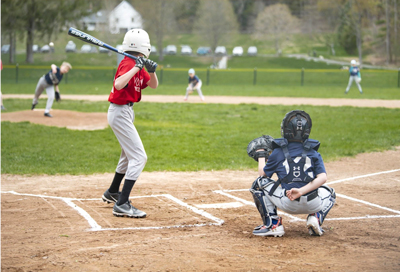
NBA player, Abe Rojansky, at bat

NBA player, Abe Rojansky, at bat

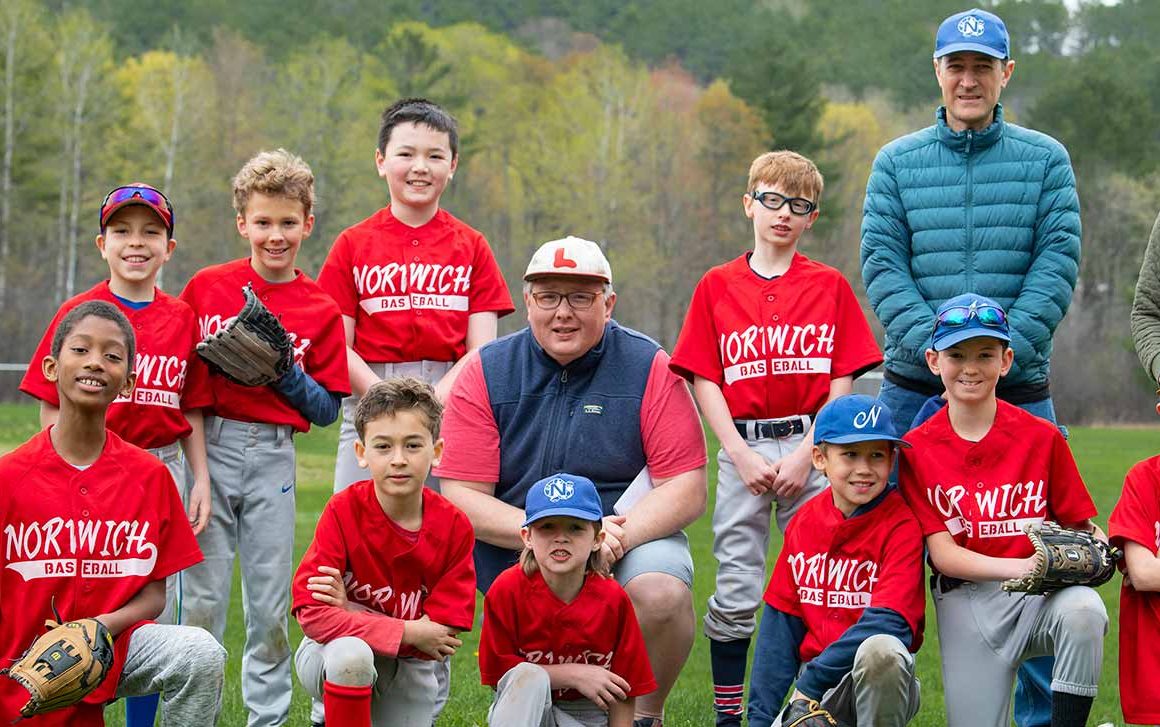
The baseball parents here in Norwich have witnessed that phenomenon firsthand. The Norwich Baseball Association (NBA), created in 2017 by Rob Kramer and now run by President Michael Costa and fellow Norwich Baseball Association board members, ensures that kids in Norwich between ages 8-12 will have the opportunity to play, improve, and learn to love the game of baseball now and in the future.

With a season beginning in early spring and practices and games running through fall, Norwich’s Cal Ripken teams are able to participate in baseball opportunities throughout most of the year. In the spring, two to three 10U (ages 8-10) and two 12U (ages 10-12) Norwich teams play against other local teams in the Upper Valley’s Cal Ripken League, like Hanover, Lebanon, and Hartford. As a part of the all-star program in the summer, teams practice and play against each other for a two-week period, and two teams (one 10U and one 12U) are selected to play in the Vermont Cal Ripken State Tournament. A more relaxed summer baseball season runs from early July to mid-late August, when rising 3rd graders are typically introduced to the program. In the fall, the NBA prepares for the next spring season with weekly practices and games. Each year, between 40-60 kids participate in the Norwich Baseball Association program.

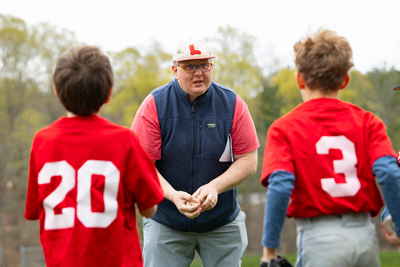
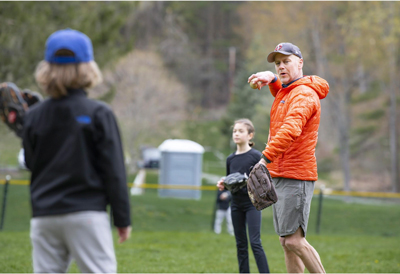
NBA president Michael Costa and two young Norwich baseball players

NBA president Michael Costa and two young Norwich baseball players

For Costa and other board members, as well as the coaches, a critical concept that the Norwich Baseball Association imparts on their teams is “player development over wins and losses,” Costa says. From the start of the season, practices are built around emphasizing good physical habits like stretching, throwing technique, base running, and more. Coaches also teach their players about the importance of good sportsmanship and being a good teammate – skills that will stick with them well beyond the baseball diamond. The coaches also challenge the players, making sure that, despite their young ages, these passionate and talented athletes are giving it their all while developing self-confidence.

“You have to really love the sport of baseball,” explains Costa. “I always tell my players, when they see a curveball for the first time, that the process of figuring out how to hit a curveball will show how much they actually love the sport.”

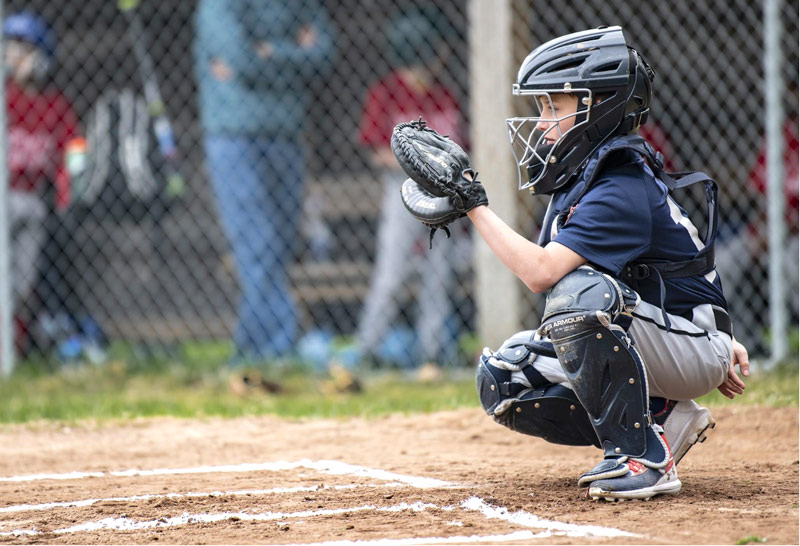
Weston Dyke catching

Weston Dyke catching

While these skills and tweaks take time to learn and improve upon, especially for younger players who are newly introduced to the sport of baseball, Costa says that seeing his players get over hurdles and demonstrate the skills they’ve been practicing is one of the best parts of his involvement with the Norwich Baseball Association.

“Sometimes it doesn’t [seem] like the kids are improving, but then they’ll make a play we had worked on in practice during the games,” remarks Costa with a hint of satisfaction.

An emphasis on teaching the fundamentals of baseball, as well as the evident time and effort put into making the NBA possible, all stems from the fact that the people involved in organizing the association are avid baseball lovers themselves. Costa was born into a baseball family, with his childhood often consumed by the sound of Red Sox radio broadcasts. “My grandfather taught my dad how to play baseball, and my dad taught me, so it’s been passed down the family,” he says. With fond memories of famous Red Sox moments – like the Dave Roberts steal in the 2004 ALC (American League Championship), which Costa considers his favorite Red Sox moment – Costa is someone who can talk about baseball for hours on end. His love for baseball extends to his work with the association between practices, schedules, and even jerseys that he pitches in to meticulously plan out.

Christopher Coughlin coaching Norwich baseball

Christopher Coughlin coaching Norwich baseball

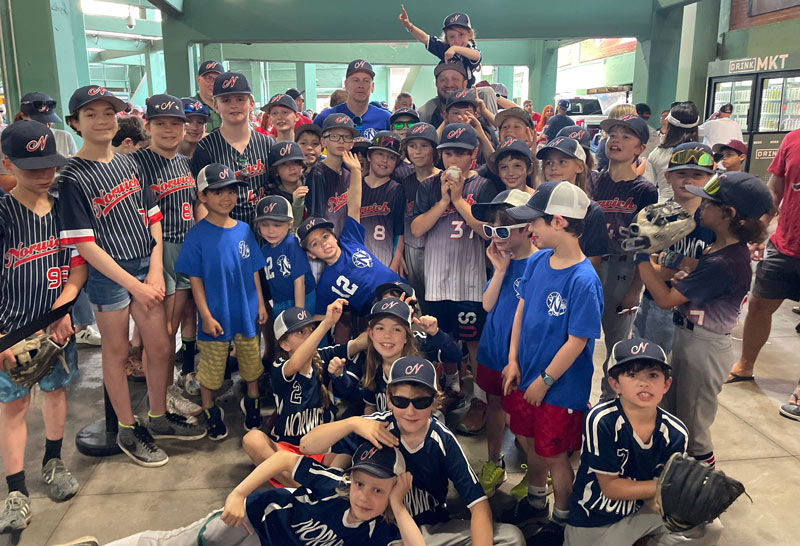
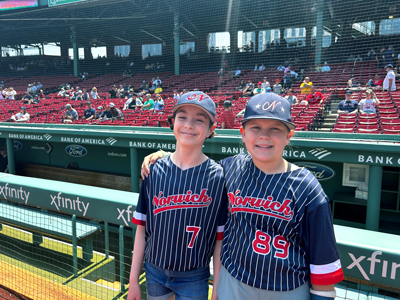
Another vital component of the Norwich Baseball Association are parent-volunteers. As Costa puts it, “None of the magic in youth sports happens without parents putting in effort.” Aside from encouraging players to focus on baseball outside of NBA-led practices and games, which Costa says is essential for the improvement of young baseball athletes, parents often help in other ways as well. Recently, NBA parents Mara Child and Lucy Rojansky, along with other parents and the board, organized a Fenway Park trip for the whole NBA community. The NBA, being a 501(c)3 non-profit organization, can do its own fundraising, and Child, seeing an opportunity that the Red Sox advertised, took the initiative to contact them, which led to both a fundraising and an educational opportunity for the NBA, allowing kids, family, and friends to enjoy a professional baseball game at one of the oldest baseball stadiums in the country. As part of the program with the Red Sox, the NBA raised around 16-1700 dollars by reselling tickets. At Fenway, the NBA players were also able to run around on the field and take pictures, making for a forgettable experience.

Like Costa, Child also grew up in a baseball family. She grew up in New Hampshire, watching and listening to Red Sox games, with distinct memories of her grandmother listening to the Red Sox broadcasts frequently and keeping her own scorebooks. After moving to Seattle with her husband, Child and her family watched Mariners games as well. When the family moved back to the Upper Valley two years ago, they became involved in the NBA, with her husband coaching (Child has made a few coaching cameos as well) and her son playing.

As a parent, Child says the NBA is a good way for her kid to connect with other players his age, but also a good way for her to connect with other baseball-inclined families.

“The Norwich Baseball Association is a great way to meet new families and build community, not just in Norwich, but also in towns across the Upper Valley,” she adds.

Norwich players of all ages celebrating Youth Sports Day at Fenway Park.

Norwich players of all ages celebrating Youth Sports Day at Fenway Park. ((Photos seen first in Demo Sofronas’ newsletter,
“About Norwich”, used with permission from aboutnorwich.substack.com.)

The NBA isn’t the only opportunity for kids to play baseball in the Upper Valley. The Upper Valley Ambush, organized by Brian Melzer, provides an opportunity for more competitive baseball in the Upper Valley. With 12U and 14U teams, Upper Valley Ambush plays in the New England Select League, which showcases some of the best youth teams across New England. Costa, who will coach one of the teams next spring, says that the Ambush allows kids to experience competitive, challenging, and travel-team-style baseball at a young age.

The Ambush also has another benefit to Upper Valley youth baseball, according to Costa.

“Upper Valley Ambush allows kids in the Upper Valley to experience travel baseball without the need to travel to Concord or Manchester to find travel baseball teams like the Concord Cannons or the New Hampshire Bobcats, like one used to have to do,” he says. Because the Ambush includes a 14U team, some games are played on a major-league-sized field, with 40′ vs. 60′ pitching mounds, 60′ vs. 90′ base paths, and overall bigger outfields, which is often a big jump for players who are used to a smaller setup. Costa explains that this is why the fundamentals of baseball are so important to learn at a young age when practicing.

Costa hopes to keep the Norwich Baseball Association going strong even after this batch of athletes moves on to the next stage of their baseball careers. “Our goal is to make this whole process sustainable so that the next group of parents who take over the program don’t have to start from scratch,” he says.

Mia Tesone and Etta Regan at Fenway Park.

Mia Tesone and Etta Regan at Fenway Park.

The Norwich Baseball Association has always been an organization passed down among parents. When founder Rob Kramer was in charge, Costa often helped out, noticing Kramer’s dedication to making quality youth baseball available to Norwich youths. Costa, now president of the association’s board, continues to try to imitate that same rigor, along with the rest of the board, coaches, and parents, who are all essential parts of the organization to keep it running smoothly.

A strong youth baseball program has many benefits that impact beyond the players and their families. At the high school level, many of the players who are on the team start off at programs such as the Norwich Baseball Association. In the case of Hanover High School, a good number of the players in the high school program played baseball in Norwich at some point. Having a strong program like the NBA ensures that the future of baseball for youth in Norwich and beyond will be rewarding in the upcoming years.

As summer turns into fall, be ready to see young baseball players in Norwich donning their navy blue jerseys as they begin their fall season. Play ball!

*****

All photos on this page except for last 2 by Kata Sasvari

Share:
Reading time: 8 min
All, Cover Story

Norwich Resident Takes the Helm at VINS

by Devin Gifford No Comments

In April of this year, the Vermont Institute of Natural Science (VINS) welcomed a new executive director, Alden Smith. Having moved to Norwich in 2022, Smith has been working to be the leader that VINS needs, while he, his wife, Missy, and their three children continue to settle into their home on Church Street.

Smith directed the Mountain School of Milton Academy in Vershire for two decades, so he and his family have lived in the Upper Valley for a long time. Smith described Vershire as a “remote, beautiful place” and a wonderful community for his children. However, he and Missy made the decision to move to Norwich in order to give their children, who are now 9, 13 and 15 years old, closer access to their various passions. Whether it was piano lessons or soccer practice, the remote location of Vershire ultimately made it more difficult for them to commute their children to the many opportunities found in the Upper Valley.

Alden Smith and his family enjoying the Norwich Town Forest

Alden Smith and his family enjoying the Norwich Town Forest

When Smith left the Mountain School, he didn’t know what his next career step would be. They spent their first year living in Norwich, unsure of whether or not they would be able to stay, but that didn’t keep them from falling in love with the vibrant community. “We traveled and interviewed all over the east, looking for new jobs and places to live, and we never found anywhere as wonderful as the neighborhood we live in right now, in Norwich,” Smith explains.

They found their new community in Norwich to be an intersection of access to both the arts and the natural world. Smith and his family love the trails, the farmers’ market, the wildlife, and the walkable nature of Norwich. Smith recalls that “the first Halloween shocked and delighted us.” After living thirty minutes from the nearest stoplight in Vershire, moving to Church Street put the family smack in the middle of the Norwich community. He remembers the trick or treaters coming to his door in droves, and how wonderful it was to host guests and be welcomed into the neighborhood.

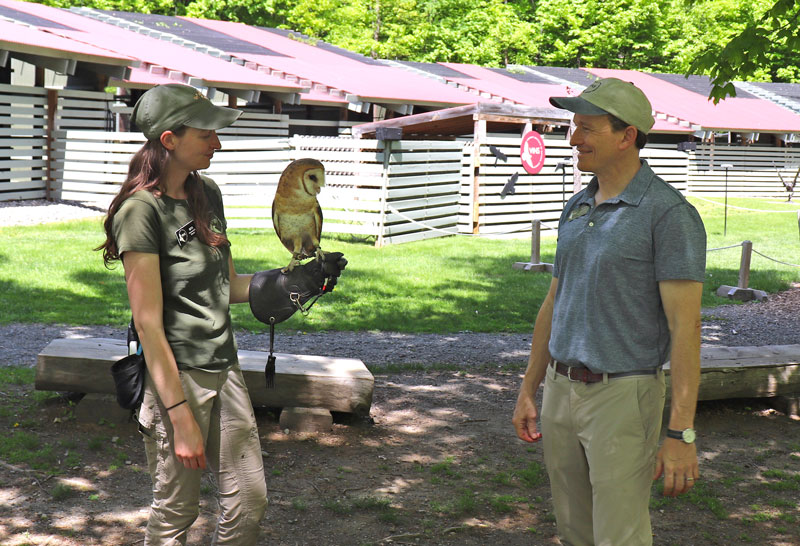
VINS executive director Alden Smith admires a barn owl perched on the arm of a handler.

VINS executive director Alden Smith admires a barn owl perched on the arm of a handler.

While Smith says the “walkable, bikeable access to community” was one of the highlights of his initial experience moving to Norwich, he also cited the connection to nature as part of the reason his family chose to make Norwich their home. He calls the slice of woods behind their home a “pocket of serenity.”

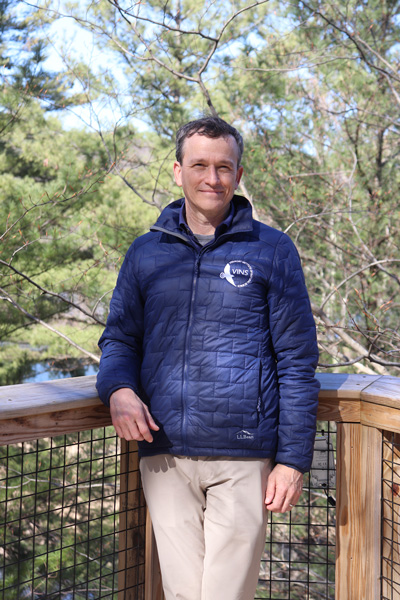
Norwich resident Alden Smith, the new Executive Director of the Vermont Institute of Natural Science.

Norwich resident Alden Smith, the new Executive
Director of the Vermont Institute of Natural Science.

“In some ways, it’s been surprising how many wild places exist down valley in Norwich, which I used to think of as a population center,” Smith says. While he misses the deep forests of Vershire, he’s finding that Norwich has more in common with his previous home than he had first thought. He and his family have been enjoying harvesting mushrooms, hiking, and biking in the woods so far over the past two years.

Smith also enjoys bow hunting, which has been one way that he’s gotten familiar with the woods of Norwich since moving here. He acknowledged that being a hunter might seem to be in tension with his conservation work at VINS, but he views his hunting as a conservation effort in itself: “While Norwich is diverse and healthy, an overpopulation of deer is not good for biodiversity.”

So, despite their extensive job search, the Smith family hoped a job opportunity would emerge in the Upper Valley. Smith’s position at VINS provided a perfect opportunity for them to stay in Norwich.

Smith has been settling in well as the new executive director of VINS, applying the nonprofit management skills he learned at the Mountain School – a semester program for juniors located on a farm with a focus on connecting to nature and to each other. He was drawn to VINS by its mission to inspire people to care for the natural world. Living and promoting this mission, he says, requires simply that he be the “most authentic version” of himself.

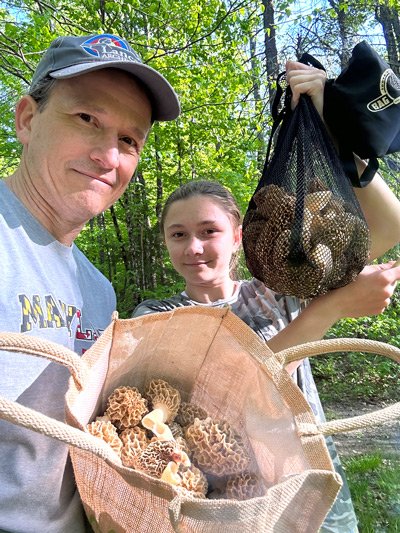
Alden and his daughter Ellicott harvest morel mushrooms in the Upper Valley woods

Alden and his daughter Ellicott harvest morel mushrooms in the
Upper Valley woods

He finds the work fun and restorative. “Even if I’m having a bad day in the office, I can go visit the snowy owls or climb the canopy tower and look out on the Ottauquechee River,” he explains. For Smith, VINS is an extraordinary place to work and learn, and he feels lucky to have found his “work home” there.

While his long-term goal is to expand the impact that VINS has in the community, Smith remarked that he’s taking it slow and learning from all that VINS has to offer. “Right now, we are launching a strategic planning process that taps into deep wisdom within the organization,” he says. The next steps that Smith envisions for VINS hearken back to its origin story: in 1970, VINS founders David and Sally Laughlin led an effort to clean up the then-polluted Ottauquechee River and continued their conservation efforts from there, resulting in the creation of VINS in 1972. “We’re really interested in circling back to that original vision, especially the ways that clean water connects and heals us,” Smith says.

Smith thinks of this story each time he climbs to the top of the canopy tower. “I look down at the Ottauquechee River, which is about two football fields away and 100 feet below, and I can see down through that clean river to the stones at the bottom,” he explains. Smith views this clarity of water both as a testament to the Laughlins’ vision and as a call to continue the effort to heal and protect the Upper Valley.

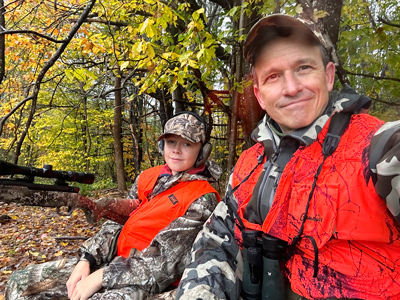
Alden and his son, Alden Hopkins, in the Norwich woods on Youth Hunting Weekend

Alden and his son, Alden Hopkins, in the Norwich woods on
Youth Hunting Weekend

So Smith’s priority is to apply the rich history of VINS to the needs of the present. “We give people an opportunity to see what is present but often invisible in nature,” he says. From locking eyes with a Golden Eagle to walking through the top of the tree canopy, visitors discover unique perspectives on the natural world. Smith hopes that the community is inspired by these experiences to take action and protect the environment. He acknowledges that VINS would not exist without the community. VINS is supported by a devoted group of volunteers, many of whom have been with VINS for decades, and the institute welcomes new volunteers every year. Local schools and camps visit VINS, giving them the opportunity to educate young people, and the nonprofit relies on funding from many people and organizations throughout the Upper Valley.

“We’re grateful at VINS to do the work we do, and to help the Upper Valley be a healthier place to live and learn,” Smith says.

Share:
Reading time: 5 min
All, Cover Story

A Life With Horses: The Princes’ Story

May 28, 2024 by Paul Foster No Comments
Toni Prince doing what she loves on her horse farm.

Sometimes it feels like things don’t change, until they do. Generations of children have grown up in Union Village, and many have enjoyed the routine of a walk to see the horses at the Gregory and Toni Prince’s farm. But this year – both at the age of 84 – the Princes decided to sell their farmhouse and land.

“In hindsight, we probably should have done this two or three years ago,” Gregory said. “All the chores and upkeep of the farm were proving too much for us.” Many times, in the middle of winter, in the snow, you would see Gregory out mending fences or moving manure with his tractor. He would always be so welcoming and friendly, though you could tell he must have been freezing. “Our grown children have been pushing us for a while to downsize,” he added.

The Princes’ homestead is an idyllic landmark that shouts “rural Vermont” and welcomes you to Union Village in Norwich. Since 1970, when Gregory and Toni Prince bought their horse farm, Toni has been teaching generations of local young people to ride.

Toni Prince doing what she loves on her horse farm.

Horses have always been a huge part of Toni’s life. She started teaching horseback riding at ten years old in her home state of Virginia. Toni ended up not finishing college; instead, she focused on building a very successful business as a riding instructor for youth. Many of her students over the years have gone on to win championships and compete at high levels in various competitions.

When the Princes recently sold their farmhouse and the land and paddocks to the family of a builder, he built them a very cute little house right next to their old one. It has panoramic views of the horse pastures and the cows up over the Connecticut river on Campbell Flats. It has a screened-in porch and will soon have an outdoor patio. The house is filled with Toni’s antiques and is like a mini version of the main house they just sold. The one missing element is a Golden Labrador. Over the years, Gregory and Toni have had several Labradors; they would wander out to the road as visitors walked by. The pair aren’t sure if they will get another dog, though it is hard to imagine the Princes without one.

Gregory and Toni Prince in their new home

I went to visit the Princes in their new home. I have known them for over forty years. Both of my daughters learned how to ride with Toni. My youngest daughter, Katie, said, “I have always thought she is such a kind woman and have been amazed by her dedication to her horses and to teaching children to love horses as she does. Her love for her horses is infectious and she grew a love for horses in me. She is someone I will always remember.”

When I arrived, they were sitting by a lovely fire in their new home. They appeared very comfortable in their new surroundings. There is a wonderful chemistry between the two – a real affection for each other. They are childhood sweethearts, after all.

When the Princes came to Norwich together in their early 20s, they had opened a new chapter in their lives on the farm. They’ve now been together for over 60 years, and as one chapter closes, another one opens. I asked them what led them to sell their farm but stay nearby. Toni was adamant that she was not going to go into senior housing; she wanted to “age in place”. They had sold two of the horses to the new owners of the farm, but were keeping two.

Gregory, on the other hand, felt that he would have been quite content to move into a senior living community. He is perhaps the more outgoing and social one of the couple, and he may have found the social opportunities of a senior home stimulating. Over the years, Gregory has been a facilitator, helping Toni with the farm and the horses. He’s not as passionate about horses as Toni, but as Toni’s riding business helped fund Gregory’s intellectual pursuits at Stanford and Yale, he shows his appreciation by being a real trooper – helping with a lot of the chores and standing by Toni’s side.

Gregory mentions a recent article he read about the problem of older Americans aging in large houses that they could no longer keep up. For the Princes, it was not so much the upkeep of the house, but all of the upkeep needed to keep the horse farm operational. 

Coco Yehle practicing her jumping at the Princes’ farm

One of Toni’s favorite hobbies is collecting antiques. She manages two booths, one in Quechee and one in Chester, Vermont. The old house was always full of beautiful antiques and many of them adorn the new house. “The [antique] business has really changed. So much of it is now online and some of the prices are outrageous,” Toni said. The basement of the new house is where Toni keeps her antique acquisitions.

Gregory has had a life in academia. He directed summer programs at Dartmouth College, was the president of Hampshire College, and published a book on education. He is still active as a Board member of a Charter School in Washington, D.C., and he holds some strong opinions on the profession of education and the lack of support for front line workers (worthy of another article).

I talked with the Princes about how Union Village has changed in the 54 years since they moved here. They told me about the old store in Union Village and the dance hall. There have been very few new buildings in the Village since– Bernie Benn’s house being the only one we could think of. “There have been decades when there were hardly any children in the Village. Now, this Halloween, as the Princes handed out goodies to the neighborhood children, they witnessed just how many youngsters live in the village – 11 and counting, said Toni.

Toni has touched the hearts and minds of hundreds of young children during her time teaching. Ella Swett, a Norwich resident and a freshman at Kimball Union Academy, has been a riding student of Toni’s since she was seven. Ella has been riding Adonis, who came to the Princes’ stables after a difficult life. I put Ella on the spot and asked her what she liked about Toni’s teaching style.

Ella Swett started riding with Toni Prince at age 7

“Well, I think Mrs. Prince teaches in a way that you suddenly realize what you have learned. It’s not really a trick but it’s not always immediately apparent what you are learning,” she said. “I think she commands respect and in turn gives it. She provides a safe environment in which to learn and grow – a home away from home. She definitely inspires us and she is one of the people I most admire in the world. She has high expectations of us that push us to learn and grow.”

Ella thinks that horses will probably be in her future life in some capacity. She doesn’t think she will compete, but she has a love of working with rescue horses and gaining their trust and confidence.

Coco Yehle is the 12-year-old daughter of the family moving into the Princes’ house and farm. Her father built the Princes’ new home and plans to remodel the old farmhouse.

“I’ll wake up every morning and be able to look out and see the horses,” Coco said with excitement. Coco’s mother, Crystal Piffath, will be co-teaching with Toni. Coco has no concerns about the transition; she loves taking care of the horses working with Toni who gives her great advice. Coco loves jumping and has a goal to compete in the Olympics, and she would also love to own a breeding and lesson farm someday.

There is no doubt that Toni Prince has had a profound impact on these two young ladies and all of her riding students over the years.

Ella with her favorite horse, Adonis

As a new chapter unfolds for the Princes, Gregory acknowledges that it’s a little scary. Touch wood, they are both relatively healthy. Gregory was acutely ill a few years ago and had the good fortune to be able to use the services of the local emergency squad and the community nurse. Toni has had some joint replacements and broke her foot. As more elderly Vermonters decide to “age in place”, vital services like a community nurse, community transportation, and care services are important resources to lean on. Toni and Gregory are still able to drive, and they have the love and support of friends and their two grown children. And, when they look out the windows of their new home, the Princes will still see their four legged friends in the paddocks just over yonder.

Share:
Reading time: 7 min
All, Cover Story

Contra Dancing Culture in Norwich Continues Following a Caller’s Passing

by Gwynn Lyons No Comments
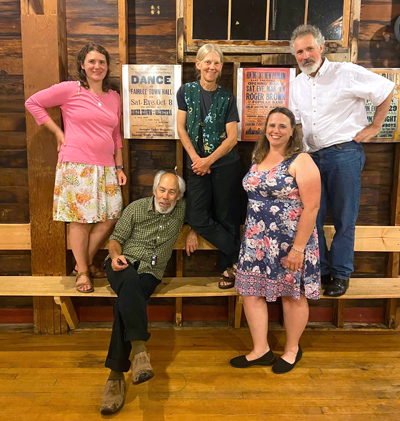
Blind Squirrel, featuring Upper Valley musicians Bill Shepard, Erin Smith, and Steve Hoffman (fiddle); Suzanne Long (fiddle and cello); and Chip Hedler (guitar).

On many a Saturday night at Tracy Hall, dancers can be found moving to one of the Upper Valley region’s several contradance bands. Joined by a “caller” who choreographs the dancers, the bands invoke a variety of musical traditions, from Appalachian and Celtic to old English and French Canadian.

One man who contributed significantly to the Norwich contradance scene was the late Chip Hedler. Chip was the guitarist for the band Blind Squirrel, which regularly performed in Norwich. Alongside one of his bandmates, Erin Smith, he was also a member of the Norwich Dance Committee, a small group that works together to plan community dances throughout the year.

Performing with the band Blind Squirrel, Chip Hedler embodied the
essence of the Upper Valley’s contradance community: openness,
enthusiasm, and generosity of spirit.

Performing with the band Blind Squirrel, Chip Hedler
embodied the essence of the Upper Valley’s contradance
community: openness, enthusiasm, and generosity of spirit.

The group got together in 2015, when two of the local contradance bands that had been going for years – Northern Spy and Cuckoo’s Nest – decided to stop undertaking the organizing of the events by themselves.

The idea was, “if you want [the dances] to continue, you have to participate and be willing to step up and take a leadership role,” Erin said. “I think everybody had been coasting along and enjoying letting someone else do it, so there was a learning curve figuring out how to run it.”

Chip was ready to take up the challenge. As part of his duties, he maintained the Dance Committee’s website, made posters, and booked talent for dances. He also helped plan the summer series at East Thetford’s Pavilion.

“Chip was crucial to keeping things going,” Erin said. “He [was] part of the committee since it started and he [was] just always willing to step up and do things when needed, [was] really supportive of new dancers when they come, and eager to be a better musician.”

One of Blind Squirrel’s last dances with Chip was in February. Erin remembers a humorous moment Chip had with a vibraslap – a percussion instrument commonly found in Latin music. Chip was stomping his foot right next to a music stand that the vibraslap was balanced on. He accidentally toppled the music stand and the vibraslap fell over and sounded off, causing the whole room to turn and look to see what happened. Everyone in the band was laughing, but they had to keep playing – the show had to go on!

Calling Contra Dances in Norwich & Beyond

Chip also was a dedicated caller who would travel far and wide to call for contra dances in New England. The week before his death in March, Chip and former Blind Squirrel bandmate, Steve Hoffman, went to the Saint Patrick’s Day gathering in Littleton, New Hampshire.

Steve recalled, “He would go just about anywhere to call a dance.” He credited Chip’s professional background as a teacher with his ability to engage audiences. “Being a teacher, I think he had a good sense for that.” Chip taught elementary and middle school in the Danville area at some of the last one-room schoolhouses in Vermont.

Veteran caller David Millstone has over 30 years of experience performing in the band Northern Spy that regularly played in Norwich. He says callers need to be well-rounded, sensitive and responsive, and good communicators. They “need to be able to read a crowd, knowing when to introduce simple, basic figures, and when they can introduce a little more complexity or challenge into an evening,” he wrote in an email to the Norwich Times.

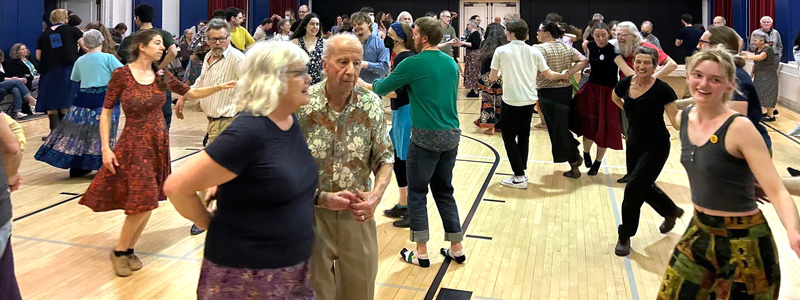
Dancers take to the floor at Tracy Hall during a contra dance in February.

Dancers take to the floor at Tracy Hall during a contra dance in February.

What David most enjoys about calling was “the sense of helping create an enjoyable evening for everyone by picking the right dances for that particular group of people, working closely with the band to find the right mix of tunes and letting them sound their best, choreographing the evening so that everyone goes away having had a good time,” he said.

Chip excelled at setting the mood for dances. He “[helped] everyone feel comfortable and relaxed, whether they be new dancers or new musicians…he was a welcoming and supportive presence,” David added.

The History of Contra dance in the UV

Beyond Blind Squirrel, numerous contra dance bands have graced the Upper Valley region since the resurgence of the art form in the early 70s, including Northern Spy, Cuckoo’s Nest, Smash the Windows, and Dr. Ruth and the Pleasure Seekers.

Blind Squirrel

Blind Squirrel

According to David, renowned caller Dudley Laufman re-launched the dance genre locally, in South Strafford’s Barrett Hall. A new band, Smash the Windows, emerged in the late 70s, holding monthly dances in Lyme, then in Lebanon and Cornish.

Northern Spy, David’s band, first performed in Lebanon, then Etna, before settling at Norwich’s Tracy Hall. At the early dances, sometimes the band members would outnumber the dancers, but by the late 80s, attendance at Tracy Hall contra dances numbered up to 200.

“The popularity waxed and waned, and by the 20-teens, when a committee took responsibility for organizing the Norwich dances…attendance had fallen below 50,” David added. The coronavirus made dancing impossible for a while, but “the Norwich dance now is on the rise with many new, younger dancers discovering this healthy and friendly activity and bringing their friends.”

Looking to the Future

Since the retirement of Northern Spy and Cuckoo’s Nest, the Norwich Dance Committee has been able to engage other regional bands and provide more variety for dancers with different styles of music. Blind Squirrel is looking to restart by finding a new guitar player. “That’s what [Chip] would have wanted,” said Erin.

Elfie Forbes, a long-time contra dancer and Norwich resident, is grateful for the continued efforts of the committee. “I’m glad [dancing] keeps going here,” she said. For her, dancing helps build an in-person community in a world that feels fractured and disconnected, and it’s a great way to meet people. Elfie’s late partner, Ruth Sylvester, was a caller at Norwich dances for many years.

Chip at one of his last dances in New London before his passing in March.

Chip at one of his last dances in New London before his
passing in March.

Contra dancing is fun for the musicians, too. “It’s a great feeling” to provide the music for the dancers, Steve said. The pressure is off because “you’re there playing in front of people, but you’re not performing. The people dancing are so focused on the caller, so we’re playing for ourselves and the dancers.”

That ethic of service was certainly evident in the way Chip supported his bandmates and his community. He’ll be remembered for his generosity, caring nature, dedication, and humility by those who continue to be connected to the contra dance tradition and beyond.

Share:
Reading time: 5 min
All, History

A Look Back

by David Callaway No Comments

“Time is a jet plane; it moves too fast.” – Bob Dylan

I started writing historical articles for the Norwich Times in the summer of 2015. After 33 journeys into Norwich history, it’s time to pass the computer, the pen, or maybe the quill onto another chronicler. Before I sign off, I’d like to revisit a few of those intriguing people, places, and events in Norwich’s history that have made their way into print. To spice things up, I’ve included a review question at the end of each passage. Answers will be at the end of the article.

Wartime Celebration in Norwich

July 4, 1944

Let’s start with a softball question: What event happened in Norwich on July 4, 1944, that drew over 400 people? The gathering opened with a rendition of “God Bless America” with Fred Metcalf accompanying on his organ. A ribbon was cut, and folks enjoyed grilled burgers and hot dogs cooked on stone fireplaces built by Ernest Fitzgerald and Dan Fraser. Kids and adults participated in races and contests. Bill Aldrich, a lifetime Norwich resident, was a small boy at the event and remembered one game that “involved drinking a Coke out of a baby bottle, and the quickest to empty was the winner.” The celebration closed with “The Star Spangled Banner.” Need a hint? Visit the Norwich Town Hall and check out the Paul Sample painting in the clerk’s office.

1. Why was there a celebration in Norwich on July 4, 1944?

  1. Celebrating the success of the D-Day invasion
  2. The opening of the town pool
  3. Birthday gala for long-time Norwich resident Verne Lundquist

Town Reports

There’s no better way to understand the history and character of Norwich than by thumbing through the town reports, which first appeared before Town Meeting Day in 1778. By the late nineteenth century, the reports covered the town’s financial health to the last penny. They explained how the village educated its children, treated its poverty-stricken citizens, and supported its local institutions year after year. Here is a question from one town report:

2. On November 13, 1963, President Kennedy signed a bill that created what landmark development?

  1. The first interstate school district in the nation, joining Norwich and Hanover
  2. The building of Interstate 91
  3. Property taxes could not be based on home value

To Save the Union

During the Civil War, 178 Norwich men, out of a population of 1,759, joined the Union Army and Navy. In September 1861, a farm worker from Norwich joined the military after he received a $100 bounty for his patriotism. This young Vermonter fought in 18 major battles, including Gettysburg and Antietam. The soldier was wounded near the end of his enlistment and sent home, where he ran a farm on Turnpike Road, married, and helped raise five children. He is buried beneath a large family tombstone in Hillside Cemetery.

3. Who was this Civil War soldier?

  1. Eldred Huff  
  2. Asa Fix
  3. Gomer Pyle 
  4. Ransom Slack

Big Business on the River

In the later part of the nineteenth century, Pattersonville, a bustling hamlet, was established on the northern edge of Norwich along the Ompompanoosuc River. Between 1872 and 1910, L. S. Patterson developed a company that was Norwich’s largest and most prosperous. The products made in Pattersonville were shipped to St. Johnsbury and Burlington and dealers in Boston, New York, Baltimore, and Philadelphia.

4. What was made in Pattersonville?

  1. Musical instruments
  2. Furniture
  3. Lumber for new homes 

Crossing the River

Since 1804, there have been six bridges across the Connecticut River between Hanover and Norwich. The first span was a toll bridge. Every walker paid two cents, and a horse and rider cost five cents. In 1859, a third bridge was constructed, covered, and free to cross. It survived a flood in 1869 and stood up to the historic 1927 flood. During the log drives in the 1890s, “logs used to jam up so badly against the old stone pier that they had to be dynamited to effect their release – but the old bridge stood.” Goods bound for Hanover were shipped to the Lewiston train station in Norwich and carted across the bridge. Many Dartmouth first-year students were dropped off at the station and “walked through the covered bridge and up the hill to view the Hanover plain for the first time.” The covered bridge lasted until 1935; today’s bridge, completed in 1999, cost $11.2 million.

5. The current Ledyard Bridge was subject to a heated debate regarding…

  1. Its lack of a proper bike path
  2. The decorative stone balls along the bridge
  3. Should the bridge be renamed after then-President Clinton

The Concrete Octopus

The Concrete Octopus

In 1964, Interstate 91, the new superhighway, approached Norwich. The state of Vermont announced its intention to build two on-ramps and two exit ramps at the shortest and most direct route between Norwich and Hanover. The proposed interstate did not sit well with the community and set off a four-year battle that included letters to the editor, petitions, and town votes. Some citizens were upset about the destruction of the hamlet of Lewiston, a small group of homes and stores on the Vermont side of the Ledyard Bridge. In contrast, others welcomed the opportunity to enjoy the benefits of a modern transportation system.

6. During the discussion about where to locate the I-91 interchange, several alternatives were suggested. Were they to:

  1. Shift the interchange to the Loveland district two miles north of the Ledyard Bridge and build a new bridge
  2. Set the interchange in the general vicinity of where Willing Hands is located today
  3. Both a & b

Skiing in Norwich: From Rope Tow to the Olympics

Flying at Sample’s Jump

What’s the magic behind Norwich and its Olympic skiers? Are ski jumping classes a requirement at the Marion Cross School? Or is there a magic elixir in the town’s maple syrup? What else could explain the abundance of Olympic athletes from this Vermont town in the last 70 years? In the late 1940s, the Ford Sayre ski program, which originated in Hanover, got rolling in Norwich on the south side of Cemetery Hill with a rope tow. The area, Altow, was named after the first owner, Al Peavy (get it?: Al’s Tow). Near Altow, off of Hopson Road, a 25-meter ski jump was created in the 1950s. It was called Sample’s Hill after the Dartmouth artist-in-residence, Paul Sample, who lived nearby. “Ski jumping was viewed as an extreme sport when the hill opened,” said Buff McLaughry, who grew up in Norwich. “Spectators flocked from all over to watch us sail through the air for jumps of even 50 feet.” Norwich has produced 11 Winter Olympians, highlighted most recently by Hannah Kearney, who brought home a gold medal from the 2010 Vancouver Olympics, where she won the women’s moguls event.

7. Which Norwich skier won the silver medal in the 1960 Olympics women’s slalom at Squaw Valley, California?

  1. Picabo Street
  2. Penny Pitou
  3. Betsy Snite

A Rare Norwich Gem 

Ruby Fitzgerald, “A gem from Norwich”

In the 1940 Norwich census, farmer, lawyer, doctor, and professor were all positions held by men. Women were listed primarily as housewives. That made Norwich’s Ruby Fitzgerald, who worked at the New England Telephone and Telegraph Company for 48 years, a pioneer. Born in 1902, Ruby grew up in a 21-room home on the corner of Hazen and Main Streets. In 1909, the Fitzgeralds operated the first telephone exchange in Norwich. When Ruby was 17, inspired by her experience with the family exchange, she joined New England Telephone in White River Junction. In 1928, she became a junior switchboard supervisor; in 1933, the company promoted Ruby to senior supervisor. Ruby’s final promotion came in 1946 when she became the chief operator. She hired new operators in this position, led visiting dignitaries on exchange tours, and spoke to civic groups. In a 1955 White River Junction Rotary Club presentation, Ruby predicted that “a dial system would be introduced here between 1956 and 1957.” It arrived in 1961. In 1967, Ruby, who turned 65 that year, retired from the telephone company. Ever the groundbreaker, Ruby left with a flourish, with awards and a testimonial dinner before 200 people at Lebanon’s Landers Restaurant.

8. Ruby’s nickname was:

  1. Mrs. Ding A Ling
  2. Mrs. Bel of Tel. And Tel.
  3. Mrs. Number Please

Norwich’s Mayor

Al Foley, the Honorary Mayor of Norwich

By many accounts, Allen Foley was Norwich’s grandest storyteller and one of its finest public servants. Born in 1898, Allen attended Dartmouth, earned a master’s degree in history, and returned to Dartmouth, where he taught history for over three decades. Al had a home on McKenna Road and, in 1956, became Norwich’s town moderator, a post he held for 20 years. In 1963, as a thank you for his years of service, he was named “Honorary Mayor.” He said his duties as mayor consisted of riding in a convertible during the Norwich Parade each summer.

In 1964, Al retired from Dartmouth and increased his civic responsibilities. He represented Norwich in the Vermont legislature for five terms and was the town moderator until 1975 when he began his subsequent career as an after-dinner speaker. His stories poked fun at people who ventured into Vermont from out of state. For example, one told of a visitor from Massachusetts who drove to Vermont and came to a fork in the road with signs pointing in both directions to White River Junction. He asked a Vermonter walking on the road: “Does it make any difference which road I take to White River?” and received the reply: “Not to me, it don’t.”

Allen died in 1978. A colleague from the legislature wrote, “We shall miss Al Foley, his humor, his caring, his demonstrated belief in good government, his love of people and conversation, his mastery of the Yankee put-down. His was the ultimate gift, to make life more bearable for others.”

 9. Al Foley was a lifelong bachelor and rarely ate at home. He enjoyed most of his meals at:

  1. Umpleby’s and Ramunto’s
  2. Molly’s and the Hanover Inn
  3. Lou’s and the Norwich Inn

Bonus Question

Where is one of the most beautiful places on the shores of the Connecticut River to enjoy a summer afternoon?

Answer: Foley Park. Dedicated to Allen Foley’s memory, the park lies on the southwestern side of the Ledyard Bridge. In addition to its beauty, the park is a historical landmark. In 1765, the Messenger and Hutchinson families built a log hut on the site, becoming the first pioneer families to winter in Norwich.

Adirondack chairs allow you to sit and watch ducks feed or canoes skim across the water. As you gaze down the river, you can almost imagine those first families slowly paddling upstream. The older gentleman standing nearby and looking downstream may be me scanning the river with you.          

I hope you have enjoyed reading these articles as much as I have enjoyed writing them. A big thank you goes to my research mentors at the Norwich Historical Society: Sarah Rooker, Nancy Osgood, and Judy Brown. A final shout-out goes to Alan Berolzheimer, whose close reads and edits consistently improved my articles.

Quiz Answers

Ski Altow

1. b) The opening of the town pool

2. a) The first interstate school district

in the nation, joining Norwich and

Hanover.

3. d) Ransom Slack

4. b) Furniture

5. b) The decorative stone balls along

the bridge

6. c) Both a & b

7. c) Betsy Snite

8. b) Mrs. Bel of Tel. And Tel. 9. c) Lou’s and The Norwich Inn

Learn more:  info@norwichhistory.org

Story ideas: editor@norwichtimes.com

To contribute articles: editor@norwichtimes.com

Share:
Reading time: 9 min
All, Elder Profile

Rosamond Orford: A Photographer’s Story of Water, Land, and Color

May 27, 2024 by Paul Foster No Comments
Rosamond at her studio in Norwich

Rosamond Orford, a Brit by birth, has been living in Norwich for quite some time. First, living down by where the Ompompanoosuc runs into the Connecticut River, and then moving to a quaint farmhouse on Union Village Road. At her farmhouse, Rosamond has a lovely studio where she has many of her framed photographs on display. People occasionally come by to browse and buy a print.

Rosamond grew up in the southern part of England. “I started taking photographs at the age of 11 when my parents gave me a Kodak Bellows camera,” she said. “I floundered a little in finding a suitable post-secondary path.” But luck prevailed, and she had the opportunity to travel to the United States with a friend. She went to Wyoming and then to Aspen, Colorado, where her interest in photography took off.

Camel Fair, Pushkar, India
Sunrays, Norwich, VT
Water Swirls, Ompompanoosuc River, VT
Evensong, Connecticut River, VT
Harbourside, Cinque Terre, Italy

“I became a more serious photographer after taking a course with David and Cheri Hiser in Aspen, which opened my eyes to the fact that abstract ideas and emotions could be communicated by a photograph,” Rosamond said. “There is an old Eastern saying: ‘When the pupil is ready, the teacher will come’.” Rosamond decided to stay in the United States. She got married and moved to the Upper Valley where her husband got a job as an English teacher at Hanover High School. Rosamond loves the Upper Valley, but she would have liked to have spent more time in the West where she enjoyed the vast landscapes.

Rosamond has a particular love of taking pictures of water and capturing the variety of patterns the light makes on the water. She has had the good fortune to travel – Cuba, India, Morocco, Kenya, Nepal are some of the places she’s visited over the years. She has wonderful photos of these places in her studio.

Rosamond started a publishing company called Upcountry Publishing. She published calendars and then postcards and note cards. Then she published her first book: Water Colours – Photographs by Rosamond Orford. It is a collection of her photographs (you can buy the book directly from her or online).

Rosamond made the transition from dark rooms to digital fairly painlessly. She is somewhat of a purist. She doesn’t like to use filters and enhancers to digitally modify photographs. For her, “the seeing is the important piece,” she said. “Creativity is in the perception.” Along her creative journey, Rosamond started to paint in watercolor. Some of her water colors adorn her living room.

Rosamond’s family owns a house in the Lake District in North West England, so it is easy for her to return to her homeland when she wants to. It is a mountainous region with many lakes and beautiful vistas – an ideal place for a photographer that loves water and landscapes.    

In addition to being an artist, Rosamond also has a history of being a community activist. She and some community members were strongly opposed to a water development on the Ompompanoosuc River that would have reduced the flow in the river and diminish the beauty of its several waterfalls. The group fought hard, involving legislators, and finally won a settlement that allows the river to flow naturally. Her commitment “to fight for the river” illustrates how Rosamond loves the flow of the river with its patterns and reflections.

Rosamond’s character has not been affected at all by her success. She is someone you would meet in the pub or on a ramble. She is down to earth and quintessentially British. Sadly, some of her work was destroyed in a house fire several years ago. But her living room and studio are adorned with beautiful framed photographic prints and watercolors. Occasionally, someone will show up to look at the artwork and maybe buy a piece. 

Rosamond Orford

At 84, Rosamond is slowing down a bit. Unfortunately, she inherited her father’s arthritis. But her passion for seeing beautiful scenes and capturing them is still strong. The essence of her work is “seeing” and then capturing it on film or in a painting. She doesn’t need all the “bells and whistles” of modern photography. Rosamond has a message for all of us: we need to open our eyes to the beauty around us. It can become a way of life.

Rosamond is very proud of her work. I think if you call ahead, she would be very happy to invite you into her studio.

All the photographs shown in this article are copyrighted by Rosamond Orford and may not be used without permission.

Share:
Reading time: 3 min
All, Cover Story

From Norwich to New Orleans

March 18, 2024 by Gwynn Lyons No Comments
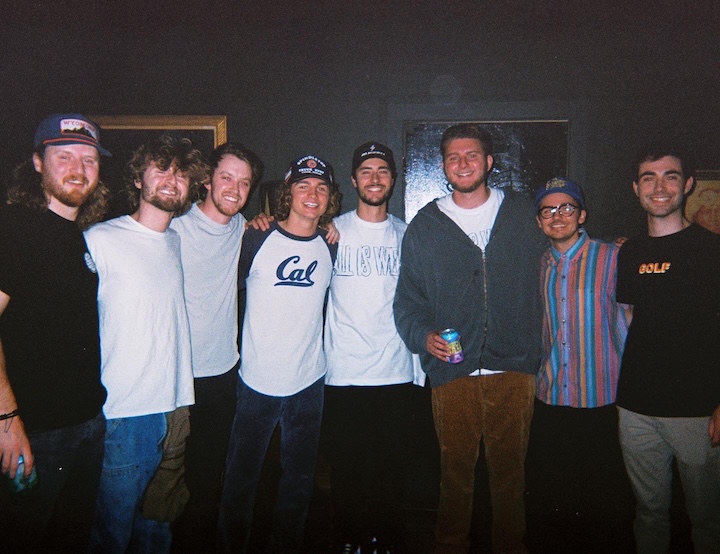
From Norwich to New Orleans - people standing in a line with arms around each other smiling

Following the Journey of a Young Musician With Upper Valley Roots

From performing in assembly at Marion Cross School to racking up more than a million monthly listeners on Spotify, Hans Williams’ musical career has grown steadily as he has developed his sound. Now based in New Orleans, the Norwich native sat down with The Norwich Times to discuss his roots, his journey, and his aspirations.

Music as an emotional outlet

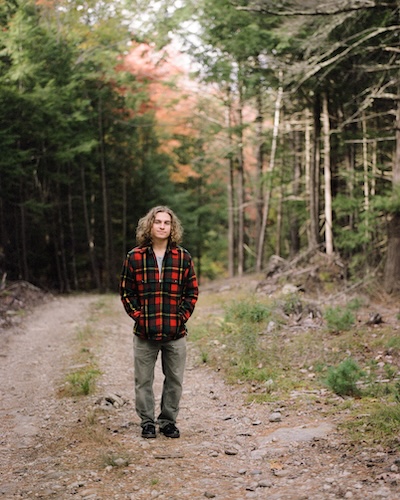
From Norwich to New Orleans - man standing on dirt road with hands in pockets
Hans Williams

For singer-songwriter Hans Williams, music goes beyond mere lyrics, melody, and harmony; it’s also a vehicle for self-expression. He writes music to share himself and connect with others. Williams’ emotional vulnerability is front and center in tracks like “Body On My Shoulders,” which he wrote after being a first responder to his floormate’s suicide while attending college at Tulane University.“ I use my music as an emotional outlet,” Williams said. And to good effect: “I’ve been really lucky to have people that have gravitated towards it and used it for the same purpose in the last five or six years.”

Distributing his music online has allowed Williams to reach people all around the world; on Spotify, his listeners hail from 183 different countries. As an independent musician – one that has not signed with a label – Williams is able to retain greater control over his music. Revenue from digital streams and shows gives him the means to continue creating music without having to compromise on his vision and voice.

Beginnings

Williams’ musical career can be traced all the way back to elementary school. In third grade, he had a brief stint as a rapper, going by the name “Young Freezeman” and distributing CDs of his rap tapes. He also performed at regularly held school assemblies in front of his peers and teachers at Marion Cross School in Norwich. The process of recording music piqued his interest in doing more than just live performances.

At home, Williams listened to his dad’s favorite funk artists, like Parliament Funkadelic, the Ohio Players, James Brown, Tower of Power, and Al Greene. Later on, he became interested in his mom’s favorites, singer-songwriter artists like Norah Jones, Tracy Chapman, and the Chicks. Williams’ music has become increasingly soulful as his unique sound has evolved over time, while staying true to its folk roots.

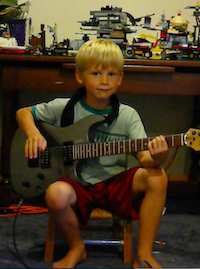
Though primarily a vocalist now, the first instrument Williams’ learned to play was the guitar. He began taking lessons during his childhood from Tuck Stocking of Tuck’s Rock Dojo in Etna.

From Norwich to New Orleans - young boy sitting down with guitar in hand
Hans Williams learning to play the guitar at age 10.

“When I had my first lesson with Tuck, I was 10,” Williams said. “Tuck recently told me, he talked to my dad after [that] lesson and told him, ‘Hans has got a lot of passion, but he has no clue what he’s doing on the guitar’,” he laughed.

As it turns out, Williams’ relationship with Tuck ended up being the foundation of his budding music career. At Tuck’s Rock Dojo, Williams participated in local bands that Tuck facilitated and had the opportunity to create music in his studio. According to Williams, Tuck’s Rock Dojo is the premier outlet for playing alternative music in the Upper Valley.

“You could come in there with almost no experience and find a way to add something,” he said.“ Going in there and toying around was a big part of exploring what I wanted to do with music.”

Coming into his own

Williams enjoyed playing music in school, too, and got support from Ms. Keck of Marion Cross School and Ms. Chambers of Hanover High School. He performed in chorus, acapella groups, and the jazz band. Yet, he found studying music in school to be a bit limiting.

“Oftentimes, there’s not a lot of room for exploration,” Williams explained. He continued to seek out performance opportunities outside of school, playing in a band called “Unstable Elements” and later performing on the Norwich green during the Fair as a high school junior, and at Blue Sparrow Kitchen as a senior.

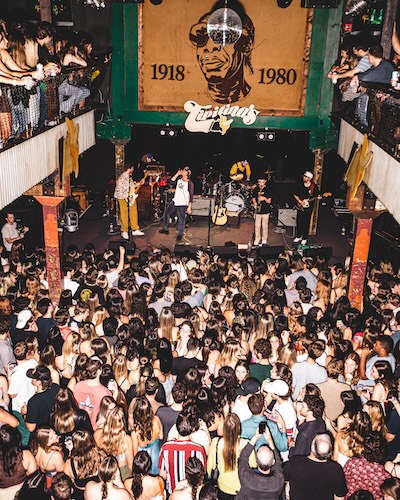
After departing for college at Tulane University in 2019, Williams began seeking out solo gigs and performed in venues around New Orleans, building his audience and his musicianship over time. He ultimately recruited a band, with whom he went on tour across New England this past summer.

From Norwich to New Orleans - concert with band on stage and crowd in front of stage
Hans Williams (second from left) and band performing at Tipitina’s in New Orleans.

“I’ve had slow, steady growth personally and creatively as an artist,” Williams said, reflecting on his career. “Having a band who can push me more from an instrumental standpoint has made me realize that there’s a lot more that I can do than having four-chord, singer-songwriter songs,” he added.

Now that he has graduated from college, Williams is immersing himself in the New Orleans music scene and finding inspiration all around the City.

“I run into so many more influences than I did when I was in school,” he said. “It gets me so excited.” As a young artist, he’s soaking up everything he can from the experience.

“I’m nowhere near wanting to settle down creatively; there’s a lot more to explore,” he added. “The more I can push myself outside of my folk/singer-songwriter comfort zone, the better.”

Norwich leaves its mark

Williams’ music pays homage to being raised in Norwich, and the influence it’s had on his life and in his musical career today. His newest project, which will be released in the spring, is called “More Than One Way Home” and explores themes of nostalgia, childhood, and homecoming.“

Growing up here gave me a good sense of what community should feel like,” Williams said. “It feels so ideal in so many ways. I didn’t really appreciate how supportive and sheltered this community was until I left.”

Williams is one of a growing number of acclaimed musicians who have come from the Upper Valley, including Noah Kahan, Brooks Hubbard, and Phin Choukas. The rise of digital music and digital means of distribution make it easier than ever for musicians from rural areas to find success – and to become role models for local kids who dream big.

More than one way home

Nowadays, Williams spends his time in New Orleans working at a studio as a handyman, where he gets to sit in on recording sessions with brass bands and funk groups. He hopes to nurture more collaborations and sing with another group in a seven or eight-piece band.

This spring, Williams plans to release his first EP and go on a nationwide tour to nearly every major U.S. city with a few stops in Canada. He looks forward to meeting his listeners.

Even though Williams has been approached by major labels at recording companies, he says he isn’t ready to sign just yet – it’s a big gamble, and a lot of pressure to make money. “Someday we’ll find a partner that shares our vision and is willing to give us a good deal,” Williams said. Until then, he’s more than happy to continue to be an independent musician.

All in all, Williams said, “Making music into a career has been a privilege.”

Share:
Reading time: 5 min
Page 5 of 21« First...«4567»1020...Last »

Our Latest Issue

Fall 2026 Edition

© 2024 copyright Greater Good Media. All rights reserved.