Home
About Norwich
Our Team
Content
    All Articles
    Cover Story
    Animals Rule!
    Around Town
    Artist Profile
    Creating Community
    Elder Profile
    Green Page
    Goodness InDeed
    History
    Life at 531 Feet
    Meet your Neighbor
    School Days
    Your Green Spaces
Our Sponsors
Advertise
Archives
Contact Us

Norwich Times - Good People, Good Places, Good Things Happening
  • Home
  • About Norwich
  • Our Team
  • Content
    • All Articles
    • Cover Story
    • Animals Rule!
    • Around Town
    • Artist Profile
    • Creating Community
    • Elder Profile
    • Green Page
    • Goodness InDeed
    • History
    • Life at 531 Feet
    • Meet your Neighbor
    • School Days
    • Your Green Spaces
  • Our Sponsors
  • Advertise
  • Archives
  • Contact Us
All, Cover Story

From Norwich to New Orleans

March 18, 2024 by Gwynn Lyons No Comments
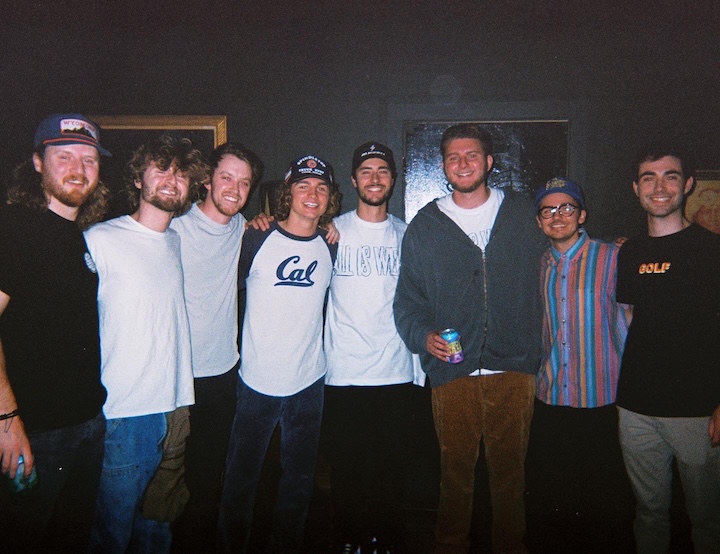
From Norwich to New Orleans - people standing in a line with arms around each other smiling

Following the Journey of a Young Musician With Upper Valley Roots

From performing in assembly at Marion Cross School to racking up more than a million monthly listeners on Spotify, Hans Williams’ musical career has grown steadily as he has developed his sound. Now based in New Orleans, the Norwich native sat down with The Norwich Times to discuss his roots, his journey, and his aspirations.

Music as an emotional outlet

From Norwich to New Orleans - man standing on dirt road with hands in pockets
Hans Williams

For singer-songwriter Hans Williams, music goes beyond mere lyrics, melody, and harmony; it’s also a vehicle for self-expression. He writes music to share himself and connect with others. Williams’ emotional vulnerability is front and center in tracks like “Body On My Shoulders,” which he wrote after being a first responder to his floormate’s suicide while attending college at Tulane University.“ I use my music as an emotional outlet,” Williams said. And to good effect: “I’ve been really lucky to have people that have gravitated towards it and used it for the same purpose in the last five or six years.”

Distributing his music online has allowed Williams to reach people all around the world; on Spotify, his listeners hail from 183 different countries. As an independent musician – one that has not signed with a label – Williams is able to retain greater control over his music. Revenue from digital streams and shows gives him the means to continue creating music without having to compromise on his vision and voice.

Beginnings

Williams’ musical career can be traced all the way back to elementary school. In third grade, he had a brief stint as a rapper, going by the name “Young Freezeman” and distributing CDs of his rap tapes. He also performed at regularly held school assemblies in front of his peers and teachers at Marion Cross School in Norwich. The process of recording music piqued his interest in doing more than just live performances.

At home, Williams listened to his dad’s favorite funk artists, like Parliament Funkadelic, the Ohio Players, James Brown, Tower of Power, and Al Greene. Later on, he became interested in his mom’s favorites, singer-songwriter artists like Norah Jones, Tracy Chapman, and the Chicks. Williams’ music has become increasingly soulful as his unique sound has evolved over time, while staying true to its folk roots.

Though primarily a vocalist now, the first instrument Williams’ learned to play was the guitar. He began taking lessons during his childhood from Tuck Stocking of Tuck’s Rock Dojo in Etna.

From Norwich to New Orleans - young boy sitting down with guitar in hand
Hans Williams learning to play the guitar at age 10.

“When I had my first lesson with Tuck, I was 10,” Williams said. “Tuck recently told me, he talked to my dad after [that] lesson and told him, ‘Hans has got a lot of passion, but he has no clue what he’s doing on the guitar’,” he laughed.

As it turns out, Williams’ relationship with Tuck ended up being the foundation of his budding music career. At Tuck’s Rock Dojo, Williams participated in local bands that Tuck facilitated and had the opportunity to create music in his studio. According to Williams, Tuck’s Rock Dojo is the premier outlet for playing alternative music in the Upper Valley.

“You could come in there with almost no experience and find a way to add something,” he said.“ Going in there and toying around was a big part of exploring what I wanted to do with music.”

Coming into his own

Williams enjoyed playing music in school, too, and got support from Ms. Keck of Marion Cross School and Ms. Chambers of Hanover High School. He performed in chorus, acapella groups, and the jazz band. Yet, he found studying music in school to be a bit limiting.

“Oftentimes, there’s not a lot of room for exploration,” Williams explained. He continued to seek out performance opportunities outside of school, playing in a band called “Unstable Elements” and later performing on the Norwich green during the Fair as a high school junior, and at Blue Sparrow Kitchen as a senior.

After departing for college at Tulane University in 2019, Williams began seeking out solo gigs and performed in venues around New Orleans, building his audience and his musicianship over time. He ultimately recruited a band, with whom he went on tour across New England this past summer.
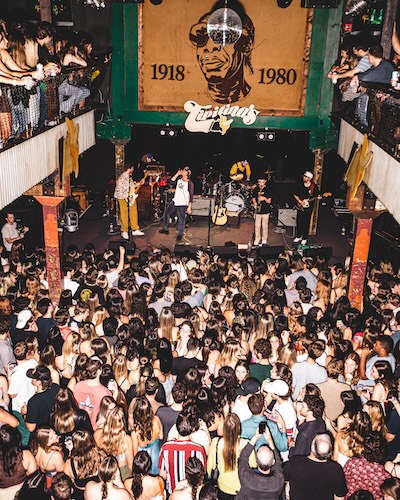
From Norwich to New Orleans - concert with band on stage and crowd in front of stage
Hans Williams (second from left) and band performing at Tipitina’s in New Orleans.

“I’ve had slow, steady growth personally and creatively as an artist,” Williams said, reflecting on his career. “Having a band who can push me more from an instrumental standpoint has made me realize that there’s a lot more that I can do than having four-chord, singer-songwriter songs,” he added.

Now that he has graduated from college, Williams is immersing himself in the New Orleans music scene and finding inspiration all around the City.

“I run into so many more influences than I did when I was in school,” he said. “It gets me so excited.” As a young artist, he’s soaking up everything he can from the experience.

“I’m nowhere near wanting to settle down creatively; there’s a lot more to explore,” he added. “The more I can push myself outside of my folk/singer-songwriter comfort zone, the better.”

Norwich leaves its mark

Williams’ music pays homage to being raised in Norwich, and the influence it’s had on his life and in his musical career today. His newest project, which will be released in the spring, is called “More Than One Way Home” and explores themes of nostalgia, childhood, and homecoming.“

Growing up here gave me a good sense of what community should feel like,” Williams said. “It feels so ideal in so many ways. I didn’t really appreciate how supportive and sheltered this community was until I left.”

Williams is one of a growing number of acclaimed musicians who have come from the Upper Valley, including Noah Kahan, Brooks Hubbard, and Phin Choukas. The rise of digital music and digital means of distribution make it easier than ever for musicians from rural areas to find success – and to become role models for local kids who dream big.

More than one way home

Nowadays, Williams spends his time in New Orleans working at a studio as a handyman, where he gets to sit in on recording sessions with brass bands and funk groups. He hopes to nurture more collaborations and sing with another group in a seven or eight-piece band.

This spring, Williams plans to release his first EP and go on a nationwide tour to nearly every major U.S. city with a few stops in Canada. He looks forward to meeting his listeners.

Even though Williams has been approached by major labels at recording companies, he says he isn’t ready to sign just yet – it’s a big gamble, and a lot of pressure to make money. “Someday we’ll find a partner that shares our vision and is willing to give us a good deal,” Williams said. Until then, he’s more than happy to continue to be an independent musician.

All in all, Williams said, “Making music into a career has been a privilege.”

Share:
Reading time: 5 min
All, Norwich History

The History and Legacy of Jones Circle in Norwich

by David Callaway 1 Comment
Jones Circle - historic photo of man in buggy with horse

Many places in Norwich embody rich intersections of history. But in the 20th century, the neighborhood of Jones Circle, a small cul-de-sac located just off Elm Street, stands out. A respected doctor, savvy investors, an ambitious builder, and a housing company that believed homes should be affordable joined forces in the 1950s to develop this neighborhood on a street that, according to kids who lived there, was shaped like a lollipop.

Dr. LeFavor B. Jones, 1930–1934

Before the subdivision of the lots in the late 1950s, the land that was to become known as Jones Circle, primarily a hay field, belonged to several families. Prior to 1942, Lefavor and Eva Jones cobbled together those properties behind their Main Street home, probably as pasture for their horses. To understand how the land became known as Jones Circle, we must explore Dr. Jones’s life and his and his wife’s many contributions to the community.

In 1907, after graduating from the University of Vermont School of Medicine, Dr. Jones settled in Norwich. For the next 37 years, he tended to the needs of ill folks in Hanover, Norwich, Union Village, and beyond. For the first few years he visited his patients at their homes, by horse and buggy, and in the winter “he drove his team of roan pacers hitched to a high-back sleigh.” As the years passed he stabled his horses and drove to see his patients in a Model T Ford. So dedicated was Dr. Jones to his patients that on the way to his wedding in February of 1911, he stopped to treat a pneumonia patient who had a successful convalescence. “Pleasure could not be permitted to interfere with sickness and duty,” declared the Hanover Gazette in February of 1936. Eva had been a school teacher in 1911 when they met and married. Through the years, while her husband tended to his patients, Eva, a full-time mother, was a member of the Congregational Church, Norwich’s Women’s Club, and for 25 years the treasurer of the Norwich Library. In February of 1936, the Hanover Gazette reported that 160 Norwich friends crowded into the Grange Hall to celebrate Eva and Lafavor’s 25th anniversary and honor their entire family,“ who give character to a community and uphold a tradition of service to humanity.” A toast was also raised to Doctor Jones, who was “always at the beck and call of his clients, morning, noon and night, days without end he just keeps going.”

In 1942, the Joneses sold the property to the Berry family, who in 1949 sold the land to Richard and Viola Putman. The Putmans took the first steps to subdivide the land into building lots, calling it the Jones Field Development in honor of Dr.Jones and his family. By 1953, all eleven lots had been sold to Charles and Helen McKenna. One of Charles’s great interests was real estate development. In 1961, he built the now-razed brick post office that was adjacent to the current postoffice. Helen, who had a long career as postmaster in Norwich, was the postmaster there until her retirement in 1966. Along with Jones Circle, the McKennas also developed McKenna Road.

The development of Jones Circle intersected with the boom times for the National Homes Corporation, a company that began making prefabricated houses in 1940. The walls were built, primarily of plywood, on assembly lines, shipped to building sites, and assembled quickly. The sale of National Homes houses took off during World War II. Before the war, the company sold 816 homes. But in 1945 alone, the company constructed a whopping 2,665 homes that were used for military camps and war plant workers.

National Homes cover

After the war, the company shifted gears and began making prefab homes for the thousands of returning GIs. National Homes Corporation created a straight-forward process for the public. Potential owners, introduced to National Homes by local builders, selected a floor plan from a company catalog, the home was ordered through the builder, and it was shipped to the building site where the house was assembled in a matter of months. Because the price of the house was set, banks were eager to finance the new homes.

Lebanon builder, Fred Brown, Jr., was probably the National Homes Corporation’s local representative. He started his own contracting business in 1950 at the age of 27. By 1955, the Valley News reported that he had a crew of approximately 15 carpenters and was building 12 to 15 houses a year. Between 1958 and 1961, Brown bought individual lots from the McKennas, built a house, and sold the property to the new owners. Brown’s outfit built 11 National Homes houses in Jones Circle. There were certain restrictions imposed by Brown and the Town of Norwich on each lot so that the neighborhood would appear as a unified and cohesive collection of dwellings. Each house had to be a single-family dwelling, built back 50 feet from the centerline of the street. At least $10,000 had to be spent on the home after the lot was purchased and the foundation was built. In addition, each home had a plaque installed, generally in the basement, that identified the house by a serial number and outlined suggestions for upkeep and painting.

The first homeowners on Jones Circle were employed around the Upper Valley in various professions. Some worked at Mary Hitchcock Hospital. Several army veterans worked at Cold Regions Research and Engineering Laboratory or taught at Mascoma and Lebanon high schools. Others taught and did research at Dartmouth. The common theme for all of them is that their connection with Jones Circle did not last long. A majority of the homes were sold two years after they were purchased.

Cathy Girard Home

The turnover was quick for the first residents, but not for John and Cathy Girard. The Girards rented a Jones Circle house in October 1969 and then purchased the house in January 1971 for around $22,000. According to the National Homes catalog, the Girards’ new abode was a “California Contemporary” design, and like several other homes in Jones Circle, it rested on a concrete foundation, had a full basement, a carport, and a small garage. It was a peaceful neighborhood with woods behind the house where the Mascoma Bank and Norwich Inn parking lots are today.

Girard House, circa 1950s

After raising a family of four, Cathy worked for DesMeules, Olmstead & Ostler, a law firm in Norwich, as a secretary/office manager. John taught for 46 years full time at Marion Cross School. They each had the shortest walk to work for any couple in Norwich. According to Cathy, “John never said he was going to work – always to school.” Throughout its history, the Jones Circle neighborhood could have been a model for a Norman Rockwell painting or a Frank Capra movie. “One only had to go out the front door and children appeared to play,” said Cathy. “Many townspeople walked the Circle regularly and lots of folks brought their children here to learn how to ride their bikes! And the advantage of living in the Village was immeasurable!”

At Halloween, the Girards would have over 225 trick-or-treaters. For the 4th of July, neighbors grilled hot dogs and hamburgers in their driveways while kids dressed in costumes rode their bikes around the circle. For years John ran the summer Norwich Recreation program. Several kids attended “Mr. G’s” camp in the morning, went to Dan and Whit’s for a quick lunch, and then played pickup basketball games in the Girards’ driveway where there were no worries about traffic if a ball rolled into the street.

Today papers are being drawn up to nominate Jones Circle as a Historic District to the National Register thanks to a Certified Local Government Grant received from the Vermont Division for Historic Preservation.* Not only is it important to Norwich history but it also may be one of the best concentrated collections of National Homes Corporation houses in Vermont. Are there restrictions on what a homeowner can do if a property is listed on the National Register as many in Norwich already are today?

According to Nancy Osgood, chair of the Norwich Historic Preservation Commission, the answer is no. “Being on the National Register does not have any strings attached, rather it is an honorary designation,” she said. “It does not impede what a homeowner can do . . . it adds interest to the property but does not impact its monetary value. It should give the homeowner . . . a sense of pride in knowing that the property is worthy of such a designation and should spark interest in its architecture and moment in history.”

Along with its historic value, it’s wise to remember that the homes on Jones Circle were built from kits, quickly and efficiently, and then reasonably priced. Wouldn’t it be wonderful if the country could get behind a building boom as it did after World War II? Then companies like the National Homes Corporation could return to small towns across America, knock together much needed affordable homes, and create new neighborhoods like Norwich’s Jones Circle.

*This program receives federal funds from the National Park Service. Regulations of the U.S. Department of the Interior strictly prohibit unlawful discrimination in federally assisted programs on the basis of race, color, national origin, age or handicap. Any person who believes he or she has been discriminated against in any program, activity, or facility operated by a recipient of federal assistance should write to: Director, Office of Equal Opportunity, National Park Service, 1849 C Street, NW, Washington, DC 20240

Share:
Reading time: 7 min

Our Latest Issue

Fall 2026 Edition

© 2024 copyright Greater Good Media. All rights reserved.