Home
About Norwich
Our Team
Content
    All Articles
    Cover Story
    Animals Rule!
    Around Town
    Artist Profile
    Creating Community
    Elder Profile
    Green Page
    Goodness InDeed
    History
    Life at 531 Feet
    Meet your Neighbor
    School Days
    Your Green Spaces
Our Sponsors
Advertise
Archives
Contact Us

Norwich Times - Good People, Good Places, Good Things Happening
  • Home
  • About Norwich
  • Our Team
  • Content
    • All Articles
    • Cover Story
    • Animals Rule!
    • Around Town
    • Artist Profile
    • Creating Community
    • Elder Profile
    • Green Page
    • Goodness InDeed
    • History
    • Life at 531 Feet
    • Meet your Neighbor
    • School Days
    • Your Green Spaces
  • Our Sponsors
  • Advertise
  • Archives
  • Contact Us
  • The Upper Valley in the Spotlight — JAM’s Feature-Length Film Valley Transit
    September 16, 2026
    READ MORE
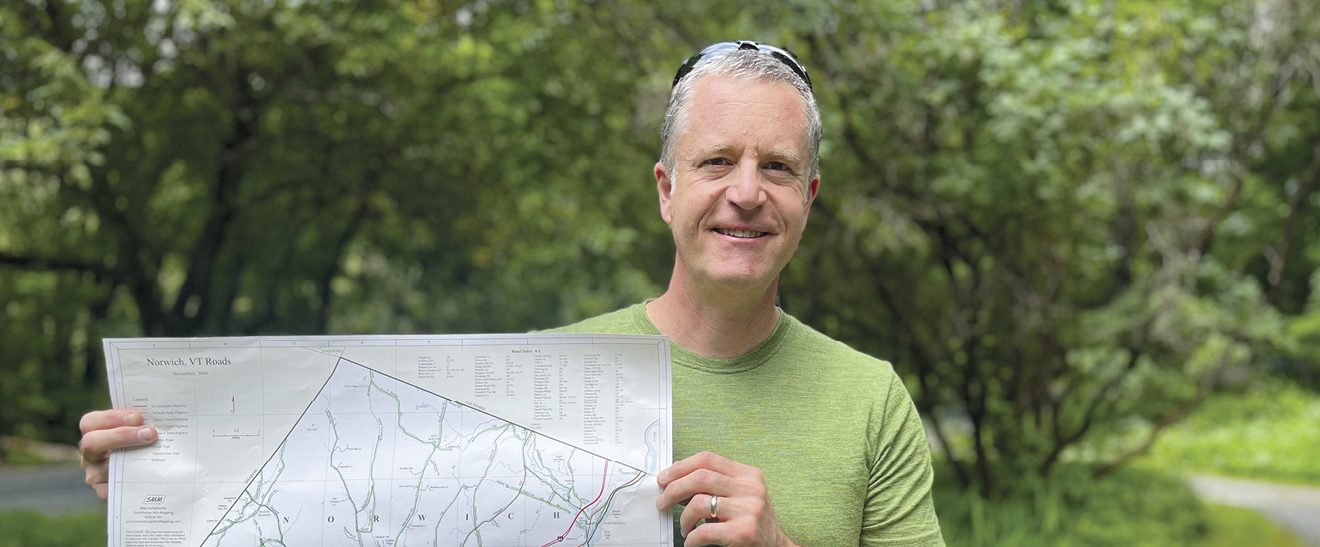
  • Exploring Norwich One Street at a Time — David Watts’ “Tour de Norwich”
    September 16, 2026
    READ MORE
  • Norwich’s Diamond in the Rough
    June 21, 2026
    READ MORE
  • For Norwich’s Community, the Bell Tolls
    June 21, 2026
    READ MORE
All, Cover Story

Creating Change through Theater, One Show at a Time

September 14, 2021 by Molly Davis Shimko No Comments

When two local companies team up to better our community, magical things can happen. JAG Productions based in White River Junction is partnering with King Arthur Baking Company in Norwich. While a theater company and baking company seem an unlikely pair, together they are co-producing a beautiful series of performances, “Theatre on the Hill.”

“Theatre on the Hill” will take place on Friday, Saturday, and Sunday evenings between August 13 – September 12 on the grassy hill behind King Arthur Baking Company in Norwich. Preceded with food and drinks provided by Upper Valley favorites such as Munchie Rollz, Griddle and Groovy, and Wolf Tree, “Theatre on the Hill” is an outdoor theater series featuring an array of performances from workshop productions to concert musicals, to staged readings. 

Jarvis Green, Founding Artistic Director of JAG, spoke of his desire to give audiences, “a hybrid of all the many ways in which we are thinking about producing theater.” Suzanne McDowell, King Arthur’s Vice President of CSR and Sustainability, wrote about supporting Green’s vision. “The idea of Theatre on the Hill was born out of the natural link between food and art and the potential for King Arthur Baking to offer a vibrant, living stage for JAG’s work.” 

Norwich resident Suzanne McDowell, VP of Corporate Responsibility & Sustainability at King Arthur Baking Company collaborate on this exciting project.

JAG and King Arthur Baking Company first came together through JAG’s ambassador partnership program in which organizations or businesses interested in promoting marginalized voices and adopting anti-racist policies can find creative ways to partner with JAG and support their work. This particular program came about after a year of building a relationship between the two companies and through Green’s desire to create in-person programming for the community before heading back into the theater in the fall. Luckily for all of us, this manifested in an outdoor theater experience not to be missed. 

So, what can we expect to see at this event? A little bit of everything. Starting off the series will be a workshop production of a play that was first featured as a staged reading at JAGFest 4.0. JAGFest is a yearly new works festival that invites up-and-coming Black playwrights from all over the country to stage their new pieces here in the Upper Valley. The play a curious thing; or superheroes k’aint fly by Jeremy O’Brian, a “90-minute queer romance… exploring the universal question of parenthood in a world laden with danger,” was the hit of the 2019 festival. 

For the following two weekends, Green himself is directing a concert version of Next to Normal (Yorkey & Kitt), a Pulitzer-Prize and Tony-Award-winning musical that explores mental health and a family dealing with crises. “You’re going to get that sensation of artists connecting to a score and singing beautifully… but you’re also going to be rooted in truth and in reality.” Green speaks of the stigma surrounding mental health and how presenting these stories in a fashion that evokes empathy, such as musical theater, can help normalize dialogues around difficult subjects. “As someone who has family members and friends that have struggled with mental health,” he said, “I think that’s the crux or foundation or root of why I wanted to do this piece.” 

Next up, Life in Sepia: Vermont’s Black Burlesque Revue, will take the stage. This piece builds a narrative around the history of Black burlesque in America through a variety of performers including our own local Golden Mystique. The revue will be “femmeceed” by duo Kia Warren and Liza Colby who will weave the story of American Black burlesque through eight performers, each taking on a decade in this historical burlesque journey. 

Closing the series will be a staged reading of For the Love of Jazz by playwright Raven Cassell, another JAGFest alumni. First performed as a radio play during JAG’s 2020 COVID-restricted festival, this “jazzical” follows the story of a young woman navigating life and love during the Harlem Renaissance of the ’20s and ’30s. Green lauds Cassell’s work, “She’s written this really beautiful contemporary play that’s also rooted in classic American theater.”

With this partnership in mind, where does the intersection of baking and the performing arts lie? “Baking, it’s a collective experience,” said Green. “Baking allows for conversation and storytelling. When I grew up, I was always in the kitchen with my mom and my grandmother. I remember so vividly the stories they used to tell as they would bake. Baking just allows for folks to connect in a way that removes boundaries because of this shared experience.”

“I hope that during ‘Theatre on the Hill’ series, people will shop at King Arthur and then while they’re [cooking or baking], have an experience about the work and what they saw and have conversations with their families about some of the themes we engaged with them on during the series.” McDowell agrees. “Just as art does, food tells stories, evokes emotions, and activates our senses,” she said. “The act of connecting food and art has powerful potential to promote diverse voices, experience, and perspectives.” 

Green is incredibly enthusiastic about this work. Green speaks of theater as he speaks of baking, focusing on its ability to connect people. “I want to lead with storytelling because that’s where we connect as human beings,” said Green. “How do we tap into your heart? That helps us be the change that we want to see. And I think that’s the power of theater.”

JAG’s Morgan Siobhan Green, Wonu Ogungowora and Francesca Harper

Also evident is his deep love of Vermont and of our community. “I love Vermont. I love the beauty of Vermont. I feel like [the Upper Valley] is full of vibrant, community-driven folks.” Green is looking forward to this series continuing JAG’s relationship with the community and bringing new faces into the mix who will want to become a part of making this theater happen and join in helping ensure this work becomes a part of our community for years to come. 

Green is also hoping this is the first of many community-based collaborations. King Arthur Baking Company is not the only local group that has helped make this project come to life. Speaking with Green, it became clear that this is truly a community project that has involved collaboration from several well-known local businesses such as Northern Stage, the Center for Cartoon Studies, plus an army of local volunteers. “I think this series is going to speak to the power of partnerships. We don’t have to live in isolation about how we’re supporting each other’s work. It doesn’t just have to be JAG doing this. It takes all of us. I think it will be kind of an entry point for people to lean in and say yes, I like what you’re doing, how can I support? I feel like there can be some cool partnerships and I hope that a big institution like King Arthur gives people more permission to lean in. I want to diversify what partnership looks like.” 

Overall, Green hopes that this series is “a reminder that you can have the beauty of gathering again and enjoying glorious theater that’s rooted in reminding us of what happened and where we need to go. This is an opportunity for hearts to mend and to come together.” McDowell seconds this notion. “In our relatively small community, theater makes a powerful impact,” she said. “It can engage individuals from all backgrounds, creating a shared experience that still allows for diversity and difference to blossom, and JAG is a perfect example of that.” 

What else can we look forward to from JAG? Green is optimistic to see an outdoor summer series return in the future, and this fall and winter, readers can catch more of JAG at Juke Joint, JAG’s annual fundraising dinner-theater cabaret in November and at JAGFest 6.0 in February 2022.

In the meantime, pull up a picnic blanket, cushion, or any of the provided seating and come take in one (or more!) of the wonderful performances this August and September at JAG and King Arthur Baking Company’s “Theatre on the Hill” on Route 5 in Norwich. n

“Theatre on the Hill” performs on the grassy hill by King Arthur’s headquarters.

Tickets are $25.00 and available at www.jagproductionsvt.com/theatre-on-a-hill. The event will be wheelchair accessible, restrooms are in the KABC facility, and parking is available in both lots. Seating is first come; first served and local food and beverage will be offered beginning at 6:30 PM. Performances will begin at 8:00 PM. See you on the hill! 

Share:
Reading time: 7 min
All, Goodness InDeed

Good People SHARe: What Norwich’s Nick Krembs and Dean Seibert Are Doing to Help Asylees and Refugees

June 16, 2021 by Chris H. Hadgis No Comments
Dean Seibert and ACTS volunteers in Honduras

In October 2018, Nick Krembs, a retired carpenter and builder from Norwich, traveled to the United States border in El Paso, Texas. That year marked a huge surge in migrants seeking asylum from their home countries. Due to the drug cartels, corrupt police, torture, oppression, gang violence, and abuse, as well as the devastation and destruction of farms and their livelihoods from hurricanes – they fled.

Krembs’s sister, Jane Greiling, a retired nurse, had been volunteering in El Paso with the Annunciation House: a faith-based nonprofit organization that provides shelter, clothing, and food to migrants predominantly from Mexico and Central America. Krembs joined her for two weeks at the border and volunteered in the migrant shelter, Casa Vides in El Paso.

• • • • •

Co-organizer Dr. Dean J. Seibert, M.D

One day, Krembs met Hugo in the “Ropa room” of the Casa Vides shelter. Hugo, 50, was traveling alone, seeking asylum from oppression in Guatemala. He had never been to the U.S. before. Loud, warm, and jovial despite his circumstances, Hugo immediately took on a self-appointed, leadership role in the shelter: taking care of other migrants, guiding, and reassuring them. He consistently offered to help the volunteer staff with housekeeping duties as well. Though Hugo had never lived anywhere cold, he was trying to reach extended family sponsoring his asylum in Chicago.

Despite a language barrier, Krembs, who speaks little Spanish, sought to prepare Hugo for the polar vortex of subzero temperatures he was about to face. In a tropical country like Guatemala, any temperature below 70 degrees feels cold. Hugo was about to move to Chicago in the dead of winter. They sorted through the Ropa room and found a large wool overcoat for Hugo. “Perfecto,” said Krembs.

• • • • •

After he returned to his home in Norwich, “the need gnawed at me,” said Krembs. So, he went back to the border – this time for eight weeks: from December 2018 through January 2019.

• • • • •

The Casa Vides is a rectangular red brick structure with two floors. Adults with children are roomed together. Otherwise, women have dormitory rooms on the first floor and men on the second. Each floor has just two shared bathrooms with showers. There were always lines of people in the halls. Their moods were often somber except for the children who ran, shrieking through the halls with siblings and new friends.

Bussed directly from the ICE detention centers, the migrants Krembs met – dirty, hungry, anxious, and tired with nothing but what they could carry – were the lucky ones. Others had been denied entry and deported back to their home countries. For permission to enter the U.S., the migrants had to show proof of sponsorship: a family, relative, friend, or a private organization or charitable group.

Nick Krembs in Texas, 2018

As though they were criminals on parole, ICE put ankle bracelets on many of the adult asylum-seekers; tracking them even though they had committed no crime. The migrants arrived at the border with few possessions. Some had spare clothes in a plastic garbage bag, but that was it. Rarely did any have money.

Krembs didn’t see any intact families. He saw fathers with children, mothers with children, and children who had been separated at the border as well as unaccompanied minors sent alone by their parents. Due to sacrifices and the costs to get to the border, as well as the border rules and restrictions set by the Trump administration, families were often split apart by the time they reached the shelters.

A huge, “Bienvenidos” sign and big, empathetic smiles from the volunteers greeted migrants upon their arrival at the shelters. They were promptly interviewed and volunteers set to the task of connecting them with their friends and family in the U.S.; their final destinations.

The migrants were each given a bar of soap and a towel and assigned to rooms with bunk beds – up to eight people per room at a time. Travel arrangements were made and paid for by sponsoring host families, relatives, or organizations. So, after two or three days at the shelter, the migrants took a bus or plane to their temporary new homes where they would start the process of applying for asylum.

In addition to offering hospitality; cooking, preparing meals, cleaning, and helping migrants get clean clothing, Krembs shuttled eight passengers in a van two or three times a day to the airport and the bus terminal. And still, he felt compelled to do more.

• • • • •

Once back home in Vermont, Krembs joined The Upper Valley Refugee Working Group, a 501c3 nonprofit organization based in Hanover, NH. This organization provides sanctuary and assists immigrants residing in the Upper Valley with acquiring basic subsistence with help from volunteers and financial support in the form of an Immigrant Community Support Fund. There he met and became friends with two other volunteers, Dr. Dean Seibert, also of Norwich, a retired physician and professor from Dartmouth Hitchcock Medical School, and Bill Ploog of Lyme, NH.

The three united in a shared mission to improve the lives of asylum-seekers in the U.S. by using the resources and connections they have in the Upper Valley.

Nick Krembs playing Dominoes with asylum seeking guests at Casa Vides Shelter, El Paso, Texas: October, 2018

“I returned to El Paso each time knowing I could do little to change the gang violence, government neglect, and climate disasters that drove all these people to flee their homeland,” said Krembs. “The action I could take is to show compassion and accompany them in seeking asylum in the US. I can do this here, where I live, as the sponsor of a few of those coming to our border seeking asylum.”

Krembs is 76. Seibert will be 89 this August. However, their ages do not impede them from actively engaging in each step of this life transforming mission, both for the asylees and for themselves.

“This work gives my life purpose,” said Krembs.

• • • • •

A construction project during the earliest days of
ACTS’ involvement in Honduras

And so, in 2020, along with Seibert and Ploog, Krembs formed SHARe: Supporting Helping Asylees and Refugees. (The ‘e’ is small and silent.) SHARe is now an all-volunteer, non-sectarian, non-profit, tax-exempt 501c3 organization. Their goal is that by mid-summer, they will start supporting up to five individuals or a family from any country, to gain asylum in the U.S. “The procedure to do so is much more complex and involved than many realize,” said Krembs.

Filing for asylum takes four to six months. After filing, it can take up to four years to receive asylum. During that time, a person needs to gain a permit to work, which can take up to a year. Until granted a work permit, the individual cannot work legally in the U.S. Unlike refugees who are granted permission to enter the U.S. while in their home countries, and once here, are given governmental support from the State Department, asylum seekers are completely on their own. They must depend on aid from family, private organizations, and/or generous donors.

According to Krembs, there is a backlog of some 1.2 million pending cases in federal immigration courts. Not until a case is adjudicated in a federal court – which can take months or years – can a person become declared a legal immigrant.

• • • • •

In the spring of 2019, the border was essentially closed to anyone trying to enter the U.S.

Krembs’s sister, Jane Greiling, in front of Casa Vides, El Paso, Texas

The border patrol went from allowing 100 to 400 migrants per day into the country to none. All migrants were forced to stay in Mexico. Now, the sentiment toward migrants has shifted and the border is reopened allowing a new influx of people seeking asylum.

SHARe’s primary focus is to find host housing in the Upper Valley for an initial six months or longer, to help support asylum-seekers while they apply for asylum. Once settled, SHARe aims to connect the asylum seekers with pro-bono legal services, English as a Second Language classes, schooling for their children, and clothing, as well as health and medical services.

“The goal is to get those initial five people set up with the support systems they need to live and work comfortably in the Upper Valley while they await asylum,” said Krembs. “We want to help migrants gain asylum and ultimately equip them to become self-sufficient in their lives here.”

Eventually, Krembs, Seibert, and Ploog aim to create a pipeline so that at any given time, there will be at least five asylees receiving SHARe’s assistance in the Upper Valley.

• • • • •

Dr. Dean Seibert has been visiting Honduras twice per year every year for the past 25.

Through his volunteer work with the non-profit ACTS Honduras: Americans Caring Teaching Sharing, Seibert has helped send teams of five to six medical professionals and aid workers per year to El Rosario, a farming village in northwestern Honduras.

The volunteer teams from ACTS now assist the people of El Rosario and a dozen surrounding communities not only with medical care but also with community development including; improving agricultural practices, creating safe drinking water systems and latrines, economic diversification, and access to expanded opportunities for education.

ACTS teams have built trust and developed close working relationships with the people of El Rosario to improve their lives with sustainable solutions for future generations. But still, in most other parts of Honduras, corruption, crime, and poverty prevail.

ACTS volunteers brighten up an old building

According to Seibert, a 2016 report by the Carnegie Foundation deemed Honduras a Kleptocracy – meaning, all of the governing bodies within the country: the military, police, gangs, and oligarchs depend on each other to function and survive – thus, mixing corrupt with non-corrupt powers all in the same soil. And so, people’s only option is to flee. The conditions of their daily lives – violence, abuse, starvation, illness, poverty – are so bad that they would opt to risk the treacherous journey to the U.S. border and end up in detention centers or worse, rather than staying in their homeland.

• • • • •

In a tented parking lot, outside a converted elementary school, now a community center and shelter, El Centro San Juan Diego, a line of migrants stood waiting for food. As he prepared to help distribute the food, Krembs connected eyes with a young mother holding a three-year-

old girl. To his surprise, she smiled. Krembs smiled back. He took off one of his blue rubber gloves and blew it up to look like a turkey balloon. He held it out and gave it to the three-year-old. Her eyes lit up and she giggled with glee. n

If you would like to donate your time or skills, or are interested in becoming a volunteer host family, please reach out to SHARe via email them at shareVTNH@gmail.com.

Share:
Reading time: 8 min
All, History

Dr. Edastina Bush: Dashed Dreams?

by David Callaway No Comments

Four years ago, a group of area poets was offered the opportunity to explore the collections of the Norwich Historical Society to find inspiration for an original poem to present at an NHS event “Poets and the Past.” Phyllis B. Katz, a Norwich resident at the time, and a professor and poet at Dartmouth College, asked if there were archives about medicine. With the help of local historians, Nancy Osgood and Judy Brown, she was introduced to Norwich’s first female doctor, Edastina Bush, and guided to the Bush family archives. The poem she wrote, explained Phyllis “was triggered by things visible…in the Historical Society’s Lewis House… And inspired by things missing about Edastina that I wanted to be there but could not find.”

Edastina Bush
Edastina Bush

Edastina Bush was born on March 18, 1856, in Sharon, VT. Her father was an innkeeper and her mother stayed at home to raise Edastina, her sister, and two brothers. Fairbanks Bush, Edastina’s 95-year-old grandfather, also lived with the family. Fairbanks, known as “The Minstrel Poet of Norwich” was one of the earliest residents of Vermont to denounce slavery. He often sang his verses from memory, since many of his poems were never committed to writing. By 1870, the entire family, including Fairbanks, who lived to be 100, had moved to Norwich.

As a child, Edastina attended elementary school in Sharon. When she turned 16, she and her older sister Mary enrolled in the Norwich Classical and English Boarding School. It’s also possible that Edastina attended the Tilden Female Academy in West Lebanon. Overall, it’s clear the Bush family wanted to see their daughters have more career opportunities than most young women of the day.

Yet by 1880, 24-year-old Edastina was living with her sister Mary and Mary’s husband Edward Olds, in their home across the road from the Olds family store, which was located at the corner of Beaver Meadow Road and Main Street. Mary was soon to become the first librarian in town. As for Edastina, her occupation, according to the census that year, was “servant.”

Then in 1888, at the age of 32, Edastina Bush entered the College of Physicians and Surgeons on Boylston Street in Boston. No letters or family notes explain why Edastina headed off to medical school at this point in her life. But she may have been inspired by Elizabeth Blackwell, who in 1849 became the first woman to receive a medical degree in the U S. By 1870, there were about 550 trained female doctors in the United States. By 1900, there were more than 7,000, making up 5.5 percent of the total number of doctors in the country. The number of women listed as physicians was growing in Vermont as well. In 1870 there were only two female doctors in the state, while in 1880 there were twenty-seven. Edastina may have seen these figures and decided she wanted a career in the field of medicine.

“The College is the only regular Medical Institution in New England that admits both sexes to its privileges,” pointed out the catalog of the College of Physicians and Surgeons. “It has proven that medical co-education is a success, and, as yet, no embarrassments have arisen to prove that the presence of women in the lecture room, the laboratory, and the dissecting room, has not been productive of the very best results.”

Class of 1891 memento

The medical program was a rigorous three-year course where students had to pass “9 principal branches” that included classes in anatomy, obstetrics, and surgery. In addition, each student had to possess a “sufficient knowledge of Latin” and present an “original thesis in their own hand-writing.” Edastina probably lived near the campus on Boylston Street where “…good board, including room, fire, and light, can be obtained… from $4 to $7 per week.” The entire fee for the three-year course, when paid in advance, was $250.

Among Edastina’s belongings and papers in the NHS collection, the greatest number come from her medical school days, including three medical notebooks where she kept handwritten notes from each lecture she attended.

In her 1890 notebook, which contained notes on obstetrics and surgery, are several pages that dealt with medical advice and philosophy. “Drugs have their proper place in the practice of medicine,” began one page. “Some are valuable for their effect and others are valuable for the moral effect they have on the patient.” Another entry suggested “Treat the symptoms and the patient rather than the disease. Always have a definite object in view in prescribing medicine. Be accurate in giving directions to patients.”

There is also an extended list of dos and don’ts. “Answer calls promptly when possible. Don’t mix other businesses with the practice of medicine-it requires all one’s time and energies. Set apart some time every day for study. Read the current medical literature. One foreign publication like the London Times is advisable. Keep abreast of the times in all matters.”

There are even some tips on billing the patient. “Charge a reasonable price and collect it [her underline]. Do not set your prices at fifty cents, if others in your vicinity charge a dollar.”

Edastina, the only candidate from Vermont, along with seven women and thirteen men, graduated from the College of Physicians and Surgeons in the spring of 1891. Soon after her graduation, she was issued her Vermont medical license which stated that she was “qualified in the following branches of the medical profession, Medicine, Obstetrics, and Surgery.”

Mary Bush, Edastina’s sister

With her studies behind her and her license in hand, Dr. Bush was ready to practice medicine in Norwich. But it was not to be. Tragically, Edastina’s sister, Mary Olds, died suddenly in 1892, leaving her husband Edward and two children behind. Putting her new career on the back burner, Edastina moved back in with the Olds family to help raise the children, as Phyllis Katz described in her poem:

My sister dead, I was called

to keep her home, her children,

a servant in their house,

no room there for the life

I’d planned.

But what happened to her budding medical career? Did it really end before it even began? The only mention of Edastina as a doctor comes from the 1900 census. She was 43 and still lived with her brother-in-law and two teenage children. Her occupation was listed as “housekeeper/physician.” Yet there is no town record of her practicing medicine at that time.

A Norwich physician who could have crossed paths with Edastina w as Dr. L.B. Jones. Dr. Jones practiced medicine between 1907 and 1944 and generally made house calls by horse and buggy. One has to wonder if Dr. Jones and Dr. Bush ever supported each other during a flu outbreak or when one of them was ill. But again, we have no record of them ever joining forces. There is no evidence that Edastina even set up a practice.

She put her hopes of becoming a medical trailblazer behind her. She helped raise her sister’s children and stayed in the house with her nephew, Robert Olds when his father died. She became an active member of the Norwich Congregational Church, the Norwich correspondent for the White River Junction newspaper, The Landmark, and a member of the Literary Club, which became the Norwich Women’s Club. In 1914, a paper she delivered to the Literary Club, “The Latest Events of Surgery and Medicine,” displayed a clear connection to her medical background.

In 1932, while living with her nephew in Norwich, Edastina died at the age of 76. Her medical school notebooks, graduation notices, and medical license eventually made their way to the Norwich Historical Society. When her belongings were put on display it was noted that “the Bush artifacts were preserved by Edastina and passed down through her sister’s family to the Historical Society are a testament not only of the importance with which Edastina regarded them but also the family’s esteem for her and her accomplishments.”

Medical School catalog from 1890 listing expenses for medical education

I saved my lecture notes from medical school, words that mattered.I could not speak or write about the

life that now was mine.

Along with her medical school documents, Edastina left behind a large scrapbook filled with carefully pressed flowers. Each flower (Wild Red Cherry, Wind Flower, Purple Trillium, and more) was labeled with her elegant, neat handwriting, the same script that filled the pages of her medical notebooks. With this image, Phyllis Katz ended her poem about Edastina Bush, the Norwich woman who endured the loss of her sister and the end of a career on the same tragic day.

Made of images, not words,

I let my book of pressed flowers

speak to me.

To read/hear Phyllis Katz’s poem My Book of Pressed Flowers from the Poets and the Past presentation, visit norwichhistory.org/poets-and-the-past.

Share:
Reading time: 7 min
All, Cover Story

Making Music Matter More

by Lars Blackmore No Comments

Over half a century ago, three idealistic musicians joined forces in New York, and proceeded to lend their time and talent to the civil rights movement, protests against the Vietnam war, and countless campaigns for human rights over the following decades. Peter, Paul & Mary became icons – “the gateway drug to the folk revival of the ’60s” in the words of one critic – with their renditions of songs like If I Had a Hammer and Blowin’ in the Wind.

A generation later, from her home in Wilder, the daughter of Paul Stookey carries on her father’s legacy of using music as a tool for social change. Liz Stookey Sunde is not a musician, but has clearly inherited his passion for activism and social justice. As the executive director of the non-profit Music to Life, she’s grappled with making music matter in an age of social media and short attention spans.

“How does that even look?” she asks rhetorically. “In my Dad’s day, an anthem or a single rally could attract and capture the attention of so many. But how do you deal with this new, more complicated world?”

Liz Stookey Sunde at home in Wilder, VT

When Music to Life asked musicians what skills they needed, the answer was, “how do I extend my impact beyond the stage, how do I sustain my work?” And that, then, is the approach that Music to Life is taking: providing artists with the tools, connections, and skills to further their own goals as musician activists. “The way you do it,” says Sunde, “is by empowering the artists that make the music.”

“The artists have the ideas, we just get to help them make their dreams happen. We don’t drive the work, so much as facilitate it. That’s much more empowering for the artists, and it’s incredibly rewarding,” says Sunde, “To see the transformation when artists who are used to struggling on their own are pulled into collaborations and given networks and opportunities.”

Accelerators, Brave Troubadours, and Mentors

“We’re working with three levels of artists,” explains Sunde. “Next generation, established mid-career, and seasoned legacy mentors.”

Their local accelerator programs target newer social change artists with weekend incubators – community workshops. They teach local activist musicians tips and tools for developing music-driven programs and partnerships, and allow the Music to Life team to discover a handful of artists ready and willing to move on to do more intensive work.

The national Accelerator then trains that group of artists from around the country how to turn an idea into a fundable program. “Once they’re done, they have an entrepreneurial approach to music-driven community change work – unlike before, when they felt they had to give it away for free or had to compromise. Now, they’ll know how to collaborate with stakeholders, nonprofits and allies, and be smart about it,” explains Sunde.

Future national accelerators will be centered around key themes: poverty, climate change, civil rights, and human rights. “That way,” says Sunde, “No matter if you’re an artist in San Francisco or Cleveland, you’re on the same page. We can bring in thought leaders and speakers, and help identify partners and companies with an interest in that theme.”

An eco hip-hop curriculum for elementary kids and a mind, spirit, and music project to heal from Parkinson’s Disease are some of the projects from the Music to Life universe. But, when I ask Sunde for an example of an artist that Music to Life has worked with, she doesn’t hesitate.

“There’s a Native American rap artist in Portland, Maine, Myles Bullen, who works with suicide prevention and addiction recovery among incarcerated youth,” she explains. “So, how do you amplify his impact? You connect him with a non-profit organization so that instead of one-off events, he can be plugged into an ongoing program. Robert Bernheim, a professor from University of Maine, teaches about the holocaust to inmates; he pulls in Myles with his creative writing work and expression through rap and hip-hop. Now, the inmates not only learn the material, but can express what it’s bringing up for them. Music to Life connected them all – the state prison system, the professor, and Myles, and helped them secure a grant to make the project sustainable. Best of all, now, the wardens are getting interested – they’re like, ‘wait a second, we really appreciate what’s happening and would like to do it, too.’”

Native American artist Myles Bullen from Maine

For artists with a bit more experience, Brave Troubadours is an educational series showcasing their talents and stories. Each live episode is billed as “60+ minutes of song and conversation, an entertaining and inspiring virtual roundtable that explores music’s capacity to move the needle on the issues of our time.”

“These shows provide seasoned artists who have done this work before with a platform to raise awareness, reach new fans, and help them collaborate with each other. So we offer them this shared performance space,” explains Sunde.

“Finally,” says Sunde, “We work with a third tier of artists through an ambassador or mentorship program. Some are legacy artists – my dad’s generation – but others are contemporary, seasoned social change artist celebrities. They can offer their wisdom, tips, and tools to artists in our network.” The goal is to pass the torch across generations, and to further the ‘craft’ and impact of social change music as it supports communities in need and furthers social justice.

Reigniting that Torch

The Upper Valley is hardly the center of the activist musician universe, but Sunde says it’s actually been a strength to run Music to Life from here, teaching her and her network to be nimble and embrace the virtual. Serendipitously, it brought her in touch with Bill Stetson of Norwich, who over the past few years has become a staunch ally of Music to Life. A veteran philanthropist and White House art advisor for New England under President Obama, Stetson believes the Music to Life model is a great fit to help musicians use their insights and notoriety to act as catalysts for creating a better world. “What Peter, Paul & Mary did in the ’60s was so impactful. This is one way to bring that flame up-to-date and relighting it,” he says.

And as Sunde’s father and co-founder of Music to Life, Noel Paul Stookey, reflects on his experience in the pivotal ‘protest music’ scene of the ’60s, he too appreciates this vision for music for change. “Uniting people in song could be the first step toward realizing positive community goals; the second step is to join that community in action. Music to Life’s broad and inclusive outreach reminds us of this historical context while providing a support system for the contemporary activist musician,” he says.

California-based Artist Naima Shalhoub, performing Live in San Francisco County Jail

Music for change has, indeed, made incredible strides since the ’60s and there’s more to come. “We may be standing on the shoulders of the work of my Dad and his ’60s contemporaries, and we’re certainly building on their legacy. But the new generation of social change artists are DIY entrepreneurs who are super fired up, with new tools and unprecedented reach through social media. With the right training and support, there’s no limit to how these musicians can revitalize our communities.”


Visit musictolife.org to learn more.

Share:
Reading time: 6 min
All, Cover Story

The Legacy of a Community Institution

by Chris H. Hadgis No Comments

To see Norwich Bookstore owners Liza Bernard and Penny McConnel in action, you would think they are fraternal twin sisters. The pair move and speak in harmony; finish each other’s sentences, encourage, laugh, compliment, and prod – the way only the best of friends can do.

One would never guess McConnel and Bernard’s ages of 82 and 67, respectively. Perhaps bookselling is a tonic that keeps people young, witty, and vibrant. But every story has an eventual ending, and thoughts of retiring have crossed their minds, especially in the past three years.

The beloved and familiar faces of Penny and Liza

And so, through the bookseller’s industry listserv, they sought new owners. Although Bernard and McConnel received numerous inquiries over the years, not one encompassed all the attributes necessary to preserve the spirit of the store. Bernard and McConnel took their time. They did not want to back themselves into a corner of panicked, last-minute decision-making.

• • • • •

“Everything came from nothing,” remarked McConnel. In 1993, with no existing structure, they found the property and built the bookstore literally from the ground up. They opened their doors in August of 1994.

“It was a very exciting day!” said Bernard. After two years of meticulous planning, they nervously anticipated the day. They feared the worst; that no one would attend the opening or if they did, the store’s inventory would lack their desired book.

Bernard and McConnel’s bookstore motto is “Thoughtfully chosen books for everyone in the family.” They wanted to make sure they lived up to that.

Bernard and McConnel with their 25th Birthday banner
compliments of the American Booksellers Association

“We had two part-time employees at the time: Karen Washburn who, with her husband Murray, even helped us set up the shelving, and Rae Schmertz, then a reading specialist at several Upper Valley schools.”

“The day was busy, busy, and lots of fun!” said Bernard. “We were warmly welcomed by the community – curious about what we had to offer.”

• • • • •

Running a small business is enjoyable but also comes with daily challenges. At first, it was how to use a computer for point-of-sale transactions and inventory. But by 2007, they adopted technology that allowed them to offer online browsing and sales. Then came “big-box” booksellers like Borders, Barnes and Noble, and Amazon. Still, the pair did not fold.

“It’s personal,” said Bernard. “We are a part of people’s families.” A personal touch cannot be created with a company that does not know your name, does not know what you like to read, or what to recommend – Bernard and McConnel do. They have seen families grow and expand. They have helped children who are now parents themselves. They developed their small business knowledge and their bookselling expertise to create a full-fledged, full-service bookstore that offers all genres of books, e-books, audiobooks, book signings, events, and something intangible.

“Part of our success is that we love partnering and co-hosting events with other organizations: schools, libraries, Dartmouth’s creative writing department,” said Bernard. “Bookselling is a very collaborative business.” “Yes,” chimes in McConnel with a twinkle in her eye, “we’re competitive but in a friendly way.”

• • • • •

And then COVID hit. In 27 years, they had never shut their doors for an extended period of time. They had to immediately evolve the business to continue serving the community and do what they love best: talking books with their customers. They instituted curbside pickup, became personal shoppers, walked through the store with a customer on the phone, describing books, and taking orders. Their typical in-person, event-a-week schedule moved to weekly Zoom events.

But there is an upside: “During COVID, people realized how much they relied on – and therefore had to support – local, independent businesses,” said Bernard. “And how connected we all are,” added McConnel.

Norwich Bookstore’s new owners: Emma Nichols and
Sam Kaas

Finally, last summer, they met Emma Nichols and Sam Kaas, independent booksellers from Seattle, Washington. Nichols and Kaas were not looking to tear anything down or make massive changes with their acquisition. They wanted to build upon Norwich Bookstore’s strong foundation of community, quality, and care. Bernard and McConnel felt a kismet connection with the pair via an aligned vision for their store. They found everything they were looking for in successors: experienced, young, energetic booksellers with technical and digital acumen.

Just as Bernard and McConnel have grown the bookstore’s roots, built their business, and adapted with the times, so, too, will they intentionally pass on their roles to Nichols and Kaas: a turning of the page of a beloved book.

• • • • •

When asked if meeting so many famous authors and hosting notable events stood out as historic moments, both Bernard and McConnel shook their heads. “No, not at all,” said Bernard, “those were magical events but only for an hour or so per week.” What they will never forget are the personal interactions with customers – their treasured extended family at the Norwich Bookstore.

While Bernard and McConnel appear to be the binding that has held the bookstore together for 27 years, they would argue that they are not the reason for their bookstore’s longevity and success: “The reason we have survived as long as we have isn’t because of anything we’ve done,” said Bernard. “It’s because of this community – our customers.” Every single customer, in ways big and small, contributed to the story of the Norwich Bookstore.

“It’s time,” said McConnel, “Not only for us but for the bookstore to have new, young people to take over for another 27 years.”

Share:
Reading time: 4 min
All, Life at 531 Feet

When the Universe Winks

March 10, 2021 by Mark Lilienthal No Comments

A side effect of the world being upside down for a year is the unexpected beauty and wit that the universe continues to throw at us. My oldest son, 10, has blossomed into an avid collector of ski trail maps, the origami squares you kept jammed in your parka to look at on the lift before smartphones changed our world. Occasionally, I look up a resort and see if it is easy to contact customer service or the ticket window. Most times, corporate America thwarts my efforts. (Calling Vail and hoping for a quick answer instead of getting trapped in an endless labyrinth of “press 1” options is a little like standing in front of the White House thinking Joe is going to come out and say hello just to you.) At one area in Colorado, however, I found an easy fill form and asked for a map.

One sends these types of messages with the thought that one will be able to tell spouse, child, parents, in-laws, and friends that AT LEAST one has tried, but that one must never expect a response from such an anonymous platform, most likely dominated by “bots.”

When the return message came into my email from “Snow Reporter,” I expected one of two responses: a canned “no” or something approaching a begrudging “yes.” The universe had other plans.

Norwichians, it is worth reminding ourselves that Colorado has a certain reputation that jibes pretty well with our own. Beautiful scenery. Population enthused by outdoor activities. A certain permissiveness about THC and craft beer. People who have left elsewhere searching for happiness who end up staying.

“I’ll get a map in the mail to you first thing Monday morning!,” the message read. “We hope to see you!”

Two exclamation points were enough to convince me I had done good. But what floored me was that the kind person at the other end of the interwebs had a name – avian in theme – that is revered in the 05055. Nay, not Partridge – can you imagine? Neither was it Hawk, Falcon, or Eagle.

“Ms. Sparrow,” I wrote back, “In our family, we talk about the concept of a ‘universe wink.’ It’s when you dare to ask for something or try something new or take a little bit of a risk (no matter how small or inconsequential) and the universe just kind of winks back at you, letting you know that you are doing alright. Well, the universe wink in this story is that a very popular café in our  little Vermont town is the Blue SPARROW Kitchen. Amazing. Thank you so much; our son will be thrilled.”

She wrote back, “I love that! Thanks for sharing the universe wink!” It’s a silly thing, but in these times, it seems to me that if we can no longer thrill at the silly things, then history will write that the virus won.

 It turns out that ski maps weren’t the only sextant for my soul, pointing the way towards a memory. Recently, after completing a task that can only be described as “essential” in New Hampshire, I took my normal route down the hill towards my hometown. At an intersection, on the best sign in Hanover (VERMONT ->), there was something new.

 Of all the 50 states, how many feature residents who would premeditate the need for spray paint, cross state lines out of their own state against the governor’s pandemic orders, locate a highway sign indicating the direction of their own home state, withdraw the aforementioned paint, and draw a couple of hearts to indicate to the wayward traveller who had forsaken their homeland that not all was lost, that their people were but a short distance across a green bridge and a black river?

My answer?

One.

These last 12 months, it has been hard to find the music in the world, like we all have a little water in our ears that no amount of jumping up and down can drain. The chaos comes at us like snowflakes in a blizzard, toying with our equilibrium. Anxiety and distress lurk behind every curtain and around every corner. And yet, somehow, strangers take a chance that maybe, just maybe, a little vandalism-turned-poetry will make others smile. They help pop the bubble and return your audio to normal. The person or people who painted those two hearts on the Vermont sign make my world sing… and our universe wink.

Share:
Reading time: 3 min
All

Spring Gardens: An Elixir For The Winter Doldrums

by Frank Orlowski No Comments

This spring issue of the Norwich Times happens to coincide with the time of greatest change in the Upper Valley.  We go from cold nights and snow covered ground in early March, to the warm (sometimes hot) days, spring rains, and long hours of light of late May.  In between there are ice events, spring flooding, mud, and the long awaited greening of trees and lawns…oh, and the flowers – who can forget the flowers.

Is there a greater boost to morale after many months of icy roads, snow covered driveways, and dirty snow piles than the seeing the colorful spring blooms of the hyacinths, crocuses and daffodils?  The pleasure realized when those first shoots from bulbs planted the previous year, appear on a warm spring day?  For many of our friends, neighbors, and ourselves, those long awaited events touch and rejuvenate the soul.

Whether we tend our own gardens, hire professionals for the work, or admire neighbors’ gardens, Norwich folks seem to have a particular affinity for gardens and gardening.  Norwich homeowner Heather Benson exemplifies the manner in which gardening becomes more than a mere landscaping project.   “Many years ago, we created several perennial gardens in an effort to spruce up the landscaping around our home,” she says.   “In that effort, I discovered that the color and beauty did more than help our lack of landscaping – it lifted my spirits and created enjoyment.”

A love of growing, gardening often results from those first efforts.  A kind of spiritual awakening, if you will.  Even for those whose livelihoods involve tilling the soil, that spiritual experience of gardening does not disappear.

Norwich gardener Norah Lake not only operates a commercial farm (Sweetland Farm), she tends her own gardens for personal enjoyment.  “It’s funny to take off my farmer hat and put on my gardener hat for a few minutes,” she says.  “But gardening and farming have always held different places in my heart. Even while growing rows and acres of production vegetables I still see a place in my life for gardening as well.”

Norah goes on to explain how personal gardening is not only relaxing for her, but also proves inspiring.  “The pace and scale of gardening are important factors in my enjoyment of it. When working in my garden I give myself space and time to observe, enjoy, and just be. I am outdoors experiencing the beauty of nature in all its facets. I am feeling the warmth of the sun or the crumble of the soil or the texture of the foliage.  I am immersing myself in the color of an unfurling poppy or a butterfly’s wing or the pruning shears against the backdrop of a harvest basket.”

Gardening is work – no doubt about it.  Turning the soil, forming the beds, mulching, weeding, planting, fall cleanup – all require a physical investment.  Yet the pains involved, for most, are far surpassed by the joys realized.

For those unable to handle the physical work involved, there are gardening professionals around to help.  Mary Ellen Treadway tends gardens around the Upper Valley professionally, primarily perennial flower gardens.  Does tending the gardens of others lessen the enjoyment received from gardening?  “No, tending others’ gardens is satisfying, as those gardens become a part of you,” she says.

Especially today, concerns about health, both physical and emotional, are uppermost in our minds.  Valerie Woodhouse, of Norwich’s Honey Field Farm, explains how gardening benefits health.  “The garden is a place of nurturing and growth for both the plants and their caretakers.  There’s so many ways that the garden decreases stress, combats depression, gives us a sense of purpose and hope.  It invites us to get swept up in the act of planting seeds or pulling weeds, and be fully present for a moment or two.  Simply digging your hands into the soil releases serotonin which relieves stress and lifts your spirit.”

Valerie also describes the cooperative nature of gardening – the gardener, and nature.  “The garden seems to reflect what we need most.  For me, that’s the constant reminder to take a minute to pause, step back, and appreciate the transformation I’m a part of whether it went as planned or not.  It’s enjoying the beauty, smells and tastes even more because we created and overcame it together.”

Those benefits, physical, emotional, spiritual, are summed up by Heather Benson.  “I love being outside…weeding, planting, harvesting, and tending of the garden is another way for me to be in the fresh air and sunshine. Gardening nurtures my body and soul on so many levels and it somehow feels like much more than just a pastime.”

Share:
Reading time: 4 min
All, Cover Story

Zooming in on Local Arts

by David Corriveau No Comments

While the digital revolution, well, evolved, Norwich resident Nora Jacobson still preferred to show her movies to – and to attend other filmmakers’ works with – a bunch of other people in a theater.

Shoulder to shoulder.

Knee to knee.

Face to face.

“People don’t watch as carefully, I think, if they’re watching on a device, by themselves, especially at home,” Jacobson says. “They’re distracted by the phone or texts. You don’t get that same sense of people zeroing in on your film, especially if you make films that are complex, like I do.”

Samantha Davidson Green, WRIF board
president

Jacobson’s complicated fictional tales range from 1998’s My Mother’s Early Lovers and 2004’s Nothing Like Dreaming to 2016’s The Hanji Box (look up these titles on www.imdb.com), the latter of which she screened at the White River Indie Film Festival in 2017.

Jacobson also planned to show an early version of her work-in-progress documentary about poet Ruth Stone to a live audience during the 2020 festival in White River last spring, the better to elicit feedback.

Then the coronavirus pandemic forced White River Indie Film to cancel its 16th annual festival, most of which would have screened at the Briggs Opera House.

It didn’t end there, however. The WRIF board brainstormed ways to stay on the radar of the Upper Valley’s devotees of film, resolving to use virtual technology to share and encourage discussion about as many movies as possible.

“We were all ready to do programs for the May festival when the quarantines started, but we didn’t want to leave it there,” Plainfield filmmaker, Upper Valley native and WRIF board president Samantha Davidson Green recalls. “The board made a commitment to do everything in our power to connect people to film.”

That effort began with WRIF joining the Sierra Club of the Upper Valley to live-stream a program celebrating the 50th anniversary of Earth Day in April.

And in May, some 50 people signed up for the discussion of Jacobson’s Stone documentary – far more than she expects would have come to the theater in person.

“It was incredibly helpful for me,” Jacobson said of the discussion of her work in progress, now in the editing stages. “I received a lot of good feedback from people. I could ask questions of the audience and they could answer.”

WRIF also helped Jacobson, a co-founder and former board president of the group, continue the part of her Freedom & Unity project closest to her heart: Encouraging young filmmakers around Vermont to pursue passion projects of their own, with an emphasis on social justice.

Ezra McGinley-Smith with his Freedom &
Unity Young Filmmaker award

While fewer Vermonters submitted films than in years past,  among the 56 who did was Norwich’s  young Ezra McGinley-Smith, whose documentary short about the Willing Hands program fighting food insecurity won the middle-school division’s social justice award.

“It was hard getting as many to submit this year because so many young people, especially, had been thrown into isolation,” Jacobson said. “The silver lining was that during the awards ceremony, which we did on Zoom, many more kids were able to participate in the discussion after the screenings. In the past, we would have to get them to come to the theater. This way, we had a much higher attendance from the young people. The kids tend to be rather shy when they’re standing on the stage. But in the safety of their homes, they were more open.”

Among the films those audiences got to discuss was Norwich teenager

Ezra McGinley-Smith’s documentary short called Willing Hands – a 7½-minute documentary about how the Norwich-based nonprofit, which collects surplus and donated food that otherwise would go to waste, focused on getting that food to Upper Valley residents who lost jobs and income during the COVID crisis. The film in 2020 won the middle-school division’s social-justice award from Jacobson’s Freedom & Unity program, which grew out of the series of movies about Vermont.

“When it won,” he told the Norwich Times last fall, “I was like, ‘Wow: there’s potential for this!’”

McGinley-Smith, a polymath of a creative, said at the time that he didn’t think too much about filmmaking until he attended the WRIF festival a few years ago.

Nora Jacobson sharing her skills

“I can’t remember exactly when, but I was still at Marion Cross School,” said McGinley-Smith, now an eighth-grader at Richmond Middle School in Hanover. “I got really inspired by what I saw.”

Not long after arriving at Dartmouth College to teach film in 2010, Jodie Mack also found inspiration in WRIF’s promotion of local moviemaking, and in Jacobson’s commitment to that goal.

“In 2016, my ‘Curating and Microcinema’ course at Dartmouth created a program for WRIF – ‘Dames and Gutters’ – short animated films showcasing the representation of female comic characters (that featured) contemporary and historical works… (and) celebrated the shared trajectories of comics and animation alongside various female tropes promoted throughout the years” at the Center for Cartoon Studies in White River. 

And in 2019, Mack screened her first feature film at WRIF at Northern Stage in White River Junction.

“It was one of the first times I’d ever shared my work locally outside of Dartmouth,” she says. “The experience of sharing my films with my neighbors was a tremendous inspiration.”

Inspiration enough to join Davidson, CATV’s Chico Eastridge, Tunbridge musician and multimedia artist Quinn Thomashow and other Upper Valley creative in putting together a Light River Junction festival of experimental film screenings at outdoor venues around downtown White River in December.

“I was so thrilled at the turnout and for the love and care behind the event, both from the organizers and the attendees,” Mack says. “With WRIF, we have a gem – an opportunity for people to come together in the name of cinema, to seek pleasure and challenge from the screen as a community.”

The Light River Junction festival culminated a 2020 that could have been an artistic desert.

Instead, after its spring and summer programs, WRIF hosted a fall series of virtual discussions leading up to the November election, with an emphasis on race and voter suppression, also exceeded the organizers’ expectations. With panelists ranging from Vermont congressman Peter Welch to Kiah Morris, the Black state representative from Bennington County who left the Vermont legislature after months of harassment, “we ended up with fabulous participation because we didn’t have any geographical bounds,” Davidson Green says. “We really felt it was an urgent time, to offer opportunities to connect.”

The warm, relatively dry summer of 2020 gave a variety of area arts groups a brief opportunity to reconnect us with live performance – some enlightening, some entertaining, many serving both purposes.

At Lyman Point Park in White River, the Hartford recreation department staged several concerts by Americana musicians.

WRIF Light River Junction projection

In Woodstock, Pentangle Arts executive director Alita Paine Wilson recruited Vermont-based performers, including Hartland singer-songwriter Jay Nash and Pomfret native Tristan Henderson’s band Pete’s Posse, for a short-but-sweet series of Music by the River concerts behind the North Universalist Chapel.

Meanwhile, Barnard’s BarnArts Center for the Arts recruited area actors to perform a theatrical adaptation of Sinclair Lewis’s Vermont-based dystopian novel, It Can’t Happen Here, during a late-summer, well, barnstorming tour of town greens and parks around central Vermont. My wife Goodie and I saw the production, a timely as well as entertaining reminder of the approaching election, at Woodstock’s East End Park, along with at least 100 socially-distanced spectators in the hillside bleachers – a blessed break in the drought of live performance.

Before long, of course, came the shortening and the chilling of the days, and the yet another darkening of the performing-arts world as we knew it. Sure, it helps to fill some of the void, if one has broadband, to gain access to live-streaming of programs and movies from sources ranging from White River’s JAG Productions and Dartmouth College’s Hopkins Center, to the Billings Farm and Museum’s Woodstock Vermont Film and the Chandler Center for the Arts in Randolph.

As for 2021? Hold the phone.

“We don’t anticipate an old-fashioned festival until 2022,” Davidson Green said. “We’re looking right now at doing a hybrid of outdoors and streaming this spring, along the lines of the Light River Junction concept.

“The goal, long-term, is to continue nurturing the full cycle, with the activist angle that has been a big part of our identity.

“There’s a lot of good will right now.”

Share:
Reading time: 7 min
All, Cover Story

Local Dollars Staying Local

by Cindy Heath No Comments

Long before white settlers came to live in the Upper Valley in the mid-1700s, the Native American Chief Mascommah hunted and fished all along the Connecticut River Valley eventually settling in Northfield, Massachusetts. The name ‘Mascoma’ appears in many places throughout the Upper Valley, so it must have been a logical choice for the founders when Mascoma Bank was established 122 years ago in 1899 as a mutually-owned bank.

How has this Upper Valley institution maintained its community and local-first banking principals amidst so many technology, economic, and social changes over more than 100 years? According to current President and CEO (and former Norwich resident) Clay Adams, Mascoma Bank was intentionally designed to be locally owned and to support community philanthropy, and the bank has simply stayed true to its original mission. It is this community-first philosophy, along with solid strategic planning, that has helped Mascoma Bank weather many financial storms that have forced other banks to close or merge.

StoneLedge Stables and Finding Our Stride are two
Norwich-based nonprofits that have received funding
from local dollars circulated back into the
community through Mascoma Bank.

Adapting to new technologies has also helped the bank grow and change with the times. Clay notes, “One thing I’ve said consistently since I’ve arrived is that technology investments are absolutely critical,” says Clay. “We need to serve our customers’ needs where, when, and how they want to bank.” New financial products and tools constantly emerge under the banner of ‘fintechs,’ (financial technology companies) like mobile banking applications and simplified online banking services. “Community banks have not made the investments in technology that we should have, and traditional providers serving banks are not innovating as fast as the rest of the market.”

Clay became President and CEO of Mascoma Bank in January 2017, succeeding long-time President Steve Christy. After serving on the bank’s Board of Directors for five years and holding CEO roles at regional businesses like Simon Pearce and Resource Systems Group, Clay was ready to step into a new leadership challenge. “Growing up, I held a lot of leadership positions through high school and college. I naturally gravitated toward that aspect.”

Clay contributed to a number of organizations early in his career, and realized he was missing the top-level leadership experience. As his experiences evolved, Clay stitched together a ‘quilt of leadership models’ to inform his approach. “I’ve picked up different ideas about leadership by reading a lot of history and serving on boards with other leaders. All leaders have things they’re good at and not so good at.” Among the many skills required to be a successful CEO, Clay brought visioning, strategic partnering, and working with nonprofits, government, and business sectors to the Mascoma Bank Community. “I had great familiarity with the institution and the regions we serve, and we have a great group of employees I can rely on for the day-to-day operations.”

In keeping with its local-first philosophy, Clay helped the bank continue its journey toward becoming a Certified B Corporation, which is a legal commitment to consider the impact of decisions on employees, customers, the community, and the environment. Companies balance the ‘triple bottom line,” giving people, places, and the planet equal priority. “The Board had been discussing B Corp Certification for a couple of years, and we pushed it over the goal line. We felt we’d already been acting as a B Corporation since the bank was started by a group of citizens from Lebanon that pooled their money and didn’t expect a return. We grow our capital and give back to our communities. The B Corp mantra is ‘best for the world’ so making it official is a nice way to validate what we’ve been doing for 122 years.”

Indeed, significant funds have been contributed to Upper Valley organizations: $2 million in 2020, and more than $8 million over the past five years. In Norwich, Willing Hands, Upper Valley Trails Alliance, Norwich Library, The Family Place, and Montshire Museum have all received funding averaging $5,000 each for programs, equipment, capital campaigns, and events to support their operations and services.

“Keeping money local contributes to a virtuous cycle of job creation, philanthropy, community involvement, and local business ownership. Amazon is not going away and there are great benefits to that business, but it is also nice to have local institutions that are unique to and familiar with the Upper Valley.” The pandemic has inspired additional contributions by the Mascoma Bank Foundation to support childcare, racial equity, affordable housing, and nonprofit organizations that rely on visitors. “Philanthropy drives a lot of the behaviors at the bank, not just in terms of the money we want to give away, but in how we conduct all of our business; it’s a lot easier to work harder and longer when you’re doing it for a higher purpose.”

Clay Adams

With 28 branches stretching across northern New England, Mascoma Bank’s community betterment impact is significant. It also reaches far beyond the Upper Valley because of a unique award from the US Treasury in 2020. In recent years, the $170 million New Markets Tax Credits (NMTC) allocation from the US Treasury has allowed the bank to help stimulate business development in underserved urban and rural neighborhoods. The bank has awarded NMTC Funds to develop the Nashua Performing Arts Center, a hotel in Burlington, a steel fabrication operation in Berlin, NH, and several other projects which are still operating despite the pandemic.

Benefitting Local In 2020, Mascoma Bank donated a total of $36,150 to these Norwich-based nonprofits:
  • Finding Our Stride
  • Montshire Museum of Science
  • Norwich PTA
  • Norwich Public Library
  • StoneLedge Stables
  • Student Rescue Project
  • The Family Place
  • Upper Valley Community Grange
  • Upper Valley Trails Alliance

For Clay Adams and the more than 370 Mascoma Bank employees, community service is both a personal and professional ethic. Currently, Clay serves as a member of the Board of Directors of the Montshire Museum of Science, Alice Peck Day Hospital, Ford Sayre Memorial Ski Council, and Vital Communities Corporate Council. Each year, Mascoma Bank employees provide hands-on help from building projects to mentoring students and helping seniors through the Bank’s paid Volunteer Time Off program.

For 122 years, it’s been a win-win situation for both the bank and the communities that it serves, says Clay. “As the bank grows and is more profitable, we return more money to the community. This is one of the most meaningful parts of being with a bank dedicated to making a difference.”

Clean Yield Team’s Annual Retreat
Share:
Reading time: 5 min
All, Goodness InDeed

Waypoint: Upper Valley’s Family & Child Service Helps with Life Journeys

December 15, 2020 by Virginia Dean No Comments

For Norwich resident Deborah McLane Carter, the mission and ensuing work of one of the oldest family- serving non-profits in New Hampshire actually began over a 100 years ago with her grandfather, John McLane, who was instrumental in founding the NH Children’s Aid Society that later merged into the Child and Family Services of NH, now rebranded as Waypoint.

“I’m involved in Waypoint because of family history,” said Carter who is one of its nine board members. “There has always been a McLane on the board, and, when it became my turn, I gladly joined. My beliefs and values – as a part of our enthusiastic, cohesive, hard-working board – echo those of the founders, serving with the ‘shared vision of guarding children’s rights, serving children’s needs, and strengthening the life of the family.’”

Indeed, Waypoint is a significant provider of vital services in the Upper Valley and serves all its residents, according to the center’s director, Jeannette Birge. “We’ve been an active service provider for over 20 years in Lebanon,” Birge said.

Dan Fraser. Top Image: Nina McCampbell and Deb Carter.

The name, Waypoint, signifies a point along a journey at which the course can be changed. “That’s what we do,” said Birge. “We help people and communities to change course.”

As a private, non-profit agency, the services Waypoint offers include adoption, prenatal support, parent/education/family empowerment, services for children with developmental concerns or chronic health conditions, childcare, mental health counseling, family preservation, supervised visitation, foster care, homeless youth continuum, home healthcare for older Americans and adults with disabilities, and advocacy. “Our mission is to empower people of all ages through an array of these services,” said Birge.

According to board member Nina McCampbell of Norwich, Waypoint embodies the ideal of spreading kindness, one of the many reasons why she joined the board. “Whether it’s trauma counseling, foster care, aiding children with disabilities or helping to find the services most needed, this is why Waypoint is so important”, said McCampbell. “Any of us can face difficulties along the way in life.”

Waypoint’s brand is built on four pillars: staff, community, solutions, and impact. The staff is known for its compassion, professionalism, and ingenuity. “We work collaboratively in the community, creating a social safety net for all who live here,” said Birge. “We find solutions to problems through our dual roles as practitioners and advocates – a truly holistic approach to our practice.”

A case in point, for instance, involved a young couple’s very young daughter (under a year old) who was placed into foster care. “In order to be able to maintain a connection between parents and baby, we were able to provide them with supervised visits three to four times a week,” said Birge. “They were able to watch her achieve milestones and, because of the frequency of visits, they were able to be present when she took her first steps.”

There are 14 sites across the state and over 24 programs, serving an average of 8,000 individuals a year.

Funding comes from a variety of sources including state contracts, charitable giving involving individuals and foundations, and insurance payments, Birge related. “Every year we do a variety of little events around the area as well,” said Birge. “Those include the Campout for the Cause at Storr’s Pond, a Father’s Day pancake breakfast at the Norwich Grange, and an Easter egg hunt on the Norwich Green, for example.”

Jeannette Birge

In the coming year, Waypoint is establishing a Family Resource Center of Quality that will be open to all Upper Valley residents with no acceptance criteria and will provide a plethora of family services, focusing on parenting and grandparent groups, play groups, and home visiting, Birge explained. “In essence, we are and will continue to work to resolve immediate and long-term safety concerns, stabilize families, and empower them with tools to optimize their success,” said Birge.

Recently-joined board member and Norwich resident Dan Fraser agrees. “Children must have the essential components to start life successfully,” said Fraser, owner of Dan and Whit’s Country Store in Norwich. “I look forward to working with an amazing team of people at Waypoint to help advance the well-being of children and families throughout our communities.”

Birge expressed her delight with Fraser’s recent membership. “We are so honored to have Dan join an already stellar group of individuals on our Upper Valley board”, she said. “A great advocate for the cause of kids and families, he is fearless in fundraising and tireless in community building. He’s a true change-maker in the Upper Valley.”

Share:
Reading time: 3 min
Page 10 of 21« First...«9101112»20...Last »

Our Latest Issue

Fall 2026 Edition

© 2024 copyright Greater Good Media. All rights reserved.