

Treks Through Forgotten Norwich
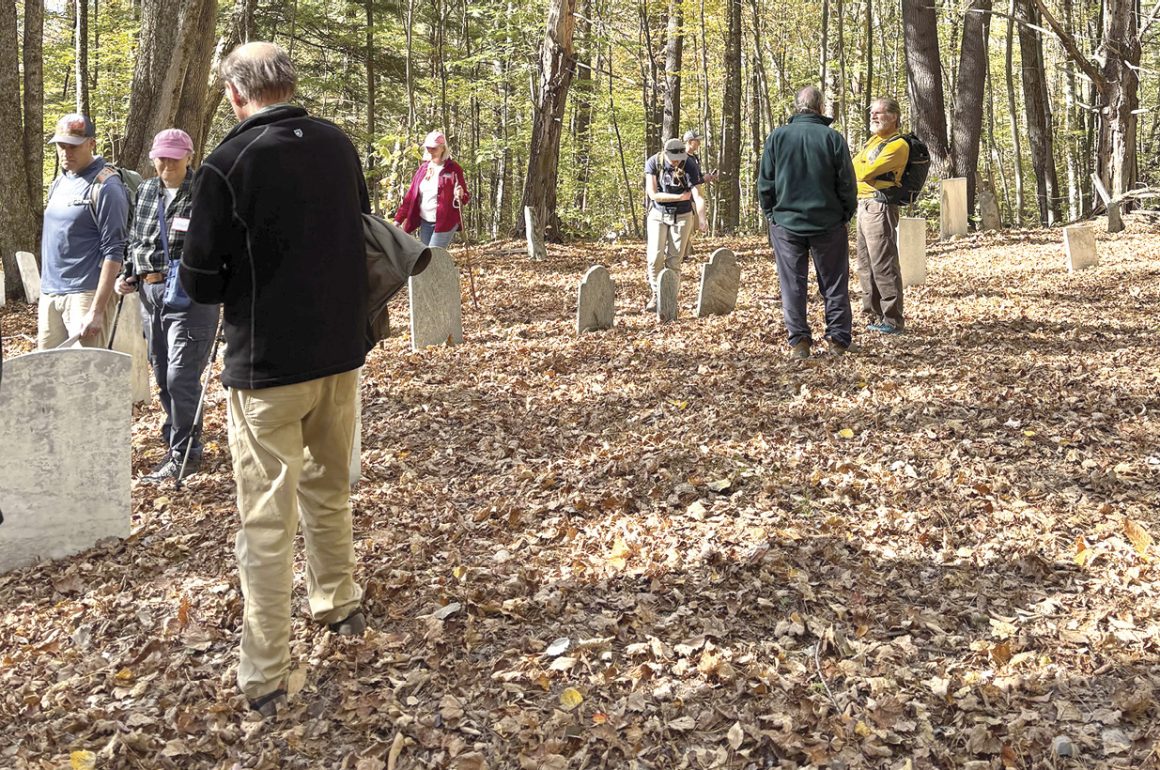
Have you ever wondered about the stone walls that line the fields of Norwich or cellar holes deep in the woods, or a small cemetery just off a hiking trail? Who lived there and when? Why did they leave? Many of these historical questions will be discussed during two fall foliage hikes sponsored by the Norwich Historical Society. One will explore Parcel 5 and the other will unlock the history of a settlement on Griggs Mountain.
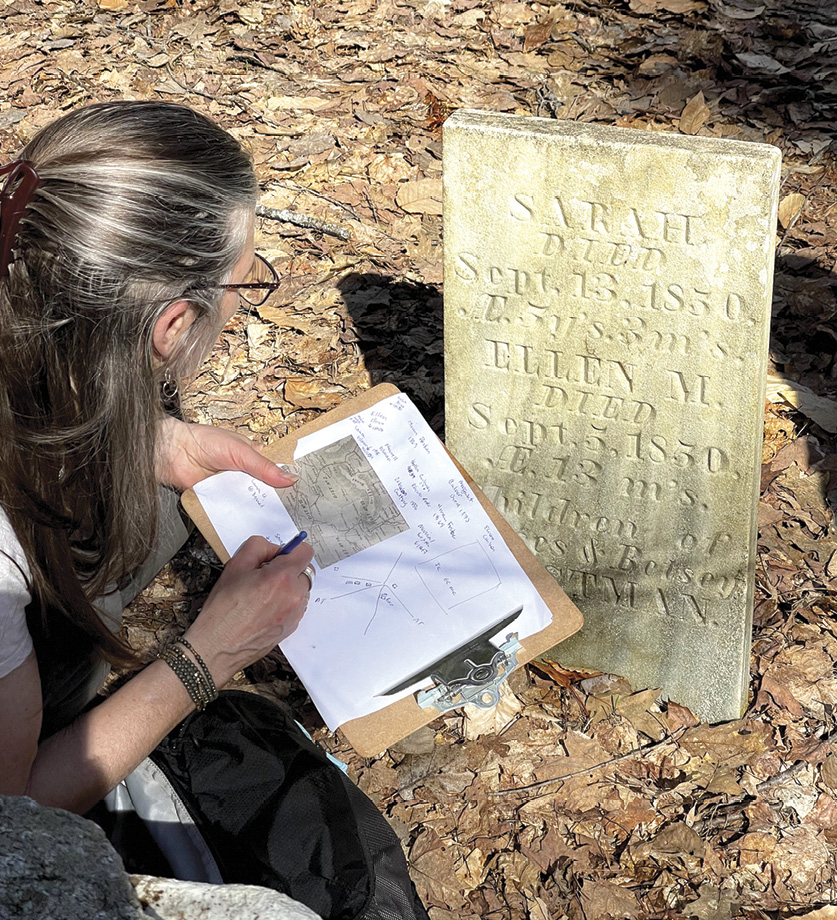
Cheri Mather gathering information to prepare for the tour.
Griggs Mountain
Situated high above Norwich on Griggs Mountain, off the Appalachian Trail, a small community of farmers settled in this area at the beginning of the 19th century. What remains of those families today are farm foundations, remote trails through the woods that used to be roads, and the abandoned Parkhurst cemetery. Parkhurst is the hardest-to-reach cemetery in Norwich and the final resting place for eight different families. Tragically, 12 out of the 21 of the people buried here were younger than 25. The last burial was in 1873.
It seems odd today that Norwich farms in the early 1800s were built on high hills. Venturing to the village was a four-hour trek by an oxen-pulled wagon over dirt trails. But living in the hills in those days made the settlers less vulnerable to flooding and the trees higher up were thinner and easier to clear.
The settlers cleared the land, planted wheat, rye, “Irish” potatoes, “Indian” corn, and hay. They also raised sheep, pigs, cows, and bees, and sugared. And to top it off, cords of wood needed to be cut, stacked, and dried to provide heat for the long Vermont winters.
Through research of town and local cemetery records and the study of population and agricultural censuses, the NHS has pieced together some remarkable tales of those early, hardworking settlers and their descendants during the 100 years the community was active. Join the NHS tour this fall to hear these stories, walk among the gravestones and explore the old foundations to learn more of the history of this vanished community in the woods. The two-mile Griggs Mountain hike begins off Bragg Hill and covers some uneven terrain, so wear sturdy shoes and bring your imagination to fully enjoy it.
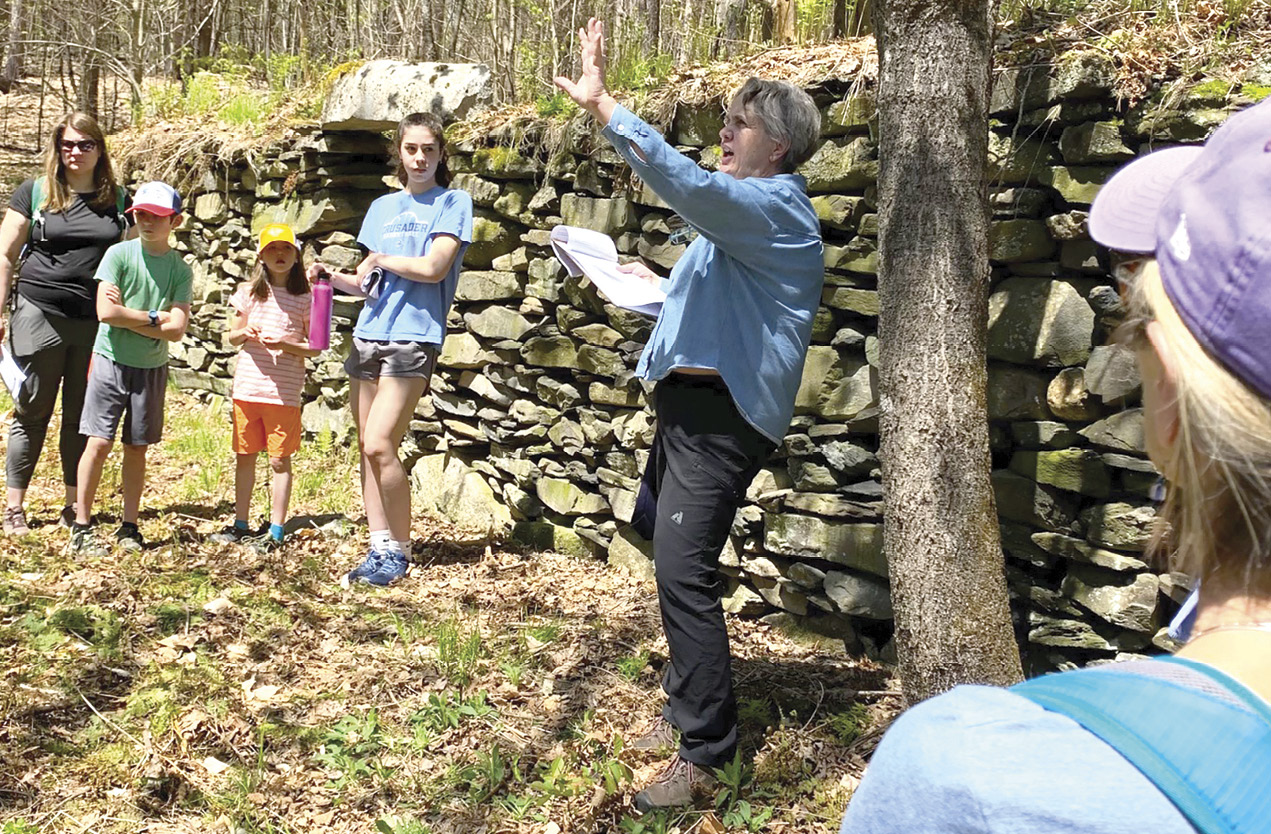
NHS Director points out cellar hole features of the Brown Barn foundation at Parcel 5.
Parcel 5
For a fall foliage hike close to town, consider a trek through Parcel 5, a historic hiking area a couple of miles out of town on Beaver Meadow Road.
Israel and John Brown settled on the land in the 1790s and had adjoining farms and several plots of land across the road and along the Charles Brown Brook. Their descendants owned the land until 1926, when it was sold to the Norwich Water District to ensure safe drinking water for the Charles Brown Brook watershed, which was sent to town in wooden pipes.
Parcel 5 has an ancient history that impacted how the Browns developed their land. 15,000 years ago, the area was covered by a mile-thick sheet of ice. The ice slowly melted and was gone 13,000 years ago, but a large dam formed near Middletown, Conn., and water backed up all the way to St. Johnsbury, creating what is now known as Lake Hitchcock. Once the water retreated, rocks dropped by glaciers were slowly buried. Soil covered them. Trees grew over them.
The Browns cleared the fields of trees and plowed them, kicking up rocks that were hauled from the fields and used for stone walls and foundations. In the 1840s, there were over 13,000 sheep grazing the hills of Norwich; by 1850, nearly every farmer in Norwich kept an average of 55 sheep. The combination of deforestation and sheep grazing dislocated even more stones. Supplies of wood shrank; supplies of stones rose.
The abundance of stones was put to good use by the inventive Browns. The guide on the Parcel 5 tour will explain how to look at stone walls and point out how they were used for fencing, separating fields, and foundations. Hikers will see plans for the Brown farmhouse and its foundations, and examine what remains of them. This tour will take you from the Ice Age to a 19th-century Norwich farm. Learn the history of the farm through diaries and census records and be astounded that the Browns had an apple orchard that grew 2,000 bushels of apples a year and turned it into cider at a mill in Beaver Meadow.
Along with the Griggs Mountain hike and the trek through Parcel 5, an interested hiker/historian might also like to explore the Ballard Trail or climb up the switchback path to Gile Mountain. The Norwich Historical Society has more hiking options and trail histories at norwichtrails.org/trail-histories, and check out norwichhistory.org for the fall foliage hike schedule.


Leave a Comment