Home
About Norwich
Our Team
Content
    All Articles
    Cover Story
    Animals Rule!
    Around Town
    Artist Profile
    Creating Community
    Elder Profile
    Green Page
    Goodness InDeed
    History
    Life at 531 Feet
    Meet your Neighbor
    School Days
    Your Green Spaces
Our Sponsors
Advertise
Archives
Contact Us

Norwich Times - Good People, Good Places, Good Things Happening
  • Home
  • About Norwich
  • Our Team
  • Content
    • All Articles
    • Cover Story
    • Animals Rule!
    • Around Town
    • Artist Profile
    • Creating Community
    • Elder Profile
    • Green Page
    • Goodness InDeed
    • History
    • Life at 531 Feet
    • Meet your Neighbor
    • School Days
    • Your Green Spaces
  • Our Sponsors
  • Advertise
  • Archives
  • Contact Us
All, Cover Story

The Upper Valley in the Spotlight — JAM’s Feature-Length Film Valley Transit

September 16, 2026 by Bill Cooper No Comments

Soon, some residents you know will become celebrities, and local haunts you love will become recognizable to those from different areas of the world, all because the Upper Valley will soon grace the silver screen. JAM (Junction Arts & Media) is making its first feature-length film, Valley Transit, about an intergenerational relationship that occurs on a bus.

The nonprofit community-building organization has served Norwich, Hartford, Hartland, Hanover, and Lebanon for the last five years. JAM helps residents work their way into roles in the film industry and supports those with big ideas, but even still, their newest project is one of their most community-focused to date. A grassroots-funded film featuring local businesses and organizations, Valley Transit will be an opportunity for new filmmakers to learn about the world of filmmaking on set.

This ambitious goal first came about last year in the fall when JAM decided to “[raise] the quality bar of media production in [the] area,” says Executive Director Samantha Davidson Green. As the director and writer of Valley Transit, Green’s goal was to tell a “quintessential Upper Valley [story] about what it’s like to come of age…and what it’s like to age here.”

Lead actor Alicia Sanyal (playing “Lizzie”) and Allison Fay Brown (playing “Chloe”).

Green noted that the story’s inspiration came from the “unusual mixing of generations” JAM has as a community resource, as it provides programs for both younger and older demographics. Over the next month, Green developed the project into a full-fledged script, which was further workshopped during the White River Indie Films Festival with a community table read and staff feedback.

Many signs showed this was the right time for the film to be made. First, last fall, film producer Wei Dai had recently moved from Los Angeles to the area. Though Dai was looking to apply for another job on JAM’s board for media coverage, by spring, he was brought on by Green to produce the project. Additionally, JAM found cinematographer Quinn Thomashow, who grew up in Stratford and came back from LA to help. Then, JAM also received a grant from the Panavision New Filmmaker Grant Program on June 1, allowing the team to film Valley Transit on high-quality Panavision film, which Green believes “will give everyone a higher quality learning experience and results in the film.”

From the beginning, the entire project has had the Upper Valley community in mind. When JAM hosted the community table read, the organization invited Upper Valley residents interested in reading parts to attend. In addition, JAM also encouraged those attending to complete paper surveys for feedback. Also, JAM held a brief discussion to take comments and have conversations, because although the film is a comedy, Green said it “does tackle, in a gentle way, some of the culture divides around political points of view” and expresses that “the spirit of the story is very much about bringing people together” across those rifts.

Richard Noble (playing “George”) and Alicia Sanyal (playing “Lizzie”).

Many different types of locations are featured within Valley Transit to show the burgeoning diversity of the Upper Valley. The shooting plan included the Lebanon Salt Hill Pub, Shyrl’s Diner, Dan and Whit’s, the Lebanon Opera House, the Norwich Fair, Hanover Food Co-op, Lyman Bridge, the American Legion in Windsor, and of course, the Advanced Transit Bus System, the catalyst for the entire film. Local musicians will also contribute to the film’s soundtrack, including Norwich resident Hans Williams and Hanover resident Sir Babygirl. Some will even be on camera, like folk/bluegrass musicians Jakob Breitbach, Jes Raymond, and Allison Faye Brown.

Valley Transit Green explained, provides a “real resume item and a real IMDb credit if any of these folks end up wanting to continue to do this work.” She says that the 15 high school and college interns working on this project have real responsibilities, including directing, casting, and filming. Because of higher stakes, participants will be held accountable to “reach for the highest quality bar we can achieve.”

Fundraising efforts also came from the community, including residents, the nonprofit Jack and Dorothy Byrne Foundation, and corporations like Mascoma Bank. The project has raised $267,311 to date, 89% of its $299,858 goal. Green said the organization has raised enough to “cover all of [their] commitments for production,” and they are working on raising the last bit to cover post-production. Many businesses and residents have also offered their locations or residencies, and Northern Stage and North Country Community Theater (NCCT) are sharing a selection of costumes.

Dai explained that Valley Transit’s plan is in flux, depending on how production progresses. The current schedule (at press time for this publication) was to film over a month, beginning on July 18 and ending on August 16. Post-production would take another five or six months, which Dai said is a “conservative” estimate. After that, JAM will submit Valley Transit to film festivals. Dai noted that a lot of these festivals have requirements on the premiere status of the film, meaning you can’t screen it publicly until they host the festival. Dai said it will be in local theaters about a year and a half from now.

Crew, interns, and cast at the HCC Block Party: Liam Kelly-Thompson (2nd Assistant Director and Norwich
resident), Brooklyn Gramling (SFFI intern), Adelaide Jones (SFFI intern), Noah Schutzius (playing “Woody”), and Reeve Green (playing “Drew”).

Green and Dai explained how important the film is to highlight the Upper Valley’s unique community and culture as a lens for seeing the world at large. Dai said that though he’s not originally from the area, he hopes the project will help people see that they should support the local businesses and meet more people.

Green hopes Valley Transit will resonate for local audiences, and allowing them to see the Upper Valley differently while also feeling a sense of pride and appreciation. Additionally, she hopes that the film will “convey something about the heart of our community out into the world for outside audiences who’ve never been here and may or may not [know] about the Upper Valley.”

For those who want to help support this exciting community project, Green said Valley Transit is still open to accepting donations. To make a donation, visit givebutter.com/jam-summer-feature-film-intensive-2026-ooh4fo.

Share:
Reading time: 5 min
All, Cover Story

Exploring Norwich One Street at a Time — David Watts’ “Tour de Norwich”

by Bill Cooper No Comments

You can live in a town for ten years, but sometimes you need to break routine to notice it in a whole new way. Resident David Watts realized this when he challenged himself to bike every maintained public road — not including major highways or Class IV roads (roads not maintained by the town or state) — in Norwich. What Watts dubs the “Tour de Norwich” took about a month and a half. In nine rides, he biked 149 miles and climbed 15,407 vertical feet.

Bike riding has been a part of Watts’ life for a long time. He bought his first road bike when he was 26 and has been biking for over 25 years. However, recently, he was looking for a change. Selling his road bike for an easier ride in rougher terrain, he created a challenge to “go all in” with his new gravel bike. His goal? To have fun exploring Norwich in a fresh way that not many do.

An unusual sight of a skeleton riding a rooster on Tigertown Road.

To undertake this challenge, Watts needed to map it out. He purchased the last available Norwich road map from Dan and Whit’s and highlighted routes. The tactile method, he says, was simpler than using Google Maps, while also making it easier to share his journeys with his family. Each ride was tracked on his smart watch through a fitness app and later logged into a notebook.

Watts started his “Tour de Norwich” on April 9 this year with a local ride in the Pompanoosuc section of town near Union Village Road, and he ended the challenge on May 30 on Kerwin Hill Road. Watts confirmed this hit his pre-established deadline of finishing before beginning work on his new HR consultancy business, WattsUp Human Resource Solutions.

Watts’ family was generally supportive during the challenge. Though Watts said his daughter in college thought “it was nuts,” his seven-year-old son loved it. Every day, Watts said, his son would ask where Watts rode and where he was going to go tomorrow. Watts said his wife was “really happy for me because I’ve been in the corporate world for 25 years and for the first time ever, I’ve been able to take a break and just do something fun for a period of time.”

Watts completed the challenge alone. Although his wife also bikes, as a schoolteacher she couldn’t accompany Watts on his day trips. Typically, before one of his adventures, Watts would drop his son at school, then park at Huntley Meadows before beginning to ride. Watts refers to the place as his “staging area for exploration,” and he chose it for its central location to downtown Norwich.

Throughout the challenge, Watts noticed several things about Norwich. One was that the town is hillier than he expected. If a road has a hill in its name, it’s “definitely a hill,” Watts stated. He found some roads like Bradley Hill and Kerwin Hill had particularly challenging parts and were “pretty intense.”

Additionally, he expected Norwich to look a little different. He rode out to Beaver Meadow and West Norwich, which he described as having “more whimsy,” but when comparing these areas to the rest of the town, he found Norwich “fairly uniform in the way we express ourselves through our property.”

A photo from the top of often-overlooked Overlook Drive, towards Mt Ascutney.

Another aspect Watts discovered about Norwich was that there are two small parts of town you can’t access easily — there’s only a quarter-mile section of maintained public roads on both Joshua Road and Podunk Road, with only a few houses on each. Here, because the rest of the stretch of road is Class IV, Watts had to access these roads through Hartford, where he would park and ride a small section before returning home.

For each road, Watts explained, he drove up Route 14 from Hartford village and parked at a turnaround space at the town line between Hartford and Norwich. He accessed Podunk Road via Tigertown Road and Joshua Road through Jericho Street. After he finished Joshua Road, he recounted, “a couple of landscapers saw me park, bike for five minutes, and then drive away. They must have thought I was a little crazy.” Though Watts admits that some could have found this part of the challenge silly, he was determined to “make sure he was doing the whole thing.”

Though Watts said he doesn’t “have anything profound to say” about the experience, he is glad he undertook it. The challenge allowed him to see the town differently, ride some difficult roads, and enjoy biking in a whole new way. Additionally, the rides were a source of fun, allowing him to get out of his head before the next challenge — hitting the ground running with his new job.

Share:
Reading time: 4 min
All

Everyone is Welcome at the Norwich Public Library Open House

by Isaac Lorton No Comments

Libraries are one of the only places left where you are not expected to purchase anything in order to be there. You might say they are always having an open house. And yet, there are many Norwich residents who have never utilized the library’s services, and because of digital lending, there are even patrons of the library who have never actually set foot in the building. The Norwich Public Library wants to change that. On Saturday, August 22, from 11 a.m. to 2 p.m., NPL will host its first-ever (at least first in the last 20+ years that we know of) open house.

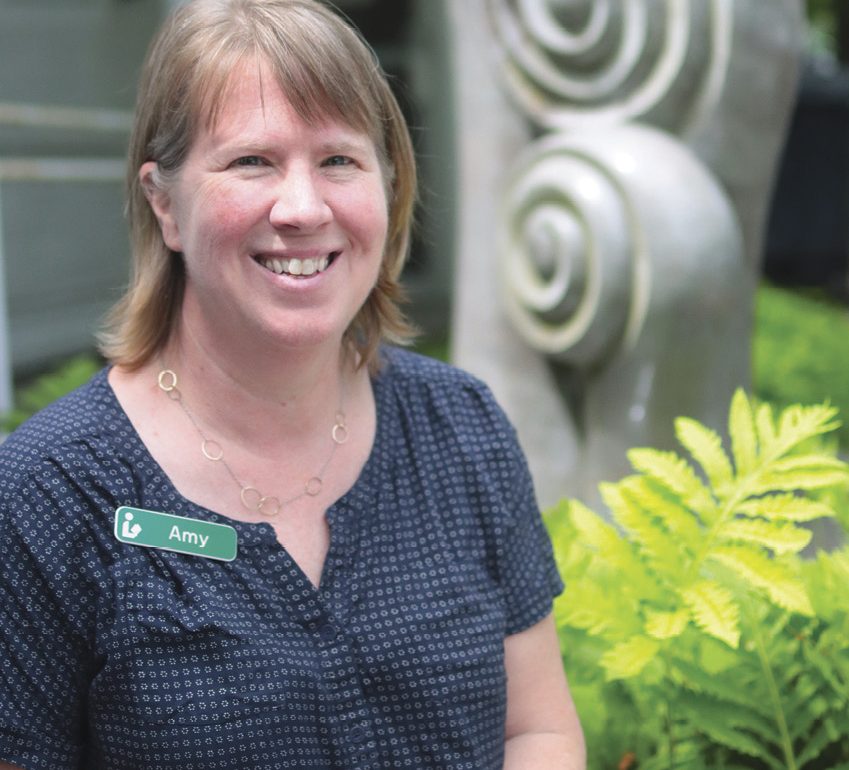
Staff, along with some board members and Friends of NPL, will be present to greet patrons and to answer questions about all of the different aspects and offerings of the Norwich Public Library. Meet Amy, the new Youth Services Librarian, and see what she has in store for the kids’ room and programming. There will be information about volunteering, where and how to access the digital options for borrowing material, and about in-person adult and all-ages programming. Snacks and beverages will be available. The afternoon at the library will culminate with author, illustrator, and MacArthur “Genius” Fellow winner, David Macaulay, who will give a talk at 12:30 p.m.

Everyone is welcome to come check out what the Norwich Public Library has to offer.

~ Isaac Lorton
Community Engagement Coordinator
Norwich Public Library

Share:
Reading time: 1 min
All, Life at 531 Feet

There’s No Place Like Home in the 05055

by Mark Lilienthal No Comments

In my 51 years, I’ve discovered a few truths out there. One is that if your modus operandi is to complain about the way of the world, you’re not going to get many party invitations. A second is that a lot of party invitations these days aren’t reflective of your popularity, but rather your ability to discern between a real Paperless Post and a fake Paperless Post. A third is that if you spend a lot of your time focused on the positive, you’ll collect a lot of smiles on the way. Readers of this publication know which way these pages lean, so I’ll try to follow along.

When you’re lucky enough to live in the 05055, there are countless ways the community will welcome and thank you for being part of the action. Oftentimes, I describe these realities as “you won’t find this in a real estate ad, but it’s true.” Take a walk around the village and count how many people you encounter that you know. Notice the number of smiles you give and receive. Take note of how many houses you pass where you can say, “I know who lives there.” (For some of us, we may even say, “And I can tell you who used to live there.” My children positively love hearing about how Chief Bradley used to hang deer in his barn at the corner of Hazen and Main.) With time, you accept this as a banal reality in our haven; don’t let yourself become blasé. Embrace it as a marvel of our town.

When you move here from away, you likely have no idea that within a short period of time, you’ll have a network of college professors, shop keepers, landscapers, letter carriers, librarians, published authors, bartenders, town employees, rec council members, youth sports coaches, and a guy named Demo in your orbit, all of whom know your first and last name and the names of your family members. You won’t try; it will just happen. #WelcomeToNorwich.

When your life takes a more serious turn, our little Vermont town will be there to help you out. No one plans to curbside the local physician, plumber, attorney, or teacher, but we all end up doing it. There’s something about the opinion of a Norwich resident at a loved one’s bedside that carries just a little more weight, that comforts just a little bit more.

If you’ve ever needed to gather eight to 1,000 people for an event, you know it can be a stressful undertaking. Here, again, Norwich answers the bell. Use the Norwich Public Library’s meeting room for small gatherings. The Inn can host your party any time. I’ve been to celebrations of life in the white church, on the shiny floor of Tracy Hall, and outside at Huntley Meadows. Each Thanksgiving, our family gathers with hundreds (thousands?) of local and non-local folks for the Turkey Trot. How do you put that in an ad for a three bedroom, two bath on Turnpike Road?

I think one common thread is that, as a general rule, Norwichians are loath to get too competitive with each other. Sure, there are some very nice homes and plenty of cash in those there hills, but if one chooses to give off too many airs, one risks finding oneself alone with one’s thoughts while the rest of us hang out at the Norwich Fair on free bracelet night, working our way through a fried dough or a snow cone.

That’s not to say we don’t know our way around a good conflict. From the ListServ to the Listers’ Office, consternation, accusation, and obfuscation can rear their heads. But Father Time and Mother Nature have a way of putting adversaries on neutral turf.

Maybe we bump into each other deep in the hardware section of the general store. Perhaps we find ourselves cheek-by-jowl in line at the famers market’s yellow tent. When we’re there, all the intangibles of the 05055 conspire to remind us that we live in a genuine community, and that community is more than just an idea. It’s our home.

Share:
Reading time: 3 min
All, Goodness InDeed

Finding Our Stride’s Community Color Splash and Dash 5K

by Greg DeFrancis No Comments

“Go ahead, squirt me! Make me orange!” shouted the nine-year-old girl as she ran past a team of volunteers squirting orange powder at runners along Thetford Academy’s Dan Grossman Woods Trail 5K course. She, her mother, and 283 other runners and walkers of all ages participated in Finding Our Stride’s first annual Community Color Splash and Dash fun run on May 31 this past spring. Finding Our Stride’s motto is Positivity in motion, and it was on full display as families and runners from throughout the Upper Valley helped celebrate the organization’s 15th year of bringing its 100% free and inclusive afterschool youth wellness programs to elementary and middle schools up and down the Connecticut River Valley.

Pure joy as a young runner approaches a color splash station.

The Color Splash and Dash was the first major community event for Finding Our Stride. It served as a fundraiser and, more importantly, as a way to expand the organization’s efforts with rural youth to include families and adults. The goal was to promote outdoor activity through a fun, welcoming, inclusive, and non-competitive event that built community. To ensure everyone felt welcome, organizers offered three course options: the well-known 5-km cross-country course familiar to high school runners across New England, a shorter 3-km route that bypassed the challenging “Morty’s Monster” hill, and a special 300-meter “Lollipop” run for children ages five and under, where every child received a colorful lollipop at the finish line. The event emphasized participation and fun by being untimed and by having volunteers throughout the course who sprayed runners with colored powder made from cornstarch and food coloring.

A runner passing through the last of the five color stations at Finding Our Stride’s Community Color Splash and Dash along the 5K
Woods Trail at Thetford Academy.

Finding Our Stride was founded 15 years ago by Jenny Williams, who saw an unmet need in our rural communities: inclusive, barrier-free programming where all youth have opportunities to thrive socially, emotionally, and physically. She partnered with the Indian River School of the Mascoma Valley School District, and the program supported 14 youth in its first year. Today, the program partners with over 25 schools, bringing its unique afterschool model, free of charge, to sites throughout the greater Upper Valley, from Ludlow, Vermont, to Lisbon, New Hampshire. Finding Our Stride’s theory of work is simple: get kids outside, active, and away from screens; give them a challenge; surround them with supportive peers and adults, and good things will happen. Add a purposeful dose of community engagement, and great things will happen. In the 2025/2026 school year, 1,200 youth participated in the program, and the organization provided stipends to 125 coaches each year, 90% of whom are teachers in the partnering schools, providing opportunities for school staff to build deeper relationships with students outside the classroom. In addition to being free, Finding Our Stride provides healthy snacks and supports a Sneaker Fund that provides free running shoes, ensuring every child has proper footwear. Over the past fifteen years, the organization has grown and evolved through collaborative partnerships with school leaders and teacher-coaches. Together, the organization has designed a program that builds fitness, strengthens social-emotional health, and cultivates connection to community.

Ella Rodakowski of Norwich (right) proudly crosses the finish line with her cousin Amelia DeFrancis.

As a holistic, youth-wellness program, Finding Our Stride sees bringing families and community together through opportunities to participate in healthy activities as part of its mandate. The Color Splash and Dash did just that, and the organization looks forward to providing more events in the future. And it seems they’re filling a need. As one participant yelled as they left with their family after the Color Splash on the way to their car, “It was a blast — we can’t wait to do it again next year!”

Share:
Reading time: 3 min
All, Norwich Historical Society

Treks Through Forgotten Norwich

by David Callaway No Comments

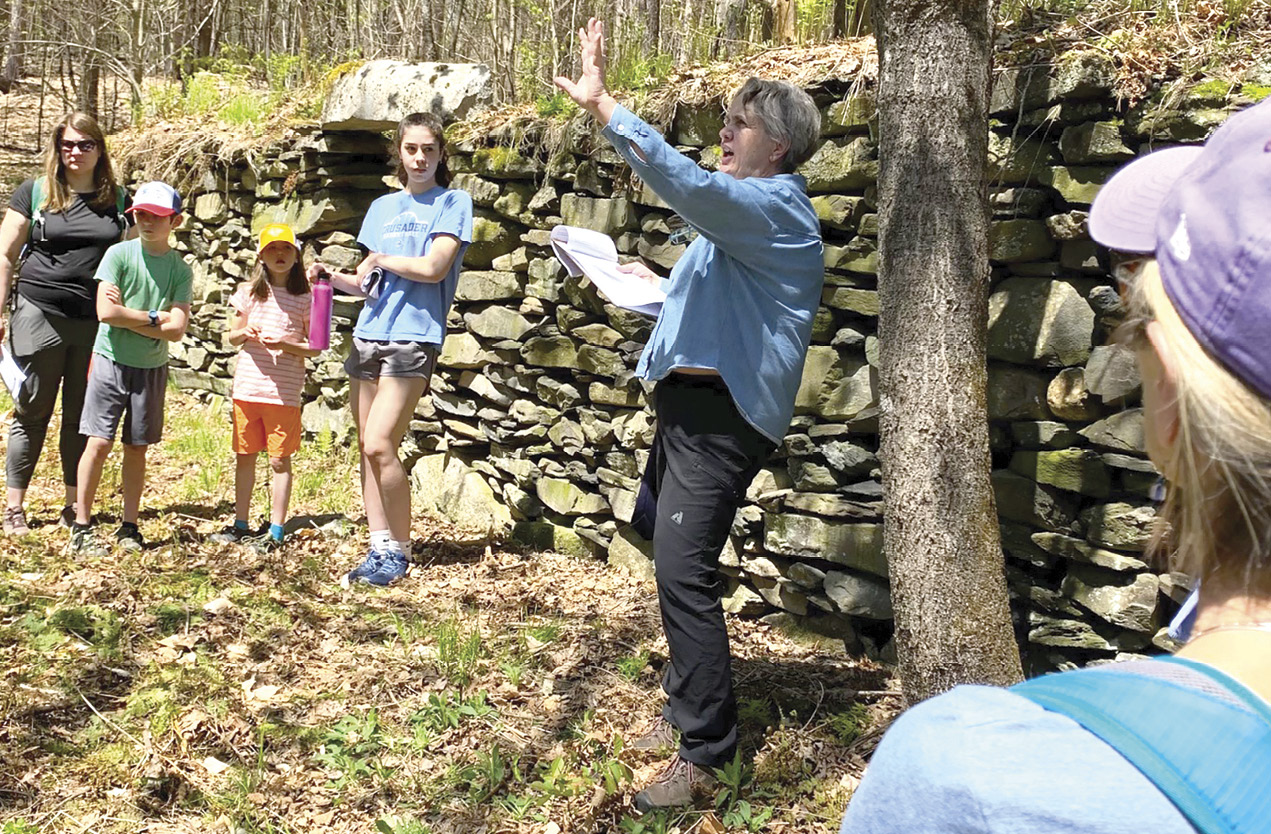
Have you ever wondered about the stone walls that line the fields of Norwich or cellar holes deep in the woods, or a small cemetery just off a hiking trail? Who lived there and when? Why did they leave? Many of these historical questions will be discussed during two fall foliage hikes sponsored by the Norwich Historical Society. One will explore Parcel 5 and the other will unlock the history of a settlement on Griggs Mountain.

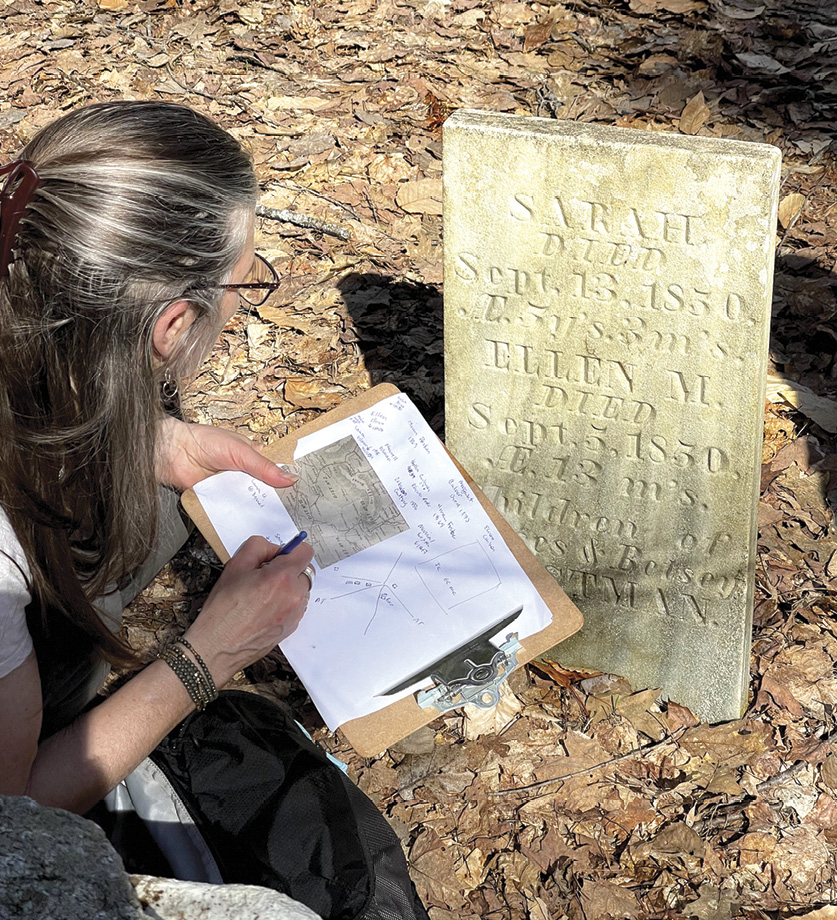
Cheri Mather gathering information to prepare for the tour.

Griggs Mountain

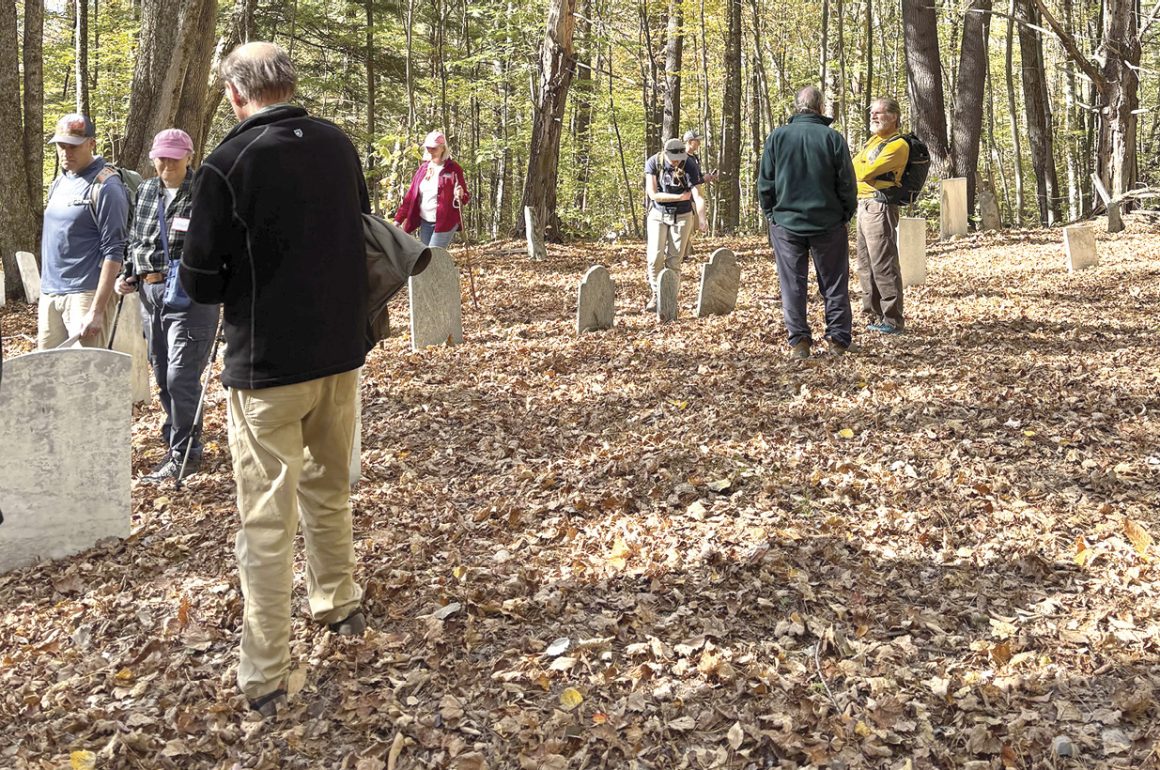
Situated high above Norwich on Griggs Mountain, off the Appalachian Trail, a small community of farmers settled in this area at the beginning of the 19th century. What remains of those families today are farm foundations, remote trails through the woods that used to be roads, and the abandoned Parkhurst cemetery. Parkhurst is the hardest-to-reach cemetery in Norwich and the final resting place for eight different families. Tragically, 12 out of the 21 of the people buried here were younger than 25. The last burial was in 1873.

It seems odd today that Norwich farms in the early 1800s were built on high hills. Venturing to the village was a four-hour trek by an oxen-pulled wagon over dirt trails. But living in the hills in those days made the settlers less vulnerable to flooding and the trees higher up were thinner and easier to clear.

The settlers cleared the land, planted wheat, rye, “Irish” potatoes, “Indian” corn, and hay. They also raised sheep, pigs, cows, and bees, and sugared. And to top it off, cords of wood needed to be cut, stacked, and dried to provide heat for the long Vermont winters.

Through research of town and local cemetery records and the study of population and agricultural censuses, the NHS has pieced together some remarkable tales of those early, hardworking settlers and their descendants during the 100 years the community was active. Join the NHS tour this fall to hear these stories, walk among the gravestones and explore the old foundations to learn more of the history of this vanished community in the woods. The two-mile Griggs Mountain hike begins off Bragg Hill and covers some uneven terrain, so wear sturdy shoes and bring your imagination to fully enjoy it.

NHS Director points out cellar hole features of the Brown Barn foundation at Parcel 5.

Parcel 5

For a fall foliage hike close to town, consider a trek through Parcel 5, a historic hiking area a couple of miles out of town on Beaver Meadow Road.

Israel and John Brown settled on the land in the 1790s and had adjoining farms and several plots of land across the road and along the Charles Brown Brook. Their descendants owned the land until 1926, when it was sold to the Norwich Water District to ensure safe drinking water for the Charles Brown Brook watershed, which was sent to town in wooden pipes.

Parcel 5 has an ancient history that impacted how the Browns developed their land. 15,000 years ago, the area was covered by a mile-thick sheet of ice. The ice slowly melted and was gone 13,000 years ago, but a large dam formed near Middletown, Conn., and water backed up all the way to St. Johnsbury, creating what is now known as Lake Hitchcock. Once the water retreated, rocks dropped by glaciers were slowly buried. Soil covered them. Trees grew over them.

The Browns cleared the fields of trees and plowed them, kicking up rocks that were hauled from the fields and used for stone walls and foundations. In the 1840s, there were over 13,000 sheep grazing the hills of Norwich; by 1850, nearly every farmer in Norwich kept an average of 55 sheep. The combination of deforestation and sheep grazing dislocated even more stones. Supplies of wood shrank; supplies of stones rose.

The abundance of stones was put to good use by the inventive Browns. The guide on the Parcel 5 tour will explain how to look at stone walls and point out how they were used for fencing, separating fields, and foundations. Hikers will see plans for the Brown farmhouse and its foundations, and examine what remains of them. This tour will take you from the Ice Age to a 19th-century Norwich farm. Learn the history of the farm through diaries and census records and be astounded that the Browns had an apple orchard that grew 2,000 bushels of apples a year and turned it into cider at a mill in Beaver Meadow.

Along with the Griggs Mountain hike and the trek through Parcel 5, an interested hiker/historian might also like to explore the Ballard Trail or climb up the switchback path to Gile Mountain. The Norwich Historical Society has more hiking options and trail histories at norwichtrails.org/trail-histories, and check out norwichhistory.org for the fall foliage hike schedule.

Share:
Reading time: 4 min
All

Women, Wit & Wisdom Lecture Series Offers Myth, Misery & Miracles…and More

by Patty Monahan No Comments

The Norwich Women’s Club has announced three upcoming events in its Women, Wit & Wisdom lecture series.

Myth, Misery, and Miracles

November 17, 2026
6:30 p.m. Gather / 7 p.m. Lecture
The Norwich Inn
$15 per ticket, which includes a glass of wine

Many thoughtful, capable women reach a point when the roles and expectations that once guided them begin to feel like an outdated operating system — no longer serving who they’ve become. In this talk, Suzanne Dudley Schon explores how the quiet beliefs we carry about goodness, responsibility, love, and identity can both shape and confine us. Through personal stories, practical insight, and reflection, she offers a compassionate framework for recognizing these inherited “myths,” understanding the misery they can create, and rediscovering the miracles — the freedom and clarity — that were there all along.

Suzanne Dudley Schon is a coach and writer who helps people untangle the inner beliefs and patterns that keep them from living with joy and freedom. Her work blends psychology, multicultural wisdom traditions, and hard-won personal experience. She is the author of Out of the Box: A Journey In and Out of Emotional Captivity and the top banana (and only banana) of her coaching business, Oasis in the Overwhelm LLC.

Norwich resident and active gardener Jaci Allen and her daughter, Danielle Allen, who spoke at a previous lecture. Danielle is a farmer, co-owner, and farm manager for Root 5 Farm, a certified organic vegetable and CSA farm in Fairlee.

Learn to Play Mah Jongg

January 12, 2027
The Norwich Inn

Join Sue Pitiger and others from the Norwich Women’s Club and learn to play Mah Jongg.

Forgotten Founder: Bruce Bozsum as Samson Occom by R. Michael Murray.

Samson Occom, the Founding Father of Dartmouth College

April 6, 2017
| Location TBD

This event will feature the documentary Forgotten Founder: The Untold Story of Samson Occom and Dartmouth, with a talk by Signe Taylor of Norwich, who wrote and produced the documentary.

All tickets can be purchased a month before each lecture on the NWC website: norwichwomensclub.org.

Share:
Reading time: 1 min
All

American Precision Museum Promotes Mike Fenzel to Director of Education

by Norwich Times No Comments

The American Precision Museum (APM) has promoted Mike Fenzel to director of education.

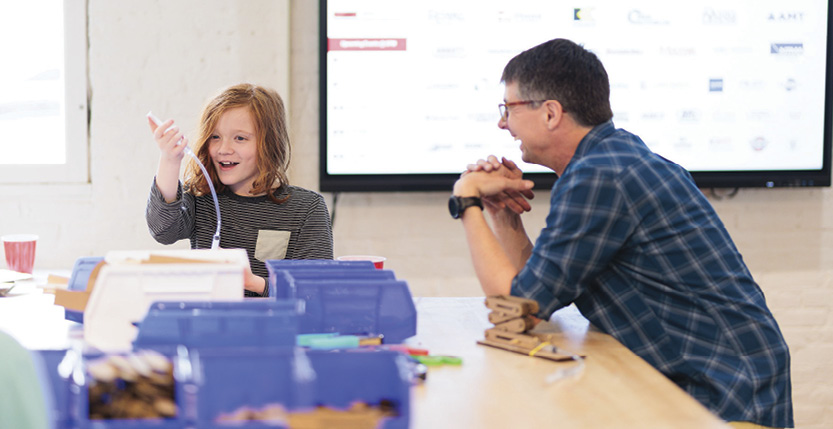
Since joining the museum in 2024, Fenzel has been a driving force behind the museum’s STEM+Manufacturing (STEM+M) education initiatives. Building on traditional STEM education, the museum’s STEM+M approach emphasizes the essential role of manufacturing in turning scientific discoveries and engineering ideas into real-world products. Through hands-on learning at the American Precision Museum, students gain practical experience in design, problem-solving, teamwork, and innovation while exploring career opportunities in advanced manufacturing.

Fenzel played an instrumental role in redesigning the museum’s STEM+M Education Kit Program and expanding educational programming that has brought more young learners through the museum’s doors. He led the development of the second generation of the museum’s A Maker’s Journey STEM+M Education Kits, which are now being used by classrooms throughout Vermont, New Hampshire, western Massachusetts, and the south suburbs of Chicago. He also expanded educational programming at the museum, giving more young learners opportunities to engage with interactive exhibits and discover how manufacturing has shaped the past — and continues to shape the future.

Fenzel has been a driving force behind the museum’s STEM+M education initiatives.

“Mike’s passion for education, creativity, and commitment to the museum’s mission have made a lasting impact on the American Precision Museum and the communities we serve,” APM’s Executive Director Steve Dalessio said. “His leadership has strengthened our educational programs and inspired thousands of students to see themselves as tomorrow’s innovators, makers, and problem-solvers.”

Fenzel began his museum education career in Washington, D.C., in 1999 before spending more than 20 years at the Montshire Museum of Science in Norwich, Vermont, where he developed engineering and maker education programs. He joined APM in 2024 during an exciting period of growth and innovation.

As director of education, Fenzel will lead the continued expansion of the museum’s educational initiatives, including new maker experiences in the Gene Haas Center for Manufacturing Inspiration. By growing opportunities for students, teachers, families, and lifelong learners to explore designing, making, and manufacturing, he will help position the museum as a leading destination for hands-on learning and workforce inspiration.

“I am thrilled to help expand the museum’s makerspace and STEM+M programming,” said Fenzel. “Helping students understand not only how things are designed, but also how they are made, gives them a deeper appreciation for innovation and opens doors to exciting future careers. I’m excited to build on that work through new experiences in the Gene Haas Center for Manufacturing Inspiration.”

Share:
Reading time: 2 min
All, Around Town

LISTEN Community Services Receives $150,000 Grant

by Norwich Times No Comments

LISTEN Community Services will launch New Hampshire’s first Situation Table and expand community-based support for people affected by opioid use disorder after receiving a $150,000 Opioid Abatement Community Grant.

The award provides $75,000 annually over two years through the Opioid Abatement Community Grants Program, administered by Granite United Way in partnership with the New Hampshire Charitable Foundation on behalf of the New Hampshire Department of Health and Human Services and the Opioid Abatement Advisory Commission.

This year, the organization served 9,050 neighbors across New Hampshire and Vermont, as rising costs left more people facing hardship. More than 2,600 people turned to LISTEN for the first time for help. Across its food, housing, financial assistance, and service coordination programs, the organization continues to see that opioid use disorder is often accompanied by other challenges that make recovery and long-term stability more difficult.

“This grant gives us the opportunity to strengthen how our community responds to opioid use disorder and the interconnected challenges that often accompany it,” said Kristi Lenart-Rikert, executive director of LISTEN Community Services. “By expanding community-based support and helping people access services earlier, we can build a more coordinated system that improves outcomes for individuals, families, and the Upper Valley as a whole.”

The grant builds on several years of expanded harm reduction and outreach efforts at LISTEN, including the organization’s Community Health Worker and growing partnerships with healthcare providers, municipalities, and nonprofit organizations throughout the Upper Valley.

This year, LISTEN expanded its community-based outreach by adding a Community Case Manager. Over the next two years, the organization will launch New Hampshire’s first Situation Table to coordinate responses among community partners, provide specialized training for its Service Coordination team, and explore installation of a publicly accessible harm reduction vending machine in Lebanon to expand access to free health and safety supplies.

The Situation Table will become a cornerstone of this collaborative effort, providing a structured process for healthcare providers, law enforcement, schools, municipalities, and community organizations to identify and respond to individuals and families facing urgent, interconnected challenges before situations escalate into crisis. The evidence-informed model has been successfully implemented in communities across Canada and several U.S. states and will make its New Hampshire debut through LISTEN’s initiative.

Share:
Reading time: 1 min
All, Around Town

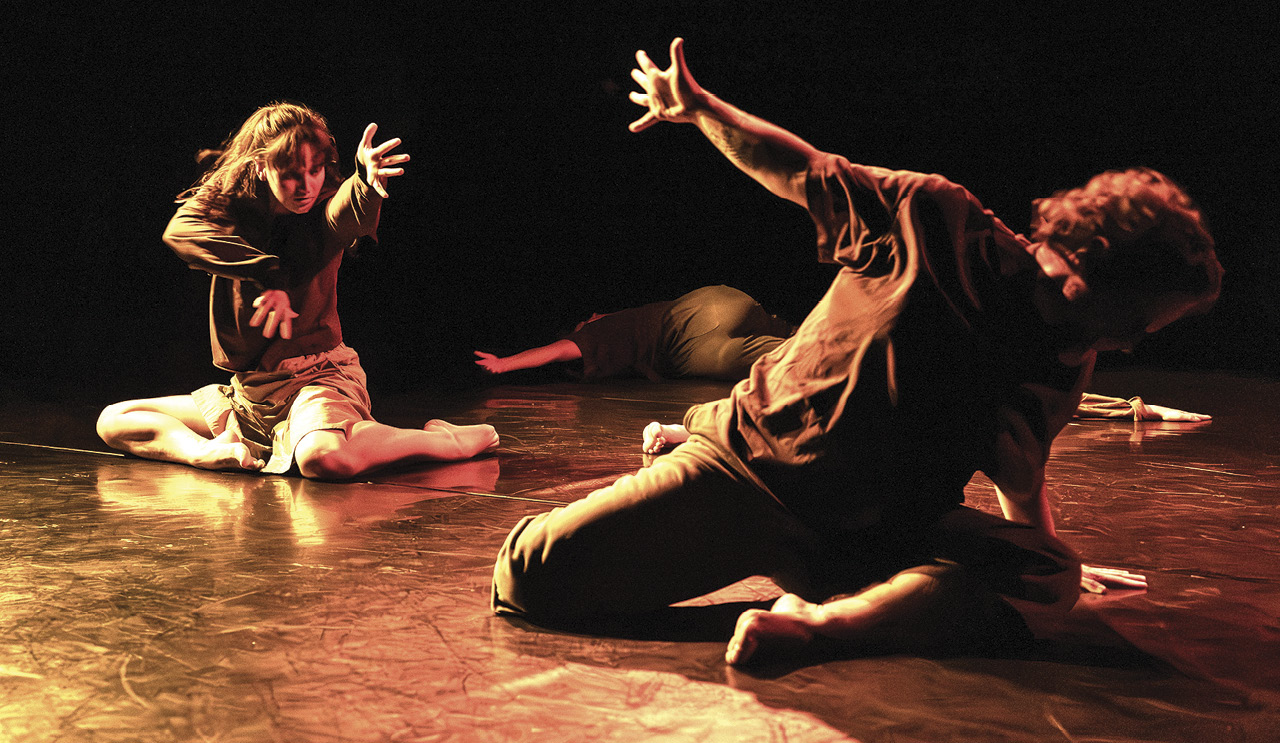
The Junction Dance Festival Celebrated Five Years of Dance in the Upper Valley

by Norwich Times No Comments

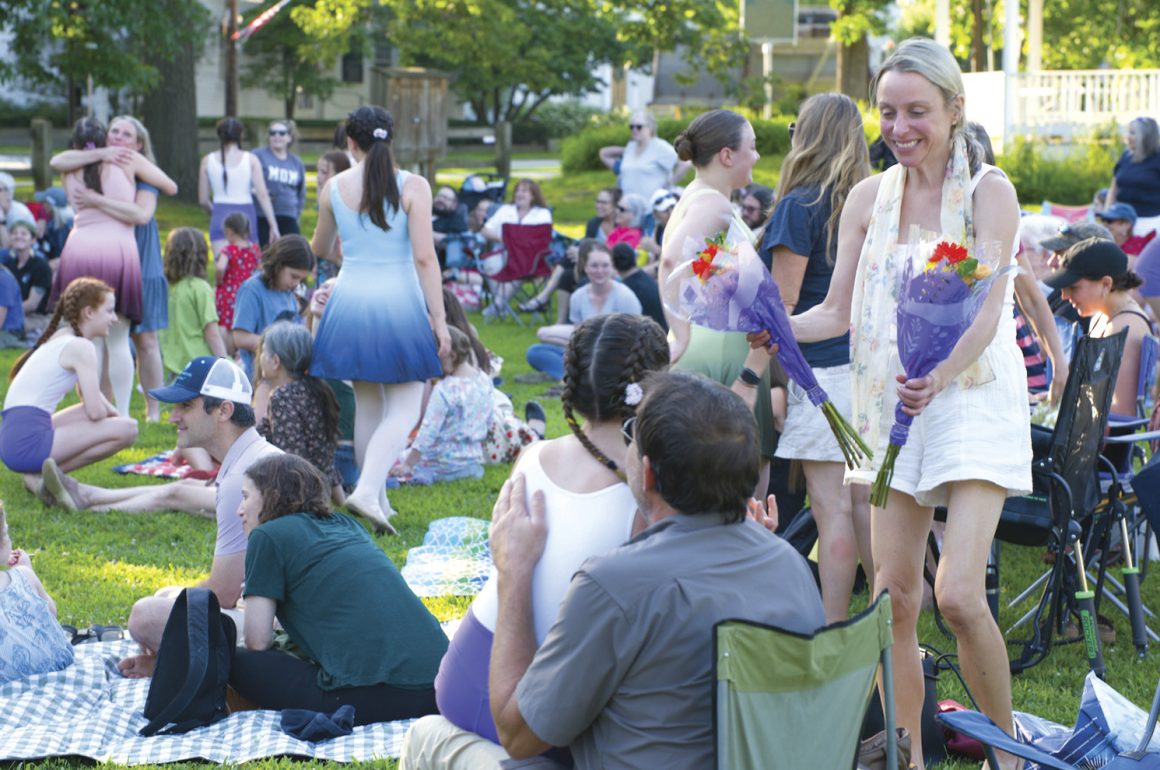
2026 marked the fifth year of The Junction Dance Festival (TJDF). The annual event, which took place July 10-19, featured performances, workshops, classes, and dance experiences throughout the Upper Valley.

The Main Showcase was presented in two performances at the Briggs Opera House in White River Junction. It featured new and original work from regional dance makers and a diverse lineup of artists, including Caitlin Morgan, this year’s featured Vermont Dance Alliance grant recipient.

The festival also featured a new Norwich Community Dance Day, which included free workshops and a performance of “SEASONS: Summer” by Avant Vermont.

Dancers from Caitlin Morgan’s piece Wind and Unwinding strike poses onstage during dress rehearsal of the Junction Dance Festival’s Main Showcase in White River Junction.

One of the 2026 ChoreoLab Residency artists was Norwich native Aida Claire Bauer, a dancer, maker, and student at the New School studying Interdisciplinary Science and Contemporary Dance. Bauer’s project explored the relationship between embodiment and labor and the connection between farmwork and dance.

ChoreoLab artists are “creators who are deeply engaged with the New England landscape and the intersection of movement, science, and spatial exploration.” In addition to her artistic practice, Bauer works at Three Cow Creamery in Corinth.

Share:
Reading time: 1 min
Page 1 of 212»

Our Latest Issue

Fall 2026 Edition

© 2024 copyright Greater Good Media. All rights reserved.