Home
About Norwich
Our Team
Content
    All Articles
    Cover Story
    Animals Rule!
    Around Town
    Artist Profile
    Creating Community
    Elder Profile
    Green Page
    Goodness InDeed
    History
    Life at 531 Feet
    Meet your Neighbor
    School Days
    Your Green Spaces
Our Sponsors
Advertise
Archives
Contact Us

Norwich Times - Good People, Good Places, Good Things Happening
  • Home
  • About Norwich
  • Our Team
  • Content
    • All Articles
    • Cover Story
    • Animals Rule!
    • Around Town
    • Artist Profile
    • Creating Community
    • Elder Profile
    • Green Page
    • Goodness InDeed
    • History
    • Life at 531 Feet
    • Meet your Neighbor
    • School Days
    • Your Green Spaces
  • Our Sponsors
  • Advertise
  • Archives
  • Contact Us
All, Miscellaneous

Plant Biodiversity is Essential for Ecosystems

June 21, 2026 by Lynnwood Andrews No Comments

According to the Vermont Fish and Wildlife Department, Vermont has “over 2,800 plant species. Most of these are flowering plants, but this also includes conifers, ferns, grapeferns, clubmosses, horsetails, quillworts, spikemosses, and bryophytes — mosses, liverworts, and hornworts.” Of these, 1448 are native, and 137 are natives to other regions of the US and have been introduced here. We have over 600 rare and uncommon native plants including 163 on the threatened and endangered list.
Recent research has shown that biodiversity is vital to ecosystem functioning and stability. Ecosystems with higher biodiversity are more resilient to weather and climactic extremes, as well as other major disturbances. Decreases in biodiversity, therefore, raise alarm about the future functioning of our ecosystems and their capacity to recover from extreme events.

Evening Primrose

Plants are foundational to all ecosystems. They shape hydrological systems, put oxygen in the air, recycle nutrients, form and conserve soil, regulate the climate, and provide habitat for animals. As a primary energy base through photosynthesis, they are the base of food chains for all animals.
The Intergovernmental Science-Policy Platform on Biodiversity and Ecosystem Services (IPBES) reported that declining biodiversity is a global problem, occurring at an unprecedented rate. Significant declines in plant biodiversity are being documented in Vermont’s forests, fields, and wetlands, as well. Recent forest health reports from the Vermont Department of Forests, Parks and Recreation show increasing stress from drought, invasive pests, and poor regeneration — clear signs that the state’s ecosystems are under mounting pressure. The drivers of the biodiversity decline in Vermont include climate change, habitat loss, non-native invasive species, deer overbrowse, declining insect populations, and simplified forest structure (even-aged stands).

Green-fringed Bog Orchid

Climate change, by virtue of rising temperatures, changing rain patterns, and more intense weather events, imposes serious threats to plants. According to the Vermont Climate Assessment, (2021) the state is already experiencing warmer winters, heavier downpours, and longer summer dry spells — conditions expected to accelerate ecological change. Warmer winter temperatures decrease winter snowpack, and may eventually eliminate it altogether. Vermont is forecast to have the climate of North Carolina by 2070. Winter snowpack insulates plant roots from ice and heaving. Warmer nighttime temperatures during the growing season prevent plants from recovering from daytime heat stress. Warmer temperatures allow pests and diseases to flourish. Vermont is predicted to lose many plant species due to climate change, especially Sugar Maple.
Recent US Forest Service research indicates invasive species are now a primary driver in biodiversity loss; they interact with climate change to accelerate ecosystem disruption. In Vermont, for example, invasive worms are changing soil composition and reducing leaf litter, pests like Emerald Ash Borer and Hemlock Wolly Adelgid are killing trees, and plants like Japanese Knotweed are creating vast monocultures.

Yellow Lady’s Slipper

According to the University of Vermont, the state loses about 5000 acres per year from development, fragmenting forest blocks. Even where total forest acreage remains relatively stable, recent mapping shows increasing fragmentation and parcelization, which reduces habitat connectivity and biodiversity. The Native Plant Trust estimated that “on average, rare plant species have lost 67% of their known range in the region.”
Deer populations have been allowed to grow to the point where they are eating forest understory, and posing a serious threat to forest regeneration.
Research from the Xerces Society and the University of Vermont confirms that pollinators themselves are declining across the Northeast, with disruptions in timing between flowering plants and pollinator activity, as a result of climate change, further threatening reproduction.

What can you do?

  1.  Plant native plants. Replace non native plants, and remove invasives like Japanese knotweed, burning bush, butterfly bush, garlic mustard, buckthorn, Oriental Bittersweet, etc.
  2.  Convert as much of your lawn as possible to native plants.
  3.  Support policies and actions to tackle climate change ASAP.
  4.  In the fall, do not cut down plants. Leave them standing until June to protect pollinators.
  5.  Allow hunters to take deer on your property. Support efforts to reduce Vermont’s deer numbers.
  6.  When fishing, do not release live worms.
  7.  When gardening, do not dump horticultural products in or near the woods.
  8.  As much as possible, buy bare root plants.
  9.  Do not move firewood from elsewhere.
  10.  Keep your lights off at night. Install motion sensing outdoor lighting.
  11.  Do not use pesticides. There is no such thing as a pesticide that does not kill beneficial insects.
Share:
Reading time: 3 min
All, Miscellaneous

StoneLedge Stables Offers Student Summer Programs

by Paul Foster No Comments

Combine a focus on acquiring socio-economic skills with working with rescue animals, and you get the gist of what the StoneLedge Stables summer programs are all about. The founder and educator of the program is Sandy Bailey. “I have been educating preschoolers in the Upper Valley for over 20 years and rescuing animals my entire life,” she said. “After noticing the increase in challenging behaviors in my students, I knew there was more that needed to be done to facilitate social emotional development. I found out that combining my two passions was the answer.”
What exactly is social-emotional development? Bailey describes it as “social emotional skills in young children includes; the ability to collaborate with others, manage their own emotions, focus their attention, have a strong sense about their own identity, self-discipline and connection. Social emotional learning is the foundation from which all learning builds.”
“Animals are natural teachers and give students the ability to learn these skills in an outdoor natural setting,” she said. “For students, this can be the breakthrough needed in their own unique learning.”
StoneLedge Stables began in 2015, with the first summer of programs held in 2016. This summer, StoneLedge offers three different summer programs:

Children at Stoneledge Stables
Photo by Kimberly Chu

The Way of the Horse

Students will explore the farm using their five senses just like a horse does. The program consists of animal husbandry activities, riding, gardening, mud kitchen play, woodworking, and nature-based crafts.

The Way of the Sheep

Students will actively explore numerous areas of the farm, including the garden and the vernal pool. Animal husbandry and sewing activities will be a large part of the curriculum. Coats will be explored once shorn by washing, dying, carding, and spinning fiber.

The Way of the Pig

Students will explore the farm in an intelligent, muddy, and social way. They will work in the garden and participate in animal husbandry activities. Pigs have one of the highest IQs of all domestic animals, and students will sharpen their minds as they study native New England plants and animals.

Sandy Bailey with Bella Photo by Kimberly Chu

StoneLedge is situated on Union Village Road, just before the steep hill before the road joins Route 132. When I visited the program on a Monday morning, there were maybe 10 young children busy with various activities. One or two were engaged in a project involving a microscope that was donated to the program. One or two children were busy grinding feed for chickens, while others were playing with and picking up the chickens. One girl sat by herself busy making a bracelet. There were three or four Counselors-in-Training (CIT) to help the children with their various endeavors. The highlight of the morning was Bailey shearing a rescue sheep. The children watched as she struggled to hold the sheep while it was being sheared, and a few of the children wanted to play with the wool after it had been sheared. In addition to the sheep and chickens, the stars at Stone Ledge are the two rescue horses and Cooper, a rescue dog.

The program relies on the community for funding. “Without community grants, there would be no program,” Bailey said. “We have been blessed by grants from the Jack and Dorothy Byrne Foundation, Norwich Lions Club, Norwich Women’s Club, Dan & Whit’s, Mascoma Bank Community Grants, the Co-Op Food Stores, Hypertherm Hope Foundation, and the Susan D. Kaufman Foundation.” StoneLedge also has a close relationship with the local Sweetland Farm, which hosted a fundraising event last September — Hoofin’ it for Hay, a 5k and Fun Run.

Kindness Rock Garden Sign Kimberly Chu Photography

Bailey said this type of education model is the way of the future for young children. “I am currently working with the Early Childhood Education Association (ECEA) of the Upper Valley by mentoring the next generation of Early Educators,” she added. “Outdoor farm-based programs are a unique model that facilitate the teacher’s ability to meet students where they are at in their unique learning journeys. In response to community needs we offer both a Junior Counselor in Training program (for 4-8 graders) and a CIT program, which then becomes a paid position if the student wants to continue their learning on the farm.”
Learn more about StoneLedge Stables by visiting stoneledgestables.org.

Share:
Reading time: 3 min
All, Miscellaneous

Meet the Norwich Community Nurse

December 8, 2025 by Kelly Sims No Comments

Mary Stevens, APRN, is Norwich’s Community Nurse. Our town, community members and the Byrne foundation have generously supported this integral service. What exactly is a Community Nurse and what exactly does Mary do?

Healthcare is evolving and complicated, making it easy for important pieces to fall through the cracks. People are encouraged to do more and more for themselves and for some, this can be a challenge. The Community Nurse bridges the gap between the medical environment and people’s lives in their own homes.

Mary offers assessments. She visits people in their homes and helps them figure out what services and equipment would make life easier and safer.

Mary will follow up with people who live with chronic illnesses such as diabetes and congestive heart failure and make sure they understand their medications and how and when to take them. She communicates with healthcare providers and sometimes accompanies people to medical appointments. Her own background as a Nurse Practitioner adds to her effectiveness in this role.

We have community members who are discharged from the hospital after a bout with pneumonia or after a hip replacement. There can be a wide gap between discharge instructions delivered in the hospital and the reality at home. Mary visits and makes sure that recovery is on the right track and that people have the correct equipment and know how to use it.

We have several elders in our community who don’t have family close by. Mary offers home visits  and communicates with family members. As is true in the larger world, Mary increasingly encounters people living independently in Norwich, who are  also living with dementia. This is one of the biggest challenges for people who are aging in place.

Mary has a lifelong association with the Upper Valley, having grown up here herself, and has lived in Norwich for almost ten years. Mary began her career in medicine as a paramedic, attended nursing school and worked as a nurse in the emergency room. She then pursued her Advanced Practice  degree, becoming  a Nurse Practitioner. Locally, she worked at Dick’s House and Good Neighbor Health Clinic before becoming Norwich’s Community Nurse.

To reach the Norwich Community Nurse, call (802) 281-2722; Email: mailto:norwichnursevt@gmail.com. Phone messages and emails are checked daily.

Share:
Reading time: 1 min
All, Miscellaneous

Ann Sargent Receives Top Design Industry Award

by Siobhan Kizis No Comments

When you think of what makes a house a home, what comes to mind? If anyone in the Upper Valley region has a deep, rich understanding of this, it is Ann Shriver Sargent.

Ann is a visionary, who, for many years, has blended her love of the natural world, her appreciation for local craftsmanship, and deep sense of family and community, with her passion for and expertise in design. She is the owner of Sargent Design Company in Norwich, VT, where she and her husband, David, live. Her story is rich, meaningful, and inspirational. For Ann, a home is so much more than the contents within. It encompasses not only the thought that goes into the design and aesthetics, but also the intention of creating a unique space where each detail, each piece within the home reflects a personal story. It is also a reflection of the craftsmen and local artisans in the community who come together to help bring the vision to life. It is not only a home, but a gathering place, a warm invitation to friends and family.

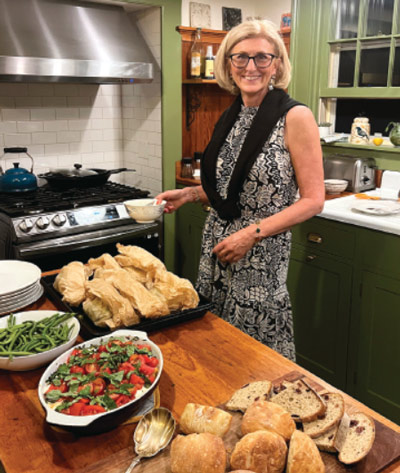
Ann in her kitchenA guest

Ann in her kitchen
A guest

In November, Ann was inducted into the New England Design Hall of Fame, a very high achievement recognizing individuals and businesses in New England’s residential design industry. Ann was recognized for her design work as well as for her contributions to and influences in the look and feel of New England homes and resorts. “This is a huge honor.  There’s a lot of people I have admired over the years that have received this honor, so it feels really humbling and gratifying,” said Ann.  Though her work is deeply interwoven into the landscape and history of New England, it can be admired across other areas of the country, as well.

When Ann and her family moved to Norwich in 1972, she fell in love with the area. “It was a wonderful time to be in the Upper Valley because back to nature was a big movement,” she explained. She described how seeing the local crafts and handmade items made homes more personal and told the narrative of someone’s life. This resonated deeply with her. “I loved the way it made you feel, to be in spaces like that. I absorbed those feelings over time.” This would become the heart and philosophy of her work, to create intentional and meaningful spaces for people and their stories.

At a young age, Ann developed a love for horses, which later led to her joining the The Root District Riding Club. It was there she met David, who later became her husband. Ann and David shared a deep appreciation for creative design, but also for land and family. David’s roots are deeply embedded in Norwich, his family having owned land there for many years.

After some time, Ann and David moved to Gloucester, MA where they lived in and took care of a 1739 home that had been in David’s family and is currently part of the Cape Ann Museum. The two eventually bought the house and made it their home. Living in such a space where fine craftsmanship was seen throughout, such as the architectural details, the hand blocked wall paper, and delicately carved woodwork, Ann developed an interest in how personal touches, history, and stories create a warmth and depth to a home. That “house really seeped into my sense of scale and comfort,” she explained. “I love how antiques and things that show the touch of the craftsman’s hand make a space feel.”

Ann studied art history in college, simultaneously narrowing in on her interest in architecture, which was heavily influenced during her travels through Paris. Later she took on an internship that led her to accept a position in a design showroom in Boston. And from there her career took off. Her husband, working as a graphic designer, also shared an interest in design work that led him into the field of architectural design. Their shared  passion for family, community, and their aligning careers naturally evolved into their collaboration on many projects over the years.

Their love and ties to Norwich brought them to purchase land and build a home across from David’s family’s land, now part of a land trust. Over a 40-year span of time, each of David’s siblings purchased the adjoining properties, ultimately creating a family compound.  Ann shared, “each home has its own personality. When you feel a person’s space, you know who they are.”

When thinking of Ann’s connection to the natural world, her appreciation for craftsmanship, her interest in family, community, and comfort, it is apparent what is at the heart of Ann’s design work. She shared that her intent in designing homes is to focus on “houses with hospitality in mind. It’s about creating something comforting for the people in it and their guests, with enough personal expression to feel like them.”

Congratulations, Ann, for the well-deserved recognition for your design work. It is a testament to the passion and care that is at the heart of your philosophy in creating homes for people, not only in the Upper Valley, but beyond.

So, what makes a house a home? It is the personal expression of someone’s life, the community that contributes to the story and history through fine craftsmanship and skill, and the designer who beautifully orchestrates – and ultimately creates – the complete vision.

Share:
Reading time: 4 min
All, Miscellaneous

Reflections from Members of the MCS Class of 2006

September 7, 2025 by The Norwich Times No Comments

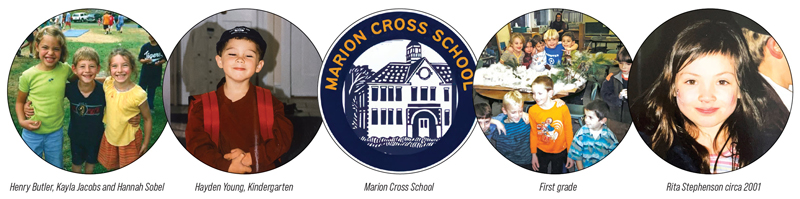
It’s back-to-school time, and, as it turns out, kids in Norwich have a lot to look forward to at the Marion Cross School. You may recall that the Norwich Times just featured the much-loved Mayfest on the cover of the Summer issue. Among many things, we learned about the different rituals performed by each grade and about how current students, staff and parents treasure this time-honored school tradition. Just for fun, we decided to go back in time and see what some members of the MCS Class of 2006 have to say about their MCS elementary school days… 20 years later!

QUESTION KEY
1. Current Residence
2. Current or Intended Career
3. What grade did you enter MCS?
4. What is your fondest memory from those years and why?
5. What was your favorite subject or activity?
6. Who was your favorite teacher and why?
7. What was your favorite MCS annual tradition?
8. List some MCS values you live by today.
9. If you have or plan to have kids of your own, has your MCS experience impacted your decisions about where to live and/or where you would like to send your child to school?
10. MCS is generally regarded as the top elementary school in Vermont. In your opinion, what is its secret sauce and can it be easily replicated in other communities?

Cyrus Rothwell-Ferraris

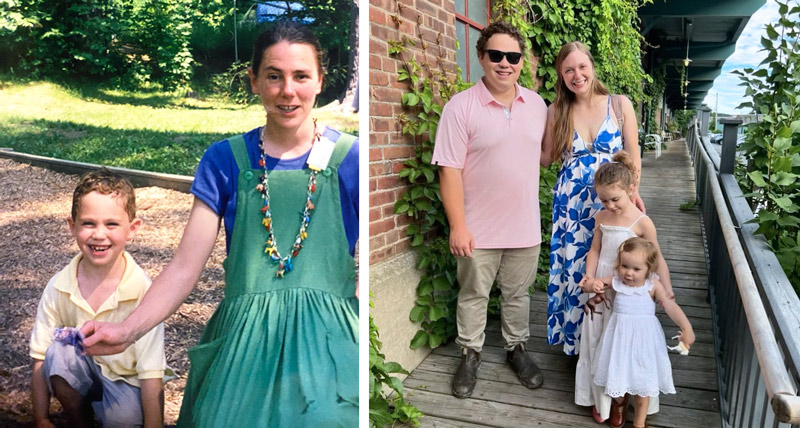
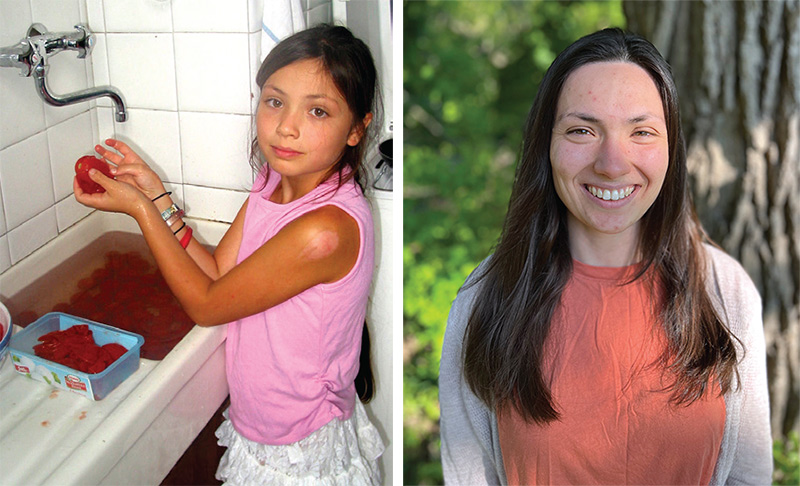
Cyrus (left) in 3rd grade, and (right) in Hawaii with family: sister Chiara (center),parents Steve and Karin, and partner Olivia

Cyrus (left) in 3rd grade, and (right) in Hawaii with family: sister Chiara (center),
parents Steve and Karin, and partner Olivia

  1. Massachusetts
  2. Hospitality/Education
  3. Kindergarten
  4. Fondest memory is the feeling of continuous community that began at MCS and expanded across Norwich to all the spaces where community gathered – Tracy Hall, DnW, Huntley, the grange, Norwich Inn, the trails.
  5. LEEP was so fun and I loved all our field trips to different bodies of water, such discovery.
  6. Mr Girard, the way he was involved with us as students, athletes, as growing young people with connections into being young adults. He was such a legendary icon in so many ways, and I’ll never forget when a simple algebraic equation ‘clicked’ for me as he stood at the head of the room with a scale, representing the variable’s ‘weight’ on the equation.
  7. May Day… it was such a celebration of the end of winter, spring beginning, school coming to an end soon, and summer in sight.
  8. Love of natural science and the outdoors. Commitment to community. A love of “folky” events in community centers.
  9. Yes, I’d love for them to go to MCS!
  10. The pillars of leadership in the sciences, in the arts, in the school wide programming and the graduated curriculum that spanned multiple grade levels. The willingness to allow students freedom and creativity and trust. But primarily I think the total buy-in from the teachers as a team seems to create an interwoven community and learning program that was both so deliberate yet so open. I think this is not something easily replicated.

Henry Butler

Henry then and now

Henry then and now

  1. New York, NY
  2. News Production/Politics
  3. First
  4. I think all of the random things we did – whether it was learning how to mime, Oregon trail day in 3rd grade, the May Day pole weaving. We just had so much fun learning about so many different things, I really appreciated the variety of activities we did.
  5. Social Studies
  6. Mrs. Moore in 1st and 2nd grade! She made coming to school so fun, I remember always being excited to spend time with her in her class. There was a warmth about her that made everyone feel welcome, and I was lucky to have her for the first two years at MCS.
  7. May Day – hands down – lol
  8. I’m not sure if this is a Norwich value or an MCS value – but the emphasis on civics is something that I live with every day. Growing up, I remember going to town meetings in addition to attending the weekly “reps” we had at Marion Cross, seeing the entire community show up physically and care about their neighbors is something that I think most of the country could benefit from. So yes, kindness, compassion and being community minded. It’s been great going to our reunions and seeing us all as 30-year-old adults living in the values we were raised with – it’s been a treat to see!
  9. Besides the emphasis on civics, I think the freedom to be multi-faceted is something that served us well. At MCS I was able to sing, and play sports, and have fun at school. We didn’t need to pick one thing and to be pigeonholed into that, we were free to be who we were. It also helps that we had phenomenal teachers and resources, both of which were used creatively to best educate all of us.

Hayden Young

Left: Hayden and Ms. Dustin (Kindergarten). Right: Hayden with his partner, Brianna McCarty and daughters Hazel and Louise Young.

  1. Quechee, VT
  2. Dreamer
  3. Kindergarten
  4. May Day in the meadow and the Oregon Trail day in 3rd grade. Two great days.
  5. Greek Mythology with Ms. Hall and Ms. Haney
  6. The entire MCS staff was incredible. Hard to pick just one. Ms. Thompson & Mr. Girard were very special teachers to me. They both went above and beyond always. Ms. Dustin, Mrs. O’Connor and Ms. Smith were amazing, too.
  7. Kite Day Popsicles
  8. Be creative. Have fun. Sing songs. Be kind.
  9. I have two daughters that we homeschool, my oldest entering 1st grade. I try to instill all of the values I learned at MCS in them as much as I can in their education and day to day living.
  10. It wouldn’t be a secret if I told you, right?

Galen Richardson

Galen then and now

Galen then and now

  1. Ottawa, Ontario
  2. Research Scientist
  3. 1st
  4. Kite day at Huntley Meadows.
  5. Going to Blood Brook and looking at wildlife
  6. Mr Girard was a very captivating teacher and always knew how to hold my attention.
  7. Kite Day
  8. Respect for the environment. Being kind to others. Learning can be fun.
  9. The classroom environment was very flexible and felt like a friendly space. Additionally, the respect for nature through lots of outdoor activities helped students have fun while learning.

Giulia Alexander

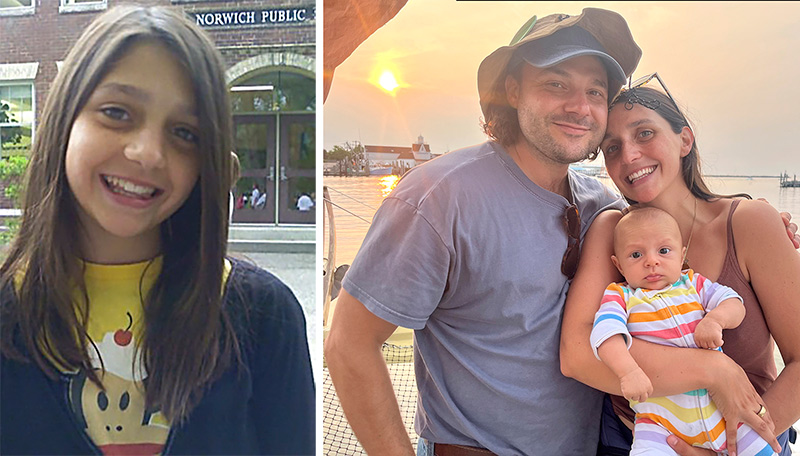
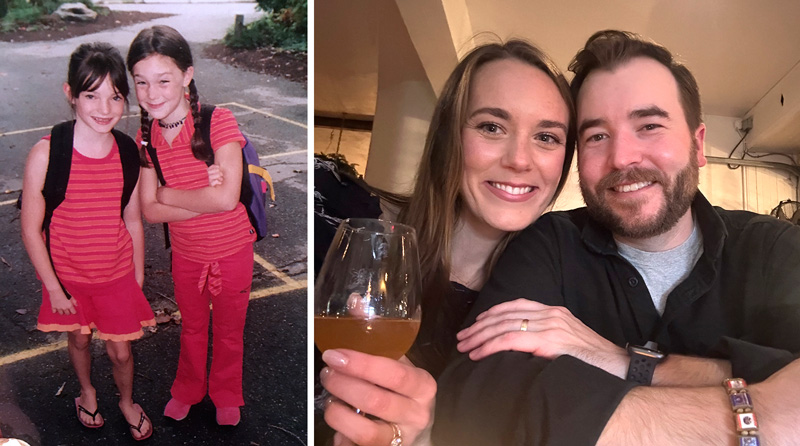
Guilia (11) sixth grade, and with husband Mike and son, Stokely, in 2025

Guilia (11) sixth grade, and with husband Mike and son, Stokely, in 2025

  1. Los Angeles, CA until a few months ago and now back in Norwich!
  2. Film and Commercial Producer
  3. Kindergarten
  4. Rep every Thursday afternoon was a big hit for me. I loved watching other students perform, and of course singing songs like ‘This Pretty Planet’ or the apple-picking song in parts with the whole school. Rep was also one of the few times we were all together. When I was in fourth grade, I had a brother in sixth and a sister in kindergarten, so I felt like I had a real finger on the pulse of the school that year. I remember looking around one day during Rep and realizing I could name every single teacher and student in the room. I loved that feeling of knowing and being known at MCS. Also, it has been nearly 20 years since I sat through Rep, and yet when I see old MCS friends we can still sing all of the songs, in three parts, just like it’s 2004 again.
  5. Social Studies
  6. It feels impossible to choose just one!
    Mr. Girard and Ms. Ames were both standout teachers whose classrooms I remember with such fondness. But if I had to choose, Ms. Thompson in third grade was truly remarkable. She brought such tenderness and attunement to our class that school felt both warm and fun. She had a way of making each of us feel like her favorite student because she connected so deeply. Her creativity as a teacher was unforgettable – she constantly took us out into the community and encouraged us to draw, sculpt, build, and experience the worlds we were learning about. I still think often about our Oregon Trail unit, when we trekked to the apple orchard behind MCS and spent the day living as if we were migrating west in the 1840s.
  7. Kite Day!
  8. Curiosity! I carry with me the values of staying curious about the world and being a lifelong learner.
  9. I had my first baby three months ago and moved back to Norwich this spring. While I’m not sure yet what the next few years will hold –or if we’ll stay in Norwich – I do know that MCS set the blueprint for the kind of childhood and early school experience I’d love for my own kids. If we do stay, I’ll feel so lucky for my son to experience May Day and to wander through the MCS woods, learning about vernal pools in the springtime.
  10. I think the “secret sauce” is a combination of having a well-funded school that can attract truly fabulous teachers, a close-knit small-town setting where people feel connected and known, and the resources and traditions that nurture creativity and curiosity. I do believe aspects of the MCS magic can be replicated in other communities, though I recognize that resources and local context can present true barriers.

Rita Stephenson

Rita then and now

Rita then and now

  1. Saint Paul, MN
  2. Nutrition
  3. Kindergarten
  4. Getting to play outside a lot and use our creativity to make up games is a very fond memory. Also looking forward to all the traditions and projects that each grade would do was always exciting, especially at the beginning of each school year.
  5. I enjoyed studying Greek mythology in both 1st grade and 5th grade
  6. Ms. Dustin & Ms. O’Connor both had a big influence on me. Both teachers made me feel comfortable and welcome in their classroom by allowing us to be ourselves while emphasizing being good to the people around us.
  7. Kite Day and getting to spend the day outside (and getting popsicles!)

Ellen Miller

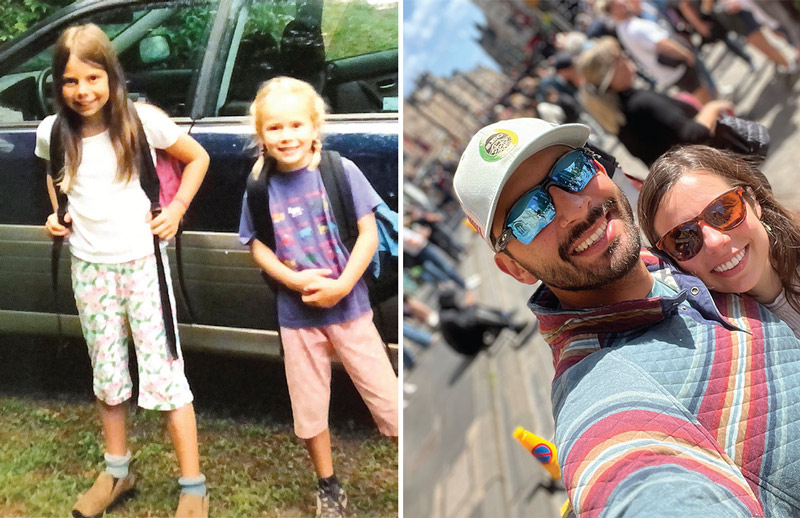
Left: Ellen (3rd grade) and her sister, Marion(kindergarten), on the first day of school in 2003. Right: Ellen with her husband, Jacob, in Scotland (2025)

Left: Ellen (3rd grade) and her sister, Marion
(kindergarten), on the first day of school in 2003. Right: Ellen with her husband, Jacob, in Scotland (2025)

  1. Sunapee, NH
  2. Attorney
  3. Kindergarten
  4. No one memory is my favorite. I loved my classmates and all the wonderful experiences the school gave us.
  5. Art and science classes. I also loved the library.
  6. Mr. G in 5th grade! He opened my eyes. He taught us eye opening things about our world through hands on experiments. I remember feeling like I was making big leaps and connections when he taught.
  7. The birthday calendar was a great one!
  8. Loyalty, curiosity, creativity, community, love and appreciation for nature.
  9. I moved back to the Upper ºValley because I loved growing up in Norwich so much. My time at MCS was one of the best in my life, and it has absolutely impacted the decisions I’ve made in my adult life. It would be incredible if my own kids could go there when the time comes.
  10. MCS stands out for the unique hands-on experiences it provides to its students, and for the trust it puts in kids to test their boundaries. The orienteering classes, Oregon trail, and countless class projects stand out in this regard.

Katrina Menard

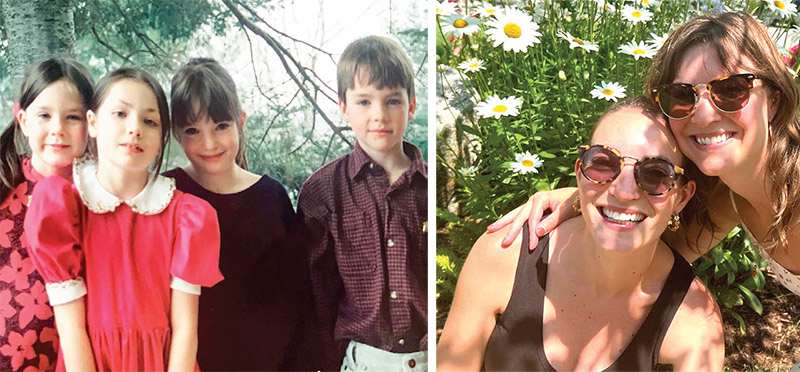
Left: Dewey, Rita, Katrina and Jack Higgins. Right: Katrina and her sister, Mikayla, in Greensboro.

Left: Dewey, Rita, Katrina and Jack Higgins. Right: Katrina and her sister, Mikayla, in Greensboro.

  1. Strafford, Vermont
  2. Public Policy
  3. Kindergarten
  4. I loved kite day. Even when there was no wind, it was still fun to walk to Huntley Meadow, spend the day outside, and eat some popsicles. The only downside was occasionally getting my kite stuck in a tree!
  5. Rep
  6. Ms O’Connor, Mrs. T, and Mr. Girard were all highly influential. It felt like they tailored the educational materials to each specific class and student. They were also very patient and understanding.
  7. Kite Day and May Day
  8. Love of learning
  9. My MCS experience underscored the importance of having teachers who genuinely care about each student’s experience and growth.
  10. Valuing high-quality teachers, whether it’s through culturally valuing them or (hopefully!) paying them what they deserve.

Jack Higgins

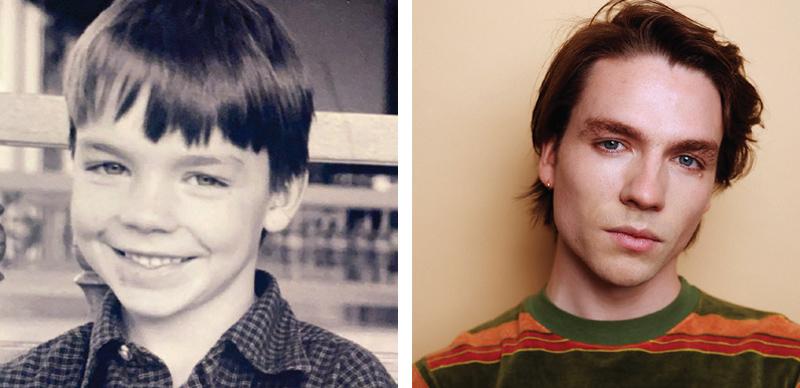
Jack then and now

Jack then and now

  1. Brooklyn, New York
  2. Actor
  3. Kindergarten
  4. I remember one early fall day, Mrs. Thompson found some wild concord grapes growing behind the school. We ate them together by hand in the afternoon light. They were sour and delicious. That and learning the Greek Myths by candle light in fifth grade, to emphasize the importance of oral storytelling.
  5. Music. I remember vividly Mrs. Keck introducing us to Porgy & Bess. It was magical and rewired my little brain.
  6. Wendy Thompson. She was my third grade teacher and instilled in me a still active love of poetry. I’m lucky to call her my friend today. I cared for her dog Tobin often during the pandemic years. He’s my favorite dog in the world.
  7. May Day! I think our class was one of the last to be lucky enough to celebrate May Day in the meadow included in the Frye walking trails.
  8. Respect and adoration for the natural world, reading and memorizing poetry, love for the town of Norwich and singing!
    I sing everyday.
  9. When (if?) I have a child, matching my elementary school experience will be a tall order. I have no idea where my artistic career is going to take me but when (if?) I have a child I know I’ll be on the lookout for a school where teachers are breaking out guitars on the regular.
  10. I think the secret sauce is MCS’s commitment to community ritual. Modern humans are starved for rituals that ask us to slow down and remember what a miracle it is to be alive, to watch the seasons change, to laugh really hard with your friends, to fly a kite. I’m deeply grateful MCS gave me this mode of thinking.

Optional Question: What was your least favorite MCS annual tradition?

I wouldn’t say I have a least favorite. Although, the fourth graders had this odd tradition for a while where, after flower garland weaving during May Day the boys were given a rose and asked to present it to one girl in their class. This made me uncomfortable as a young queer child, so I just gave mine to my teacher Mrs. Stathiem (sp?). I hope they forgo that one nowadays for many reasons.

Dewey MacMillen

Left: Katrina Menard and Dewey first day of 2nd grade. Right: Dewey MacMillen with husband AJ

Left: Katrina Menard and Dewey first day of 2nd grade. Right: Dewey MacMillen with husband AJ

  1. Jericho, VT
  2. Current: Marketing.
    Intended: Still figuring that out!
  3. 2nd
  4. Honestly it’s hard to pick one. I loved the field trips and the quirky traditions we had at MCS – REP, field day, May Day, etc. Of course, developing deep friendships – many of which I’m lucky enough to still have – has to be my fondest memory.
  5. Social Studies. I loved doing the 6th grade Shakespeare play, too.
  6. Truly, I lucked out and had the best teachers year after year. My favorites were Mrs. T (3rd grade) and Mrs. Ames (6th grade). Class with Mrs. T just felt warm and cozy – she made us all feel so loved! Mrs. Ames pushed me and helped me recognize my own potential. Honorable mention: the late Mr. Girard. The kindest man who just made everyone feel so special.
  7. May Day or Oregon Trail day
  8. MCS encouraged us to live in community with one another. To treat those in your community with kindness. I learned to be curious and driven to succeed, but have fun and not take everything too seriously. All of these are values I try to live by today.
  9. Yes, absolutely. I want my future kids to have a small school community where they are seen as a whole person whose well-being is looked after versus just their academic success and that has largely impacted where my husband and I have chosen to put down roots.
  10. I think keeping the school small, rooted in an ethos that nurtures children’s whole being versus just their academic prowess, and maintaining the traditions that make MCS so special all are part of the “special sauce” that make it such a desirable school!

Share:
Reading time: 13 min
All, Miscellaneous

Rumble Strip: A Podcast for Our Time

February 22, 2025 by Cindy Heath No Comments

In traffic engineering, a rumble strip keeps us from going out of our lane or off the side of the road while we inadvertently catch a few winks. Newer cars have ‘virtual’ rumble strips, beeping loudly at our various driving mishaps like crossing a double yellow line or getting too close to another car. But unlike roadway rumble strips, Erica Heilman, producer of the Vermont-based podcast Rumble Strip, relishes getting up close and personal with the people she interviews. In a talk sponsored by VT Humanities that Erica gave at the Norwich Public Library last fall to a standing-room-only crowd, she shared her insights about the journey we humans are on together as we navigate life’s ups and downs, sometimes with guardrails on our emotions, but more often without. A fitting analogy, as it turns out, to the many alternative names for a rumble strip, and come to think of it, the ebb and flow of small town life – “sleepy bumps”, “wake up calls”, “growlers”, and “waker-uppers”.

Recognized as one of the top podcasts in the country by the New York Times and The New Yorker, and winner of a prestigious Peabody Award for “excellence in quality storytelling,” Erica has found a way for Rumble Strip stories to resonate with both listeners and reviewers. Erica explained her ultimate goal to the Norwich Public Library audience: “I want to make shows that remind us of this really natural capacity that we have to fall in love with each other and to join with something that’s bigger than ourselves,” she says. “I think if we bring this attention, openness, curiosity, and levity to our interactions with people, our communities will be stronger.” This sentiment was echoed by a Norwich resident who responded to a survey about the event. “Erica is my favorite podcaster and she is an inspiration to be curious and thoughtful about interacting with others in town. She is also an inspiration to become more involved in town.” And ‘becoming more involved in town’, whether in governance work, community events, supporting schools, or even just buying local first, all have a place in helping a community thrive.

Erica Heilman recording an interview for her podcast, Rumble-Strip, after Vermont's flooding last summer.

Erica Heilman recording an interview for her podcast,
Rumble-Strip, after Vermont’s flooding last summer.

In a follow-up interview after the event, Erica calls out the concept of Town Meeting day in Vermont, with its broad cross section of residents coming together to make decisions. “Town meeting is one of the last places where you gather together with people who are not like you. There are people you like and people you don’t like,” she says. “I am amazed every year at the civility of those meetings. There’s a kind of mutual respect that happens.” Town Meeting in Norwich is generally a civil affair, according to Selectboard member Mary Layton. “We vote by Australian ballot and have an information meeting the night before the Town Meeting. People come because it’s a town ritual, kind of marking the year like making maple syrup or planting your seeds,” she says. Mary observes that Norwich has a lot of voter participation, and that people pay attention to Town government. The Selectboard is discussing how to reshape the information meeting to include pie or maybe lunch so people can just talk among themselves about a particular issue. “People feel comfortable talking with the Selectboard members at community gatherings,” Mary says. “If they have something to say, they say it. Most of them say it respectfully, sometimes not.”

In listening to some of the more than 200 episodes of the Rumble Strip podcast, love and levity emerge as common themes, but heartache and tragedy have their place as well, often centered around the idea of building community. Erica continues, “Now that I’m old, I realize that the quality of my interactions with other people is a huge part of the quality of my life.” Erica’s warm and compassionate interviewing style clearly puts the people she speaks with at ease. But she is also a refreshingly bold questioner, tackling difficult topics like suicide, drug addiction, and other impactful life experiences that threaten to shatter us to the core, alongside uplifting topics like gardening, whale songs, little league, and puppies.

In playing back one episode, Erica spoke with a victim of last summer’s floods who lost her home in Plainfield, VT, and invites the woman to tell her story of being rescued. The recording was a vivid description of the rocks and water banging against the door, watching the water rise in the house, and the heart-wrenching moment when she had to choose between her own life and going back for her cat. Yet when the woman shared a personal viewpoint on the housing crisis in Vermont, one listener took exception to it, despite the tragedy of the woman’s circumstances. Erica points to this exchange as an example of people experiencing each other as ideologies and not as people, which is one of the more challenging aspects of humanity she’s working to shine a light on in her podcast.

Another survey respondent from White River Junction reflected on Erica’s talk: “We want to be heard, but do we want to hear? Maybe hearing and being heard are closer than we think. I was inspired to continue to hope to find a sense of authenticity and community, two concepts that join together in tandem with how people connect.” Erica laments there is a lot of life that doesn’t happen in-person anymore, especially with the decline in small general stores, local schools becoming regionalized, and fewer community gathering events. “There are fewer and fewer excuses to get together with people who are unlike ourselves – school plays, pie suppers,” she says. “We need places to run into each other to grow social capital and familiarity with each other and have a good time in town.”

Norwich Library director, Lucinda Walker, notes that Norwich has many important annual events that provide an access point for meeting people. “Norwich has a robust recreation department and a historical society that collaborates with the school on programs,” she says. The annual Lions Club Fair and Christmas pageant attract diverse crowds as well, and Norwich residents view activities for people to gather as a high priority. Lucinda sees the library serving as a “third space” – not work, not school, but a place where people of all ages can access information and see other people. Lucinda says that it’s taken a long time for people to return following the pandemic, but now they are back in droves, and the library remains a place where people can connect with their community.

The first episode of Erica’s independent podcast aired in 2013, before the word ‘podcast’ was mainstream. “Colin McCaffrey Talks Shop” was an engaging piece featuring the prolific Vermont-born singer/songwriter. In her introduction, Erica explains that on the show, she’ll be talking with “central Vermonters who are artists, road commissioners, waitresses, parole officers, teachers, and parolees,”  and that it will “feature what I hope is some good conversation, as well as what I hope will be some good conversational experiments.”

As the show has evolved over more than a decade, so has Erica’s understanding and appreciation for what it brings to her world and the world at large. “At a certain point, this show became something that marks time for me,” she says. “It’s the way that I understand and make sense of things, and make sense of this place where I live.”

As to the production aspects of the show, Erica speaks to the unique nature of an audio recording versus a written piece. “Audio is content but also dynamic and sound. What you can capture in audio is silence and tone. You don’t have to describe it because you can hear it,” she says. Erica goes into each episode entirely without a plan, preferring to allow the recording to dictate the final outcome. “Every single time I make a show, I don’t know what I’m doing or what it’s going to become. That’s another benefit of being independent and downwardly mobile. I just wanted to get going and get started. It has become what it is over the years, but each story dictates its format.” For a show with virtually no rules, there is one thing Erica is committed to in producing the podcast: “If I had a rule, it would be that I’d never want to put out a show where we were looking at someone rather than climbing in with them.”

Author Jeff Sharlet, of Norwich, attended Erica’s talk and knows her personally. “She’s a podcaster’s podcaster, a documentary artist’s documentary artist – someone to whom other practitioners tune in to hear how it’s done, how it could be done. And the great thing is, lots of everyday people do tune in as well,” he says. “I think listening to Rumble Strip makes us all practitioners. When we listen, we linger with other people in their lives. Listening makes us think like a documentary artist; it makes us listen to our own lives, too, and the other people with whom we share them, for better and worse.”

To decide on topics for the show, Erica looks to her own questions about life and living as well as getting ideas from listeners and friends. “Sometimes, I have a selfish and burning question about my age or dying, and then I’ll figure out how I will answer it or who I should talk to,” she says. “When you have a show that is a container that you can put anything in, it gives you a sense of freedom to explore.” Topics that come up frequently include death, love, hunting, farming, and lately questions of class and cultural blindness in Vermont. “I think we’re getting better at talking about race and gender, but not socioeconomic and cultural diversity. That’s a blind spot in both the media and in people’s minds,” Erica says. Lucinda appreciates the unfiltered view of Vermont life in Erica’s podcasts. “The thing I love about Erica and Rumble Strip is that she is giving us access to an authentic view of Vermont – the people who are populating our state and their experiences of living here, which counteracts the image of life here being bucolic all the time. We suffer like people do in other places,” she says.

“We have a lot of people coming to Vermont now, and that’s great, but it’s happening at a time that the nature of the towns are changing,” Erica says. “There are a lot of people doing good work in Vermont and there are cultural traditions here that are fading because of the changes in the way that we work and live.”

Erica likes to talk with people who are passionate about something rather than those who think they are certain about what’s right or wrong. “I don’t trust people who think they have a fix on the truth. I’m more interested in first person experience and what someone might be confused about,” she says. Erica has interviewed experts on childhood, a biologist who researches whale language (definitely worth listening to), and musicians, felons, taxidermists, teachers, and poets. “What surprises me after doing this for a while is how easy it is to fall in love with strangers. We are good at that, that’s our nature. It’s an important skill that we have as humans. It’s the best job in the world to be reminded of that daily. You don’t have to like everybody, but loving people is what we’re good at.”

Erica hopes Rumble Strip encourages listeners to fall in love with strangers and to find themselves in the lives of people who are unlike themselves. “It’s really important to show how extraordinary our tiny, ordinary lives really are,” she says. In the meantime, we’ll all just keep trying to stay on the road.

To explore the Rumble Strip podcast, visit rumblestripvermont.com.

Share:
Reading time: 10 min
All, Miscellaneous

Looking to the Future by Preserving the Past: Norwich Volunteers Work Together to Restore Beaver Meadow Cemetery

November 25, 2024 by Devin Gifford No Comments

This past May, volunteers from the Norwich community came together to restore Beaver Meadow Cemetery. Under the guidance of the Vermont Old Cemetery Association (VOCA) and the Norwich Cemetery Commission, the restoration project succeeded in repairing, straightening, and cleaning monuments and headstones in the cemetery that had fallen into disrepair. This project exemplified the goals of both the Vermont Old Cemetery Association and the Norwich Cemetery Commission, two organizations working to preserve the history and legacy housed within Vermont cemeteries.

The Vermont Old Cemetery Association was established in 1958 by Professor Leon Dean of the University of Vermont. Originally, the association focused on restoring wooded cemeteries discovered by hunters in the area, but it has since expanded into a nonprofit that restores cemeteries all over the state from May to October. Communities can contact the VOCA and apply for grant funding to repair a cemetery in the area. The VOCA provides funding and instruction, and the community provides volunteers willing to work to restore and preserve the cemetery.

Tom Giffin, current president of the VOCA, has been a member since 1984, and he has since been a part of hundreds of community restorations. To him, the most rewarding part of the work is preserving the history imbued in these spaces: “You can’t talk about the history of the United States without talking about Vermont, and the people who made that history are buried in Vermont cemeteries.”

For each restoration project, the VOCA depends on volunteers from the communities in which they work. Through community outreach in the weeks leading up to a project, they generate anywhere from 30 to 100 volunteers willing to devote their time and effort to learn how to repair monuments and straighten and clean headstones. Volunteers come from all walks of life, and there are opportunities for people of every age and ability to pitch in. “If they can’t lift stones, they can clean stones. There’s always something for everyone to do,” Giffin explains.

The VOCA approached the Norwich Cemetery Commission regarding the Beaver Meadow project in late May. The Norwich Cemetery Commission is composed of four dedicated civil servants (Wilbert “Scooter” Hardy, Emily Myers, Bonnie Munday, and Dan Goulet) who meet to discuss concerns brought forth by the community about the condition of the local cemeteries. Issues include fallen trees and debris within the cemetery, headstones in need of repair, and full restoration projects like Beaver Meadow.

Emily Myers, voted onto the commission by the town in 2020, is passionate about preserving the history and legacy embodied by local cemeteries. “Preservation means helping to clean and maintain these headstones so that people can enjoy these spaces and learn about those who came before them,” Myers explains.

The Beaver Meadow project was initiated by several community members, including Donna Wheeler and Jane Keller, who brought the state of the cemetery to the attention of both the Norwich Cemetery Commission and the VOCA. With instruction from the VOCA and the help of more than 30 volunteers, the restoration project succeeded in repairing and restoring every damaged headstone in the cemetery.

“In Beaver Meadow, a bunch of stones were down, needed straightening, or needed repair, and before we left, everything in that cemetery was restored,” Giffin recalls.

This project would not have been possible without the effort of the tight-knit local community. Volunteers of all ages came from Essex and other nearby communities to pitch in. “There was a sense of purpose in coming together and helping to preserve this beautiful cemetery,” Myers says. Younger volunteers made the restoration possible despite the steep elevation of the cemetery, pushing wheelbarrows of Surepak gravel uphill.

“It was a great project in a quintessential Vermont cemetery,” Giffin says. “I mean, with a name like ‘Beaver Meadow’, you can’t get more Vermont than that.”

The project marks a success for both the Norwich Cemetery Commission and the VOCA. Both organizations aim to continue restoring Vermont cemeteries for generations to come. These cemeteries are spaces preserved by the community for the community, and the history within their grounds is part of the legacy of Norwich.

Looking to the future, the Norwich Cemetery Commission hopes to facilitate more community restoration projects like the one in Beaver Meadow. “I want to ensure that our cemeteries are places that people can walk, enjoy, and come together as a community to help preserve the history and the integrity of these spaces,” says Myers.

The VOCA remains true to their mission of restoring cemetery spaces to preserve Vermont history. The nonprofit has provided over $60,000 of grant funding to communities across Vermont, and plans to continue fundraising in order to provide larger grants to communities in the future. They aim to expand their membership, especially amongst the younger generation, and continue to demonstrate how much can be accomplished when a community gets to work.

“We are a grassroots Vermont association that does it all for the good of the community. All we ask is that the community provides a few shovels, volunteers, and a sense of humor,” Giffin says.

Share:
Reading time: 4 min

Our Latest Issue

Fall 2026 Edition

© 2024 copyright Greater Good Media. All rights reserved.