Home
About Norwich
Our Team
Content
    All Articles
    Cover Story
    Animals Rule!
    Around Town
    Artist Profile
    Creating Community
    Elder Profile
    Green Page
    Goodness InDeed
    History
    Life at 531 Feet
    Meet your Neighbor
    School Days
    Your Green Spaces
Our Sponsors
Advertise
Archives
Contact Us

Norwich Times - Good People, Good Places, Good Things Happening
  • Home
  • About Norwich
  • Our Team
  • Content
    • All Articles
    • Cover Story
    • Animals Rule!
    • Around Town
    • Artist Profile
    • Creating Community
    • Elder Profile
    • Green Page
    • Goodness InDeed
    • History
    • Life at 531 Feet
    • Meet your Neighbor
    • School Days
    • Your Green Spaces
  • Our Sponsors
  • Advertise
  • Archives
  • Contact Us
All, Cover Story

From Norwich to New Orleans

March 18, 2024 by Gwynn Lyons No Comments
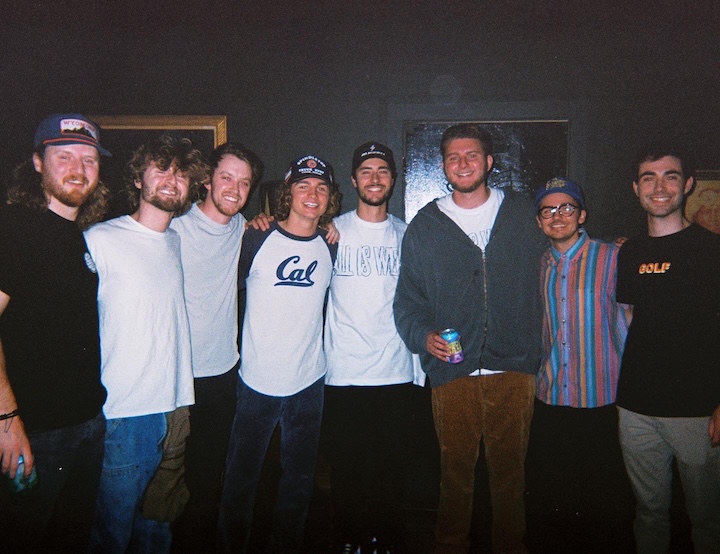
From Norwich to New Orleans - people standing in a line with arms around each other smiling

Following the Journey of a Young Musician With Upper Valley Roots

From performing in assembly at Marion Cross School to racking up more than a million monthly listeners on Spotify, Hans Williams’ musical career has grown steadily as he has developed his sound. Now based in New Orleans, the Norwich native sat down with The Norwich Times to discuss his roots, his journey, and his aspirations.

Music as an emotional outlet
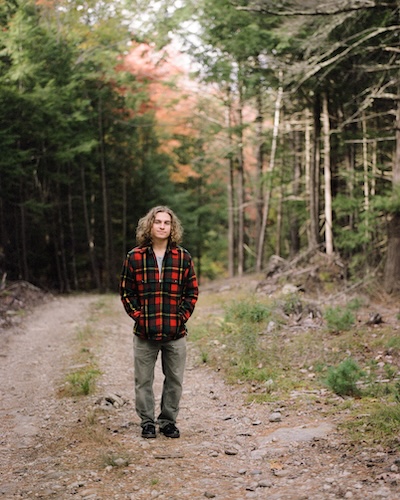
From Norwich to New Orleans - man standing on dirt road with hands in pockets
Hans Williams

For singer-songwriter Hans Williams, music goes beyond mere lyrics, melody, and harmony; it’s also a vehicle for self-expression. He writes music to share himself and connect with others. Williams’ emotional vulnerability is front and center in tracks like “Body On My Shoulders,” which he wrote after being a first responder to his floormate’s suicide while attending college at Tulane University.“ I use my music as an emotional outlet,” Williams said. And to good effect: “I’ve been really lucky to have people that have gravitated towards it and used it for the same purpose in the last five or six years.”

Distributing his music online has allowed Williams to reach people all around the world; on Spotify, his listeners hail from 183 different countries. As an independent musician – one that has not signed with a label – Williams is able to retain greater control over his music. Revenue from digital streams and shows gives him the means to continue creating music without having to compromise on his vision and voice.

Beginnings

Williams’ musical career can be traced all the way back to elementary school. In third grade, he had a brief stint as a rapper, going by the name “Young Freezeman” and distributing CDs of his rap tapes. He also performed at regularly held school assemblies in front of his peers and teachers at Marion Cross School in Norwich. The process of recording music piqued his interest in doing more than just live performances.

At home, Williams listened to his dad’s favorite funk artists, like Parliament Funkadelic, the Ohio Players, James Brown, Tower of Power, and Al Greene. Later on, he became interested in his mom’s favorites, singer-songwriter artists like Norah Jones, Tracy Chapman, and the Chicks. Williams’ music has become increasingly soulful as his unique sound has evolved over time, while staying true to its folk roots.

Though primarily a vocalist now, the first instrument Williams’ learned to play was the guitar. He began taking lessons during his childhood from Tuck Stocking of Tuck’s Rock Dojo in Etna.

From Norwich to New Orleans - young boy sitting down with guitar in hand
Hans Williams learning to play the guitar at age 10.

“When I had my first lesson with Tuck, I was 10,” Williams said. “Tuck recently told me, he talked to my dad after [that] lesson and told him, ‘Hans has got a lot of passion, but he has no clue what he’s doing on the guitar’,” he laughed.

As it turns out, Williams’ relationship with Tuck ended up being the foundation of his budding music career. At Tuck’s Rock Dojo, Williams participated in local bands that Tuck facilitated and had the opportunity to create music in his studio. According to Williams, Tuck’s Rock Dojo is the premier outlet for playing alternative music in the Upper Valley.

“You could come in there with almost no experience and find a way to add something,” he said.“ Going in there and toying around was a big part of exploring what I wanted to do with music.”

Coming into his own

Williams enjoyed playing music in school, too, and got support from Ms. Keck of Marion Cross School and Ms. Chambers of Hanover High School. He performed in chorus, acapella groups, and the jazz band. Yet, he found studying music in school to be a bit limiting.

“Oftentimes, there’s not a lot of room for exploration,” Williams explained. He continued to seek out performance opportunities outside of school, playing in a band called “Unstable Elements” and later performing on the Norwich green during the Fair as a high school junior, and at Blue Sparrow Kitchen as a senior.

After departing for college at Tulane University in 2019, Williams began seeking out solo gigs and performed in venues around New Orleans, building his audience and his musicianship over time. He ultimately recruited a band, with whom he went on tour across New England this past summer.

From Norwich to New Orleans - concert with band on stage and crowd in front of stage
Hans Williams (second from left) and band performing at Tipitina’s in New Orleans.

“I’ve had slow, steady growth personally and creatively as an artist,” Williams said, reflecting on his career. “Having a band who can push me more from an instrumental standpoint has made me realize that there’s a lot more that I can do than having four-chord, singer-songwriter songs,” he added.

Now that he has graduated from college, Williams is immersing himself in the New Orleans music scene and finding inspiration all around the City.

“I run into so many more influences than I did when I was in school,” he said. “It gets me so excited.” As a young artist, he’s soaking up everything he can from the experience.

“I’m nowhere near wanting to settle down creatively; there’s a lot more to explore,” he added. “The more I can push myself outside of my folk/singer-songwriter comfort zone, the better.”

Norwich leaves its mark

Williams’ music pays homage to being raised in Norwich, and the influence it’s had on his life and in his musical career today. His newest project, which will be released in the spring, is called “More Than One Way Home” and explores themes of nostalgia, childhood, and homecoming.“

Growing up here gave me a good sense of what community should feel like,” Williams said. “It feels so ideal in so many ways. I didn’t really appreciate how supportive and sheltered this community was until I left.”

Williams is one of a growing number of acclaimed musicians who have come from the Upper Valley, including Noah Kahan, Brooks Hubbard, and Phin Choukas. The rise of digital music and digital means of distribution make it easier than ever for musicians from rural areas to find success – and to become role models for local kids who dream big.

More than one way home

Nowadays, Williams spends his time in New Orleans working at a studio as a handyman, where he gets to sit in on recording sessions with brass bands and funk groups. He hopes to nurture more collaborations and sing with another group in a seven or eight-piece band.

This spring, Williams plans to release his first EP and go on a nationwide tour to nearly every major U.S. city with a few stops in Canada. He looks forward to meeting his listeners.

Even though Williams has been approached by major labels at recording companies, he says he isn’t ready to sign just yet – it’s a big gamble, and a lot of pressure to make money. “Someday we’ll find a partner that shares our vision and is willing to give us a good deal,” Williams said. Until then, he’s more than happy to continue to be an independent musician.

All in all, Williams said, “Making music into a career has been a privilege.”

Share:
Reading time: 5 min
All, Cover Story

How Sweet It Is

March 13, 2024 by Cindy Heath No Comments
How Sweet It Is - two kids in front of sap bucket

Historical accounts from early New England settlers describe the art of maple sugaring by the Abenaki and Wabanaki Indians as early as the 1500s, according to research compiled by the Nulhegan Abenaki Historical and Cultural Preservation Department. But before this, legends and stories passed down from the Abenaki, Wabanaki, and other Native peoples suggest that boiling sap to make granulated sugar for seasoning meats and vegetables, as well as for medicinal purposes, was taking place for many generations before the Europeans came to the New World.

According to the Massachusetts Maple Sugar Producers Association, there are many Native American legends about how maple sugar was first discovered: “One Iroquois legend tells how Chief Woksis had thrown his tomahawk into a maple tree one late winter evening. After he removed it the following morning, the weather turned sunny and warm. Sap began to flow from the cut in the tree, and drip down into a container at the base of the tree. The sap was used to boil the meat for dinner. As the water in the sap boiled away, a sweet maple taste was left with the meat.”

How Sweet It Is - man in sugarhouse with wreath above door
Reid Burris boiling sap inside the Delucia/Gardener sugar house

From early sap buckets made of birch bark to traditional metal spouts and pans, and to today’s plastic sap lines and reverse osmosis technology (removing much of the water from the sap before boiling), maple sugaring has undergone a slow but steady transformation throughout its history. Yet many family farm producers still collect sap in traditional metal buckets and gather annually around the boiling pan inside the sugar house. Some maintain that sap from the honored sugar maple tree boiled down the old fashioned way over a wood fire yields a more flavorful result and inspires an enduring sense of community. One Norwich resident, Graham Webster, is a long-time maple sugar maker using traditional methods with his grandmother’s boiling pan, which was passed down from his uncle. “I prefer the old school method and smoky flavor of maple syrup made over a wood fire, but the syrup still tastes great either way,” says Graham, who produces about 50 gallons of syrup a year to give away.

Commercially, Vermont produces the most maple syrup in the United States by far, reporting two million gallons in 2023, which is roughly 50% of the total produced nationwide according to the Vermont Maple Sugar Makers’ Association. With the benefit of ideal climate conditions, thousands of acres of sugar maple trees, and a rich tradition of maple sugaring, Vermont’s maple syrup industry is a vital part of the state’s economy as well as a rich family and community tradition.

How Sweet It Is - family standing in front of tree with sap bucket
The Van Arman Family at their family farm in Norwich: Tom Van Arman, Emily Myers, Deb Van Arman, Jay Van Arman, Eva Van Arman.

For Emily Myers and her family, producing maple syrup is now a fifth generation family activity. Emily learned to tap trees and boil sap from her parents, Deb & Jay Van Arman, on the family farm where she now resides in Norwich. Before that, Deb and Jay maintained the tradition begun by Deb’s grandparents, running their home sugaring operation for 18 years in the old sugar house near Union Village Road. “It’s been a family operation for five generations,” says Deb. “We’re so pleased that Emily and her family do everything together and that the kids are just as involved as their parents.”

How Sweet It Is - draft horse team in front of red barn
The old draft team, Queenie and Babe,
that carried sap on Deb & Jay’s farm.

Deb and Jay acknowledge that maple sugaring has changed quite a bit over the years. Deb recalls everything being done by hand – drilling the trees, installing metal taps, gathering the sap from the buckets into a metal tank. “I lived with my paternal grandfather, my parents, and my brother, and we had a sugarbush in the woods. We accessed it with our beloved draft horses, Babe and Queenie, pulling a sleigh with a big gathering tank, then we walked to the woods to gather the sap from the really old maples.” Back then, boiling was done outdoors in anarch (wood fired boiling structure), going well into the night. Deb notes that sugaring was important during the depression and World War II because of a sugar shortage, and with no farming to be had in the winter, boiling sap for a reliable source of sugar was common.

How Sweet It Is - woman testing sap in sugar house
Norwich local Lisa Gardener testing to see if syrup is ready to draw off.

Eventually, Deb’s father built a sugar house on the 116 acre family farm and sugaring continued into the ’80s. “The camaraderie was out of this world,” recalls Jay. “The old sugarhouse didn’t have electricity, but we had a lantern and we loved to cook eggs in the boiling sap.” Deb favors using sap and syrup in a variety of ways. “Using sap is a great way to cook a ham because it really enhances the flavor, and maple syrup has a greater nutritive value than refined sugar.” Indeed, modern analysis shows that maple syrup contains several important minerals and a few vitamins, and new research is discovering that it may have antioxidant and anti-inflammatory properties. Other traditional uses of maple syrup include flavoring coffee, sugar on snow, donuts dipped in syrup, and making maple candies, maple butter, and maple cream. Who knew something so delicious could be so good for you?

The family shifted to transporting the sap to Etna after state regulations required upgraded boiling pans, but eventually returned the boiling activities to Norwich. When their neighbors Dave Delucia and Lisa Gardner built a new sugarhouse with a wood fired stove, Jay introduced Dave and Lisa to the fun of maple sugaring, and they began boiling together. Even though Emily now carries on the family tradition with Dave, Deb and Jay still help out from time to time. “There’s a mystique about it,” says Deb. “You’re surrounded by steam, Dave serves up beans and franks around the arch, and it energizes you because you know that spring is coming.” For his part, Dave enjoys the social aspect.“ We get help from lots of friends and neighbors and people enjoy participating in the tradition. All together, we make about 50 gallons of syrup a year to give away to family and friends who help make it.”

How Sweet It Is - boy holding up sap bucket to maple tree
Jack Myers hanging a sap bucket during sugaring season in Norwich.

Emily has many fond memories of maple sugaring from her childhood that inspired her to carry on the tradition with her own family, including her teenage son and daughter. “March was always maple sugaring season and family members from around the country came to Norwich to boil. I wanted our kids to learn the values of hard work, community, bringing people together, and seeing what nature has to offer.” Emily’s son and a friend handled the important step of tapping the trees recently. “It’s nice to know that they are mature enough to understand how everything works and to see the full cycle of tapping, boiling, and eating the syrup on pancakes. It’s definitely a proud parent moment to think about passing the torch to the next generation.”

From the Native American tradition of generations past to today’s modern families, maple sugaring continues to bring people together to celebrate community and the wonderful bounty of the sugar maple tree.

Share:
Reading time: 6 min
All, Cover Story

The Gift of a Book

December 6, 2023 by Molly Shimko No Comments

With the holidays just around the corner, many readers are likely making plans and preparing for the recurrence of long-held, or newly-minted, holiday traditions. One holiday tradition that needs no preparation, (and is a generations-old family tradition in this writer’s home), is the reading of A Visit From St. Nicholas (colloquially known as ’Twas the Night Before Christmas) by Clement Clark Moore on Christmas Eve. From copies of the book gifted to my sister and myself as children to my grandmother’s beautiful edition from the early 1930s (which features Santa Claus as a small chubby elf in a brown furry suit – a common Santa look before his red suit became ubiquitous), these books hold a special place in our hearts and holiday season.

Books not only play a special part in traditions but are a frequent and well-loved gift, often remembered fondly as a treasured holiday memory. We caught up with Emma Kaas of The Norwich Bookstore to chat about the connections between the holiday season and books.

A snowfall before Christmas at the Norwich bookstore

Kaas says, “To me, a book is one of the best gifts you can give. They can be a balm, an escape, a comfort in difficult times. They can also be a window Curling up in front of a fire with a good book is a holiday highlight for many. While Kaas has special memories around A Child’s Christmas in Wales, her favorite books to read during the holidays aren’t entirely holiday-themed at all. Life Among the Savages and Raising Demons, the collected essays of Shirley Jackson about her life as a writer, mother, and wife living in Vermont in the 40s and 50s, are her go-to reads. “This is comfort reading for when my brain can’t focus on much else after a long day of recommending books. Jackson’s stories are a bit like my favorite lemon cake, sweet but with a bite. They are both light-hearted anecdotes of childhood antics and incisive examinations of life as a writer in a time when women were expected to put their husband and children above all else. Jackson is wry, insightful, and always a pleasure to re-read.” While the books appear not to be related to the holidays, Kaas notes that “Each book ends right around the holidays, so they deliver those cozy holiday vibes, too.” into another experience, one that can challenge you and expand your worldview. The best books manage to be both these things.”

Local author Ken Cadow reading from his National Book Award Finalist novel, Gather, at a Norwich Bookstore community event.

Kaas has her own special memories around books during the holidays. One, she recalls, is the first time she spent Christmas with her partner Sam’s family, which was the first she spent away from home. “At my house, Christmas is a boisterous, chaotic affair, with small children, competitive games, and a lot of noise,” Kaas says, “Sam’s family is much more relaxed – there is wine, a puzzle, a fire, and quiet conversation. I felt welcomed but a little out of place. And then they introduced me to Dylan Thomas’s A Child’s Christmas in Wales which they often read aloud on Christmas Eve.” The story recalls Thomas’ Christmases as a young child; Kaas recommends that readers get to know the “slim gem of a book” and make reading it aloud a holiday tradition. “It is a delightful, nostalgic poem that makes me feel like I’m curled up under a blanket in front of the fire with a cup of cocoa.”

Receiving books as a gift is another common memory many of us share, from picture books as a young one (I myself remember a beloved copy of Tomie dePaolo’s Strega Nona being unearthed from under the tree) to a variety of genres as an adult. As a bookseller, Kaas notes that it is rare that anyone gives her a book. However, every Christmas Eve, she and Sam have a tradition of exchanging books, and one sticks out in her mind. “A few years ago, Sam gifted me The Corner That Held Them by Sylvia Townsend Warner, a book I’d been anticipating but then completely forgot about. I read a lot of books, but the ones that completely sweep me away come few and far between. This was one of those books. It is an immersive experience, a winding, plotless novel about a medieval nunnery that I found utterly engrossing, irreverent, and amusing,” Kaas says, “It’s always so special to receive a book that winds up being exactly what I needed in the moment and one that sticks with me for years to come.”

Being the giver of a gift is just as pleasurable, if not more so, than being the recipient, and giving the gift of a book is no exception. Finding a book with a topic or story that just perfectly suits the person you have in mind is a thrill and once given, lets your giftee know how much you were thinking of them when selecting the title. A gift can say a lot to someone you care for and a book has all the words to help you say what you want to say. When Kaas’ best friend moved away, she gifted them a copy of The Girl Who Circumnavigated Fairyland In a Ship of Her Own Making by Catherynne M. Valente, and copied the annotations from her own book into the gift book. “[The book] is a middle-grade book about a young girl who is spirited off to another land where she has to take down the reigning monarch. But, to me, it’s a book about going on a difficult journey, and it was so special to know that, as my friend moved across the country, as far away as we could be from each other, they’d be reading this book and noticing what had stuck out to me when I’d read it for the first time, what I’d bracketed and underlined, the few places where I dared write some words – like an asynchronous book club,” Kaas says.

“I still think that’s one of the best gifts I’ve ever given.”

Editor’s Note: In the spirit of giving, The Norwich Bookstore has partnered with various community organizations for many years to help provide books to kids in need throughout the Upper Valley during the holiday season. As this article shows, the thoughtful gift of a book can make the biggest, most meaningful difference in someone’s life, and can become a memory that will last a lifetime.

Norwich Bookstore
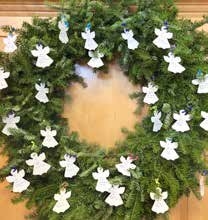
“Book Angels” wreath

This season, the “Book Angels” program organized by the Norwich Bookstore gives community members a way to touch the lives of Upper Valley children with the gift of a book. Book requests are written on paper angels, and you can be a Book Angel by visiting the bookstore in-person and choosing a specific book wish to fulfill, or making a monetary donation in-person or online which the bookstore will use to fulfill all requests. To donate online, visit norwichbookstore.com/book-angel-gift-card. Give the gift of reading, be a Book Angel!

Share:
Reading time: 6 min
All, Cover Story

The Legacy of the Norwich Lions Club

by Cindy Heath No Comments

From its founding in 1917 in Chicago to today, Lions Club International continues to be one of the world’s largest service organizations with more than 1.4 million members worldwide. In Norwich, the Lions motto, “We Serve”, is the guiding principle for the Club’s many initiatives focused on improving vision, hunger, global relations, pediatric cancer, and the environment. The wide array of community activities over the history of the Norwich Lions Club is remarkable. For a relatively small group, the Club has had a hand in supporting or improving nearly every aspect of the town including schools, non-profits, and town infrastructure and recreation facilities. Most recently, the Club was involved in screening elementary school children in Norwich, Sharon, and Woodstock for eyesight issues.

Chartered in 1954, the Norwich Lions Club (NLC) has served Norwich and the surrounding communities for nearly 70 years and conducts large and small fundraisers to support community projects initiated by its members as well as non-profit organizations throughout the Upper Valley. The Club’s first service projects included the donation of a piano to the Marion Cross School, the construction of a house at Beaver Meadow, and the development of baseball diamonds in town.

Phil Wheeler – a long-time Lion of 60 years, past Club president, and past district governor overseeing all Vermont clubs – was an early founder of one of the club’s most popular projects: the Memory Tree. “I started my Lions service with the Middlebury Lions Club but moved to Norwich after graduating from the Tuck School. When the Memory Tree project first started, I encouraged clubs all over Vermont to get involved,” says Wheeler.

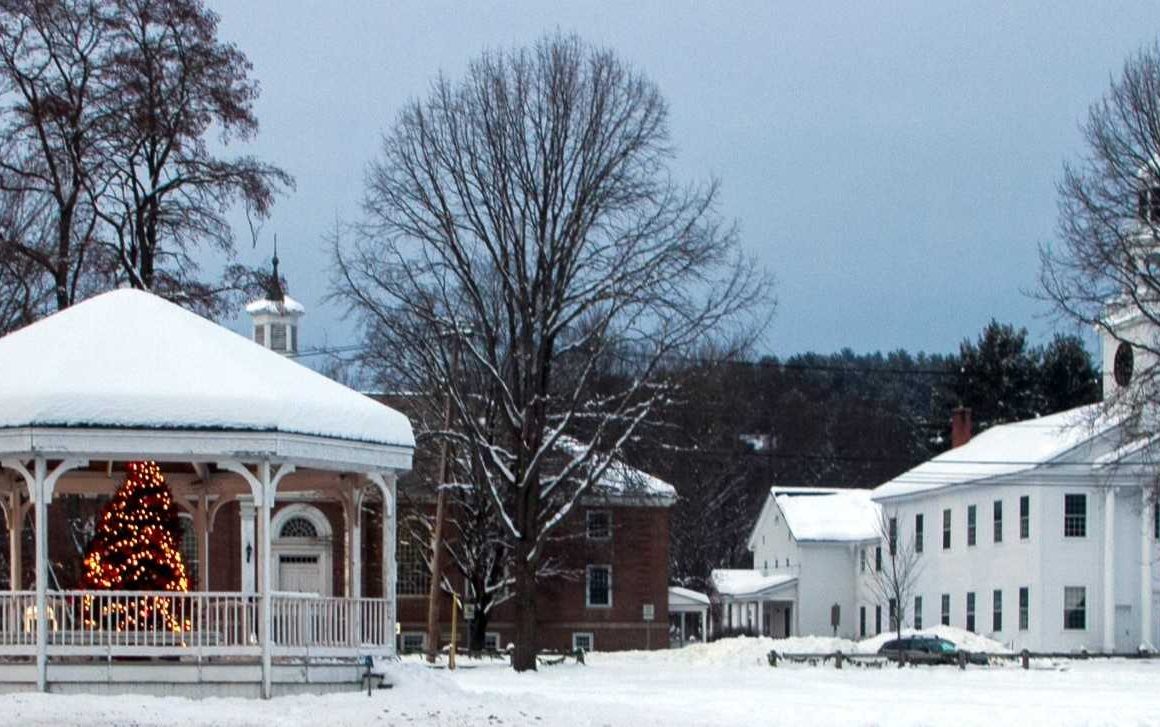
Each year, volunteers install the tree and decorate it in the gazebo in town and invite people to name those that they want to memorialize or honor. At one time, every Lions Club in Vermont hosted a Memory Tree, thanks to Wheeler’s encouragement.

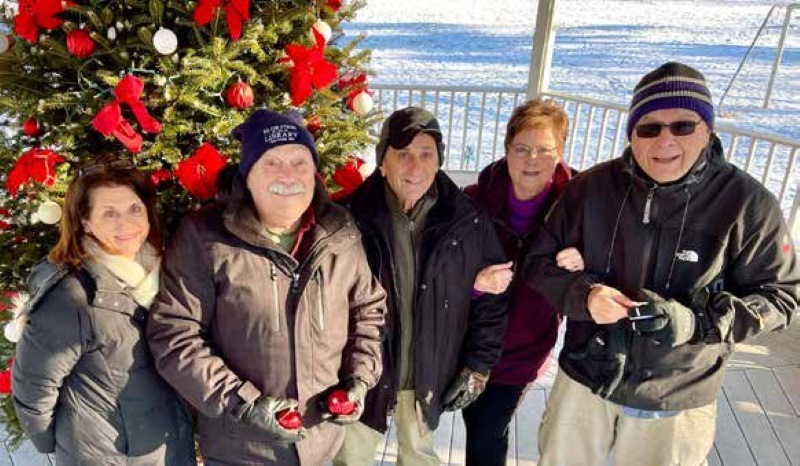
Left to right: Roseanne and Jim Maguire, Demosthenes (Demo) Sofronas, Fran and Gary DeGasta

The first year the Memory Tree program took place in Norwich, Wheeler memorialized his parents. His father was a general surgeon in Brattleboro and a 50-year member of his local Lions Club. “My mother was there to take care of us and support him because he was often called away on an emergency in town,” Wheeler remembers.

This commitment on the part of both his parents inspired Wheeler to take up a life of service. “I really enjoy helping others; the club is always looking for people who need help,” he says.

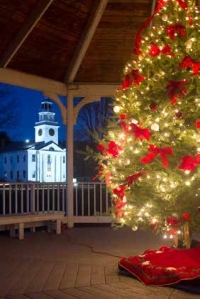
Lions Memory Tree

The Memory Tree program has evolved over the 44 years since Wheeler presented the idea to clubs around Vermont to include honoring a friend or family member who is still living as well as memorializing those who have passed on. The Memory Tree program is part of the 19 days of Norwich, and the Byrne Foundation matches the proceeds for a donation to the Upper Valley Haven – a non-profit organization that serves people struggling with poverty by providing food, shelter, education, service coordination, and other support.

The signature fund-raising event for the Norwich Lions Club is the well-loved Norwich Fair. Originally organized by local churches for the first 40 years, NLC took on sponsorship and operation of the fair in 1989 and has been providing fun and entertainment to all fairgoers ever since. The Club celebrated the 69th year of the Fair last summer, which has raised over $30,000 in recent years, far exceeding previous annual receipts of $18,000-22,000.

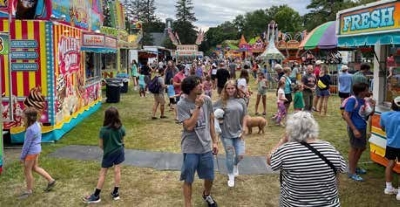
Norwich Fair midway 2023

Club President Fran DeGasta reflects on the many service-oriented benefits of the Norwich Fair: “Local non-profits partner with the club for their own fund-raising initiatives at the fair, and they can retain all of their proceeds. People really enjoy the popular dunk-tank attraction on the sidelines.” Until recently, the fair also featured a pig roast, King Arthur Pie Baking Contest, and bingo.

In addition, NLC solicits grant applications annually and has funded projects for nearly 40 different Upper Valley non-profits, schools, and community groups over the years. The list of funded projects is extensive – digital library materials, food resilience projects, heat pumps, medical equipment, and educational materials are just a few examples.

Early fundraisers included an annual Lions Minstrel Show, the sale of light bulbs, spring auctions, and sponsoring canoe races on the Connecticut River. Over the years, the Club has also held wine-tasting events at the Norwich Inn to support NLC’s service activities. In addition to the Norwich Fair and the Memory Tree, current major fundraisers include an annual “Meadow Muffin Contest” wherein participants purchase “plots”, hoping to be chosen for a prize by a bovine “plop” – a fan favorite of many native New Englanders. An online silent auction with over 200 items donated by local businesses and individuals throughout the Upper Valley raised more than $11,000 in 2022 to be offered in the Club’s granting program.

Many of the NLC’s community projects are part of an ongoing response to needs identified by members and may provide one-time or ongoing support. The various fundraisers support these initiatives as well. A partial list includes sponsoring free monthly dinner meals for over 100 adults and children at LISTEN, providing fuel assistance, cash donations and eye exams and glasses, delivering sand to seniors during the winter season, sponsoring bus transportation for children to local nursing homes to read to residents, and supporting the Pediatric Cancer Treatment Room Transformation Project at ChaD (Children’s Hospital at Dartmouth).

Similar to other service clubs, Lions Club members volunteer individually and collectively at various local and regional events for service, fellowship, and of course, fun. Collaborating with other Lions Clubs and local institutions, club members have planted trees, marched in parades, helped with elementary school reading programs, and provided voting outreach services. The reach of the Norwich Lions Club also extends to a Cabot, Vermont-based summer camp for children with vision and hearing loss. Lions provide lunches during registration days, host activities, provide equipment and games, and work with Lions from other clubs at the camp.

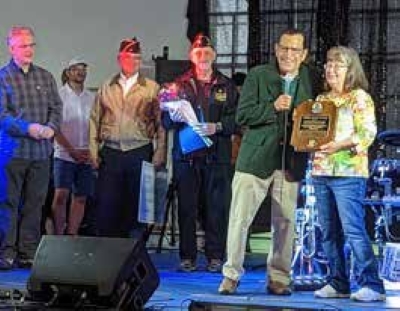
Past District Governor Phil Wheeler presents the Melvin Jones award to Bonnie Munday

The original founder of Lions Club International was Melvin Jones, a Chicago insurance salesman. In Norwich, as in many clubs, a fellowship has been established to honor the founder, and is presented to those who donate $1,000 to the Lions Club International Fund or to recognize a club member or citizen who demonstrates ‘above and beyond’ dedication to humanitarian causes. In 2023, the Club honored retired Norwich town clerk, Bonnie Munday, with the fellowship. Munday was instrumental in supporting the Memory Tree by annually posting a list of those who were memorialized and honored and managing donations.

Munday recalls her participation on a local Substack blog: “I tried to have a complete list up for the Christmas Pageant so that people could look at it and see that the memories they submitted were posted. I do hope the next clerk will keep up with this tradition.” Lion Stephen Flanders, a retired research civil engineer, and Nico Bekker, vice president of Ledyard National Bank, were awarded the fellowship in 2021. “It was an honor to get it,” says Flanders. “Nico and I each did things to help the club’s effectiveness with new fundraising procedures and by expanding our website.”

Lions International celebrated its 100th anniversary in 2017, and clubs around the world developed ‘Legacy Centennial’ projects to mark the occasion. In Norwich, the Lions Club purchased a basketball scoreboard for the Marion Cross Elementary School, installed tree signs on the Norwich Green, contributed a flag pole for the Norwich Police/Fire complex, and helped to fund the Norwich Veterans’ Honor Roll Monument.

As club members prepare to install this year’s Memory Tree for the 2023 holiday season, residents and visitors to Norwich can see it on display as they pass through town. “It’s a welcome sight as you drive into Norwich to see the tree lit up in the gazebo,” says Wheeler.

President Fran DeGasta hopes to see the next generation step in to get involved in community service with the Norwich Lions Club. ”Prospective members who are prepared to share the club’s commitment to helping others are encouraged to attend one of our meetings to see what we’re all about,” DeGasta says. “We come together as a club for the greater good of all.”

The Norwich Lions Club meets twice a month from September to June, on the first and third Tuesdays in the downstairs Community Room of the Norwich Public Library.

For more information on how to get involved in this active community service club, visit the club’s website at norwichlionsclub.org.

Share:
Reading time: 7 min
All, Cover Story

Rowing for America

October 6, 2023 by Justin Lafleur No Comments

Norwich’s Billy Bender Qualifies for World Rowing Championships

This summer, Norwich native and Hanover High School graduate, Billy Bender, had a decision to make. Head to the United States men’s senior team selection camp (where he had earned an automatic invitation) or try to make his second U.S. Under-23 rowing team (at a camp that was being held in his backyard at Dartmouth College).

Bender decided to push the boundaries by attending the senior team camp…and it paid dividends.

“I feel like I have always been the best athlete when I’m out of my comfort zone,” he said. “When these guys are better than me and I know I need to step up my game, that’s when I’ve been my best. Sometimes when you’re the best guy on a team or in an environment, it can become easy to be stagnant and complacent.”

Bender at the Dartmouth Boathouse

Now a two-time first team All-American at Dartmouth, Bender qualified for the World Rowing Championships in the men’s pair (two rowers sweeping with one oar each) after winning the USRowing Senior National Team Trials in late July. The championships run from September 3-10 in Belgrade, Serbia.

“Obviously, it’s super cool,” said Bender. “It’s coming a little faster than I thought it would.”

What Bender means is that in the days and weeks after qualifying, everything hadn’t quite set in.

“I raced for the U.S. two years ago for Under-23s,” he explained. “It will probably set in once I get over to Serbia, but it didn’t initially because the main competition that we raced (in the lead-up to the World Championships) were rowers I have competed with and against before – in U23s and the IRA National Regatta. 

“I think once I arrive to the world championships and I’m lining up against the best guys in the world, then it’ll really hit me,” Bender continued. “Right now, I’m training in Hanover. The gravity of it isn’t right in my face the way it will be (soon).”

Billy Bender

All this likely wouldn’t have been possible without Bender’s success at Winter Speed Order in Sarasota, Florida with Dartmouth alum Oliver Bub ’20. There, they finished third in the pair to earn automatic invitations to the first USRowing men’s senior selection camp in Princeton, New Jersey. 

This winter was also the first time Bender knew he truly belonged with the best of the best.

“I went out and was training with – and racing – the best guys in the country (at California Rowing Club), and I beat a lot of them,” he said. “The pair is obviously a very different boat than the eight (eight rowers sweeping with a coxswain), but that definitely made me think this isn’t a pipe dream.”

Which it wasn’t; it was reality.

From the first selection camp, Bub was named to the men’s eight. Bender was cut, but he had another opportunity to represent the Red, White and Blue.

“I called Wyatt Allen (Dartmouth’s Betsy and Mark Gates 1969 Head Coach of Men’s Heavyweight Rowing) and asked if it was worth trying to do some trial boat or come back to Hanover and reset for the year,” said Bender. “What was really clear about senior camp is I have to get faster on the erg. At Dartmouth, I have relied pretty heavily on my boat-moving abilities and my ability to win swaps. That works at the collegiate level and U23 level, but not at the senior level.”

After selection camp, Bender wasn’t sure if he should focus on training for his final season as a Big Green student-athlete or take another opportunity to reach the world stage in the pair.

“If I can just get more horsepower, get a bigger ‘engine,’ it will help me,” he said. “Wyatt obviously thought that was a good idea, but also said it may be worth going down (to senior trials in the pair) and seeing where I stacked up. Either way, it would be a good training opportunity (even) if I didn’t win.”

It ended up being both a valuable training opportunity and a win for Bender and his pair partner, Evan Olson.

The two initially met through a mutual connection. “We had a phone call and we got along, so Evan came up here to Hanover, we trained for a couple weeks and went down to New Jersey for trials,” said Bender.

Bender also knew he and Olson would have a reasonable chance for success in the pair, based on the competition.

“In some ways, the pair is slightly less contested than the single,” said Bender. “If you’re a good guy, you enter the single. In the pair, you need to find another good guy to row with and you have to match up and be in the same training location. There are a lot of good guys who can train by themselves and make a single go fast.”

Bender has been making boats go fast for some time. He began rowing at an early age, due in large part to his brother Ryan who rowed for Colgate University. Ryan originally joined the rowing team at Hanover High because next-door neighbor Blair Brooks was the freshman coach.

“We actually didn’t know this about Blair for a long time because he would never tell you, but he was a super successful rower back in his day,” said Billy. “He was captain of the mid-1970s Harvard crew that was called the ‘rude and smooth’ and they won everything. They were absolutely dominant.”

The Brooks connection got Bender’s brother Ryan into rowing, which led to Bender taking up the sport. Bender attended elementary school in Norwich where he grew up, then middle and high school in Hanover. He also rowed for the Upper Valley Rowing Foundation.

“The Hanover program is really fun and a good group of guys,” said Bender. “The coach, Andy Hilton, is great. The program was founded by Julie Stevenson, a former Dartmouth rower and current principal at Hanover High.

Hanover High varsity boat after a win at NEIRAS in 2019

“I was pretty proficient by the end of high school, maybe better than a lot of high school rowers, but there wasn’t very much time on the water,” Bender continued. “We were pretty limited by the rules, without that many water sessions. I didn’t build the fitness, strength and endurance necessary to be really strong.”

All that said, Bender was in a good place at the end of high school. 

Allen, a former Olympic gold medalist, played an integral role in getting Bender to Dartmouth, and his subsequent growth and improvement.

“Wyatt really took a chance on me, and he recruited me when I was still pretty slow on the erg,” said Bender. “He recruited me in my gap year. I went to Thames Rowing Club in London and lived and trained with them for the year, which was a great experience. That was when I got into a full-time training program and really started to take some steps forward in terms of my fitness.”

Unfortunately, the COVID-19 pandemic hit that year. Bender’s time in England was cut short, but was still worthwhile. 

It set the stage for an already decorated collegiate career, and it’s not over.

“Wyatt is a rockstar,” said Bender. “He’s such a resource because he’s been on a bunch of teams and he’s an Olympian. He knows the players, he knows the system and he’s been through it a bunch of times himself, so he can call up to coaches because they coached him or because he rowed with them. He’s got this unique perspective where he’s been through it a bunch of times as an athlete, so he knows what I’m thinking, feeling and worrying about.

“I didn’t really realize when I was looking at and committed to Dartmouth how lucky we are with Wyatt,” Bender added. 

The feelings are mutual.

Billy Bender rowing in a Dartmouth boat

“We definitely got lucky with Billy in the recruiting process,” said Allen. “We took a chance on him as a local kid with great grades, a good mentality and a promising frame, and he took his gap year opportunity and ran with it. It’s a real credit to him and his hard work in England. He walked in the door for his freshmen year way stronger, more skilled and he had even grown another inch or so.”

Bender is hoping to follow in his coach’s footsteps. Bender’s goal for the upcoming world championships is to finish top 11 out of 26 entries and qualify the boat for the 2024 Summer Olympics.

“It’s not necessarily guaranteeing our (Billy’s and Evan’s) seats, but it’s two more seats for America,” said Bender. “It’s another boat that America gets to send to the Olympics.”

There are two opportunities to qualify any boat, the first and most direct route being the world championships the year prior. The other is the final Olympic qualification regatta, which comes during the Olympic year.

“There are a lot of really good guys in the pair,” said Bender. “Great Britain has arguably their best guys in the pair, and a lot of small countries that don’t have the talent to field a good eight, they have two good guys who can make the pair go very fast. We’re pretty quick and we’re getting better. We haven’t been together for that long, but I believe it’s definitely possible.”

As Allen said, “Billy is one of the best boat movers I’ve had the opportunity to work with. Most impressively, he’s effective across all boat classes: he can scull, he can move a pair, and he’s really good in the eight. The fact that he’s had good results at the elite level this year with two different pairs partners is very impressive, especially given his relative young age.

“There’s no hiding in the pair,” Allen continued. “If you’re not holding up your end of the bargain, the boat is not going to go.”

Bender has aspirations to go and qualify for the 2024 Olympics, which makes him think of the John F. Kennedy quote: “We choose to go to the moon in this decade and do the other things. Not because they are easy, but because they are hard.”

“I feel like I have to try,” said Bender. “I’m good enough that if I don’t try, I’ll look back in five years or ten years and think I should have tried. If I don’t make it, that’s okay, but I want to know I gave it my best shot.”

Before any Olympic dreams come the world championships, which run from Sept. 3-10, right before the start of the fall term at Dartmouth. From there, Bender would like to return to Dartmouth for the fall, then take the winter off to train and race at Speed Orders.

“By March, I would have a pretty good idea if I’d make a (U.S. Olympic) boat, or at least be in contention,” said Bender. “And if I’m not at the level, which is definitely a possibility, then I would come back to Dartmouth, race in the spring, and get on with my life. 

“If I think it’s a possibility that I could make a U.S. boat, then I would likely take the spring off (to train),” he added. 

At this point, Bender’s exact plan is far from finalized. But for now, he is focused on representing the Red, White and Blue in September. 

Regardless of what the near and distant future holds, Billy Bender will continue to push himself out of his comfort zone, which helped him reach the 2023 World Rowing Championships in the first place.

It’s something that will continue to define him as he moves forward, no matter what comes his way.

Share:
Reading time: 10 min
All, Cover Story

Rocking Out at the Norwich Fair

by The Norwich Times No Comments

In our Winter/Spring 2022 issue, the Norwich Times took a look at local rock music school, Tuck’s Rock Dojo, run by Norwich resident husband and wife team Tuck and Kata Stocking. We caught up with the Dojo this summer as we ran into their students performing some radical rock at the 2023 Norwich Fair hosted by the Norwich Lion’s Club in August.

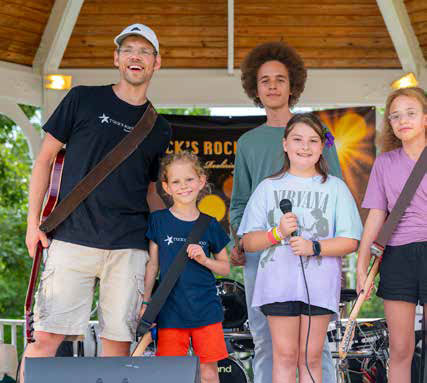
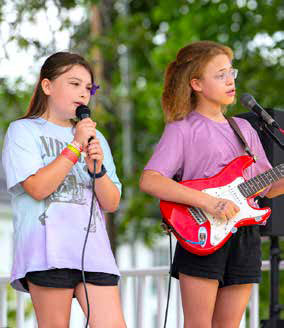
A band full of Norwich kids, Black Iris (From left Tuck, Jaden, Alex, Etienne, Juliette)

The Norwich Lion’s Club first invited the Dojo to perform about 13 years ago when a former student’s parents, Laurie and Rob Sabatelle, introduced the school to the club. Now, in their 10th or so performance at the fair, Tuck can’t say enough good things about the opportunity the Norwich Fair creates for the students to perform the craft they spend hours honing, live in front of an audience: “Norwich fair feels like home. It’s a real festive time for our bands. There is a magic to playing under the fair lights that never gets old.  The kids get to shine on stage then go and ride the Hurricane – it’s an adventure that is hard to beat.” 

Kata, who runs the administrative side of the business and was busy introducing acts and taking phenomenal photos of the students rocking out on the day of the performances, agrees. She notes how, while the students get to perform in a variety in venues, taking the stage in front of their own friends, family, and community members is something special: “For us the Norwich Fair is one of the biggest highlights of the year. We are performing with the bands in many different venues and the Norwich fair definitely is the cherry on top. The kids absolutely love it.”

Lila Bucci leads the vocals in Rockology performing at the Norwich Fair

Juliette Gemignani, 10, a Norwich student who performs vocals in the band Black Iris, agrees: “It was a great experience! I really enjoyed performing for my family and friends and with the other kids in the band.”

Juliette’s parents, Liz and Tony, were excited for the memories their daughter would make performing live at the Norwich Fair: “Of course we were super proud of her but we also felt so lucky that she was given such a great opportunity. Performing for her friends, family and community is something that will stick with her for a long time.” They reiterate that these platforms that Tuck and Kata and the Norwich community provide to express and experience music helps them build confidence. “It’s really incredible.” 

Molly Vahey , Jaden Stocking and Jesse Gitajn of Oogly Boogly

Katie Bucci of Norwich, mom of performer Lila, values the opportunity to watch her daughter perform: “Seeing Lila up there on stage, singing her heart out, being such a cool rock star, it’s almost unreal. It fills me with so much joy.” Norwich parents Katherine and Enrico Riley of drummer and guitarist Alex, 16, and guitarist and vocalist Etienne, 10, feel the same: “There is no joy quite like watching your kid embodying music.” 

Both Alex and Etienne name the fair as one of the highlight of their summer and one of the favorite things they’ve ever done. “It feels great to be able to show off the music you worked hard to perfect,” Alex says.  Etienne loves the chance to make music with her friends: “I think when you’re having fun on the stage and the audience is having fun watching the performance, it’s one of the best things you can do.”

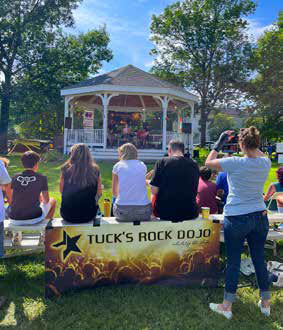
The audience jammed to the young musicians tunes amid rowdy rides and just a stone’s throw from the Lion’s Club dunk tank. Jaden, Tuck and Kata’s ten-year-old son who is talented on multiple instruments including drums and bass, recalls being one of those audience members before taking the stage himself: “I grew up seeing kids rock out – it’s awesome to finally be up there too and rock out. I love the Norwich Fair. It has such a great energy.” 

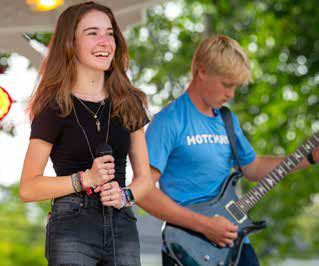
Eti Riley and Juliette Gemignani (both Norwichians) rocking out at the Fair
Band Oogly Boogly featuring young rockers from Norwich

Kata says creating that great energy and putting together these shows “always takes a village,” noting that another community member Neil Odell, a musician himself, was helping with the sound.

This was the first year for Lila, 14, to sing at the Fair and her first chance to sing in a band by herself without a co-lead singer. “Performing at the Norwich Fair for the first time this year was a very exciting opportunity for me. Tuck, my friends, and my band (Rockology) did a great job of cheering me on and encouraging me. Tuck always makes the performance of it so fun, even when I am super nervous.” 

Fellow vocalist Juliette similarly say that while she also was nervous at first, “after it was over, I just wanted to do it again.” And luckily, with a community like Norwich that provides the town with events such as the Norwich Fair, she can!

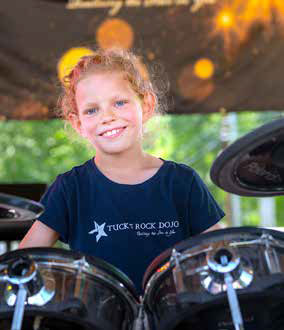
Jaden Stocking of Norwich on the drums

To check out photos of a variety of young musicians – past and present – visit tucksrockdojo.com/gallery. You can see video of the musicians featured in this article on Tuck’s homepage.

Share:
Reading time: 4 min
All, Cover Story

Keeping Local History Alive at the Historical Society

June 9, 2023 by Rose Terami No Comments

There’s a lot to learn about a place by its history. For Sarah Rooker, this means digging into the rich history of Norwich – to appreciate the past, and also to better serve the future.

“Citizen historians” – or residents who are taking an interest in learning about and investigating their local history – are on the rise in Norwich, Rooker says, who became the director of the Norwich Historical Society (NHS) in 2016. “We need to continue to tell the story of Norwich and help people understand what makes a strong community and what the aspects are that make them love it so much.”

Norwich, chartered in 1761 by Benning Wentworth – the Royal Governor of New Hampshire – is a town with a rich history and a strong community that continues to thrive. When Rooker moved to Norwich in 1994, she learned this quickly.

Students examining the vandalized Bible with Sarah Rooker

As the director at NHS, Rooker’s main responsibility is to fulfill the society’s mission of preserving local history and promoting community engagement in local history education. Depending on the day, this could mean working with trustees and volunteers, curating new exhibits, organizing community projects and school programs, or caring for the artifacts in the society’s collections.

When it comes to history, “I really like all of it,” Rooker says, though architecture and landscape history are some of her favorite topics. Growing up in a family who appreciated local history played a big role in Rooker’s interest in New England culture. Rooker spent much of her childhood reenacting at Old Sturbridge Village in Massachusetts, where her mother was the museum curator. “I learned a lot there about history,” Rooker says. “I would spin and weave and do hearth cooking… I just really connected deeply to it.”

As an undergrad student at the College of William & Mary, Rooker completed a degree in American Studies and worked at the nearby Colonial Williamsburg settlement where she trained to become a museum educator. Since then, Rooker’s career focus has always been on history education. Over the years, Rooker has worked as an educator for the Vermont Historical Society and as the director of the Vermont Museum and Gallery Alliance. Along with working at NHS, she also leads the local non-profit “The Flow of History” – a place-based history professional development resource for grade school teachers in Vermont and New Hampshire.

Now, Rooker has just finished putting the final touches on NHS’s “Becoming Norwich” exhibit – a collaboration with Norwich cartoonist Emily Zea, featuring a series of illustrated histories of Norwich, which just opened in May. Between Zea’s artistic contributions and Rooker’s writing, the exhibit covers Norwich’s history from its early years to today, with an emphasis on the importance of small-town government. The exhibit will run through 2023.

The historical society’s last exhibit showcased an old pulpit Bible from Norwich which had been vandalized by “rogues” in 1848. The Bible had been in NHS’s collections, and when Rooker opened it, she discovered that “it had been cut all the way through almost like a book safe,” to reveal a note written by the church deacon exposing the vandals “for all generations yet to come.” “It gave me the shivers,” Rooker remembers. “I [had] just got a note from the past. He wanted us to know what had happened.”

Sarah leading Hidden History Walking Tour with Dartmouth students

This exhibit and all NHS offerings aim to engage community members in learning about their own history. Rooker sees it as a way of “taking the history and thinking about ways to make it connect to the present,” she says. For the vandalized bible project, Rooker invited community artists and poets to respond to the exhibit with their own interpretations of the story. This blend of curiosity and creativity is at the heart of NHS and Rooker’s mission.

A current NHS project – “The Weather Diaries” – presents monthly reports from two Norwich diaries written 150 years apart – one in 1873 and one in 2023. The diary entries focus on the weather, and when viewed in comparison, “[It’s] really interesting – especially with climate change – to look at the differences in snow cover, frost dates, planting dates, and sugaring,” Rooker says.

After spending the past few months bringing “Becoming Norwich” to life, Rooker will soon turn her attention to the busy summer season at NHS. Now that the warmer weather has kicked in, history walking tours and other community events are just on the horizon. Most of these NHS-sponsored events are fundraisers to support the continued success of the historical society, which “[raises] everything that [it spends] every year,” Rooker says.

Walking and bicycle tours are some of the most popular event fundraisers, which cover all time periods of Norwich history, generally anywhere from 1700-1960. “People in Norwich, they’re active; they like to bike and hike and get out,” Rooker says, who plans to continue developing NHS programming that incorporates nature and exercise. “We want to meet them where they’re at.”

Sarah Rooker at Brown Barn Cellar Hole

Walking tour offerings include mid-century modern house tours, home and garden tours, stone wall and cellar hole walking tours, a Union Village tour, and a Civil War and slavery history tour at the center of Norwich. “Any kind of fundraising thing we do, I like to have it have a history piece to it,” Rooker says. “Those walking tours are an incredible way to connect to the Town.” Pre-recorded podcast driving tours are also available year-round and can be accessed for free through the NHS website.

Tour participants receive a laminated packet of documents and resources specific to the tour (these might include things like historic photos, diary entries, or other archival materials), and they’re encouraged to make observations and comparisons and to ask questions. “When you walk up and down a street and you can look at a house and imagine who lived there and how it was built and know stories, you feel so grounded, and it makes you happier,” Rooker says. “I see that over and over again, and it just brings me great joy to help people discover that.”

An Antique show in September is another annual fundraiser that supports NHS, and through the winter, a series of Zoom lectures – “Discover Norwich” – helps bring donations in during the colder months. Between these fundraisers and volunteer support, NHS would not be possible without support from the community of Norwich that it serves.

With an influx of people moving to the Upper Valley, Rooker takes special care to welcome any new Norwich neighbors to learn about the community using NHS as a guide. “We have constant work to do to help people learn about and value the historic houses and their historic barns and their historic landscape,” Rooker says. “And [to] understand that all those pieces come together to make this beautiful town what it is.”

Finding a balance between historic preservation and modernization can prove tricky sometimes, but Rooker is determined that Norwich can keep up with the times while still “[retaining] the historic character [of Norwich] that we all love,” she says. For the historical society, part of finding this balance is keeping records to help preserve history (like photographs, diary entries, or other artifacts), while also embracing progressive attitudes and a growing population. For example, NHS offers educational resources for homeowners on the care and maintenance of old buildings, so that their history can be honored while also accommodating concerns about energy efficiency – an increasingly common focus of modern construction.

Susan Haedrich, Ellen Blake, and Bambi Chapman working on putting together an NHS exhibit

Another way NHS connects with the community is by providing an interactive and easily accessible array of digital history resources, which can be found on the historical society’s website, norwichhistory.org. The website contains updates on NHS news and events, along with information on historical society exhibits, an online collections catalog, resources for historical research, and even a list of activities for families with children. NHS also connects with patrons and community members via a mailing list and the local listserv.

“At the heart, historical societies are community institutions,” Rooker says. “It’s a busy hive of activity all the time.” Even though the historical society’s official hours are Wednesday and Thursday afternoons, students, volunteers, and community members stop by daily for one reason or another. Community members – typically high school students and elders – are drawn to volunteering at NHS and are involved in a variety of ways, anywhere from setting up exhibits to putting on fundraisers.

NHS memberships, which renew every summer and start at $15, are another large piece of the support that makes the historical society possible. NHS members directly support the programming that the society provides to the community, most of which is offered for free. “Really, what you get by being a member is knowing that you’re a steward of your community,” Rooker says.

For the community of Norwich, the historical society is a vital resource for keeping the Town’s history alive – helping people answer questions about their past and learn from history as they make decisions for the future. For Rooker, some of her most important work is giving citizens the tools they need to stay engaged in their own history.

“I like seeing how history can connect people to where they live,” she says. “If a town is going to have a strong identity, it needs to know where it comes from.”

Share:
Reading time: 7 min
All, Cover Story

Getting Out There: A Trail for All

by Molly Davis Shimko 1 Comment

Upper Valley Trails Alliance Builds Accessible Trail in Milton Frye Nature Area

With mud season having come to a close, it’s time to start hitting the trails! And one newly renovated trail that you may wish to choose is the accessible trail created by the Upper Valley Trails Alliance (UVTA) in the Milton Frye Nature Area next to the Marion Cross School.

Russell Hirschler, executive director of UVTA, says, “There’s been a big push over the last few years or so for putting in accessible trails for people with any kind of mobility issues, older people who just need more places to have a sure-footed kind of walk, or families with strollers and kids.”

UVTA, a regional organization based right here in Norwich that serves over 43 communities all throughout the Upper Valley, coordinated with the Marion Cross School and the Town of Norwich to create the new accessible trail, built on an existing trail.

Those with mobility issues can now access the Milton-Frye Nature Area
Those with mobility issues can now access the Milton-Frye Nature Area.

Hirschler says, “In order to do any kind of trail, you need willing partners.” And in this case, Marion Cross School and the Town (which owns the conservation land but has a cooperative use agreement with the school district) were excited to be a part of this project and brought the idea to the UVTA, who are known as a leader in the field for creating affordable and accessible trails – especially near schools.

Hirschler is finding more and more accessible trails being installed near schools. “Schools are always trying to get their kids outside, especially during the time they were utilizing the outdoor classrooms to a tremendous extent,” he says. Not only was an easily traversable trail to an outdoor classroom important for all students, but with a recent influx of families to Norwich – some with children who have mobility issues – the accessible trail has been particularly vital.

The school district raised the money to create the trail and worked in tandem with the Town to bring the project through the Planning Board and Development Review Board phase. The permits were issued, and about a year and a half from the initial idea and site visit, the team was getting to work on creating the trail.

While the process to approve the trail took some time, the actual build took around a total of two weeks. “It’s a lot of moving rock,” Hirschler laughs.

The UVTA staff – a team of four including Hirschler – worked together to build this trail. In the summers, UVTA runs a program called the High School Trail Corps, which recruits and works with students from high schools all over the Upper Valley. However, as this was a fall build, this trail was a four-person project. “Oftentime, our small staff is scattered in every direction doing lots of different things, and this was one of the few trail projects where all four of us were out there working together. It was a really great team effort,” Hirschler says.

Part of that effort was to get the trail down before they had snow and frozen ground, which created a good team challenge, Hirschler says. Sure enough, the trail was completed just before the first snowfall in November of 2022. “We scraped the last bits of gravel off the edge of parking log, pulled our machines out of there, and then it snowed,” Hirschler recalls.

The accessible trail created by Hirschler and his team converted a dirt trail into what they call a “hardened trail” that has a stone dust or hard-pack on top. The trail is created with three layers. First is a base layer of course gravel that gets compacted down to make it tight. “With stones that are all angular and jagged, when you push them down next to each other, they lock in place,” Hirschler notes. Next comes a middle layer of geotextile cloth, which separates the bottom and top layer materials. The cloth keeps dirt and mud from coming into the upper layer of the trail and keeps weeds and other plant life down. Finally, a top layer of the aforementioned hard-pack. This is also compacted down, and the result is an easily navigable surface that is still permeable so water can run through it, unlike with asphalt or concrete where water runs off the surface.

In addition to a more easily traversable surface, an accessible trail must have limited slopes (the team aims to have slopes of 10% grade or less). The guidelines for these trails are similar to those found in the Americans with Disabilities Act.

The UVTA team finished the trail last November

Hirschler and his team have just recently been back to work on the trail this spring, having asked folks to primarily stay off the trail during mud season. As the trail is right next to downtown off of Main Street, they’re very excited to have people using the trail regularly. “There’s a sense of joy,” Hirschler says, “You build a trail that’s also accessible to a certain segment of the population – anyone who normally wouldn’t be able to go on a footpath with rocks and twigs, branches and roots, or that has uneven ground or is too steep, and then to see those persons using the trail with a smile on their face… To put these trails in place for people is a joy.”

On top of this, it’s always wonderful to see elementary school kids out in the woods in a wild area with lots of big trees and wildlife, Hirscher says.

While the building of the actual trail isn’t all that difficult, getting all the pieces together to be able to build them is much harder, Hirschler says. And the fact that more communities – such as the school district and the Town of Norwich – are investing in these trails is tremendous and shows the value in it.

Equitable access is one of the fundamental principles on which UVTA is built and guides their work: “No matter what kind of trail user you are and what physical abilities you have, there’s a trail for you somewhere close to home,” Hirschler emphasizes. 

The investment in trails and recreation infrastructure that saw an upward trajectory during COVID has by no means slowed down, Hirschler says. The UVTA currently has lots of ongoing projects where they’re implementing the building techniques they’ve learned creating accessible trails. “With more heavy weather-related events – windstorms and rainstorms and all those kinds of climate-change related activities – the better and more sustainably you build the trail initially, the longer it’s going to last.”

The thing that makes Hirschler and the UVTA the most excited is the community investment in improving local trails: “We always say it’s great to have aspirations to hike in the Notches in the White Mountains or summit Mt. Mansfield or Camel’s Hump in the Greens, but really the most important trail is the one outside your back door or down your street. That’s the trail you’re going to use the most.”

UVTA is busy building and has no plans to slow down. Hirschler says, “We’re going to build trails and we’re going to get young kids and older people and anyone in between who needs helping getting into the woods to get out there.”

The trail provides access to the Marion Cross School outdoor classrooms
Share:
Reading time: 6 min
All, Cover Story

‘Modernism in America’ Award Goes to Norwich Home

March 13, 2023 by Rose Terami 3 Comments

Upon entering Tammy Heesakker and Greg Russo’s circa-1961 mid-century modern Norwich home, it’s no surprise that it won a national Design Award of Excellence in November last year.

The Walter and Sylvia Stockmayer House, poised discreetly and elegantly atop a hill on Overlook Drive in Norwich, is an example of a “Usonian” style home, a design term coined by renowned architect Frank Lloyd Wright to describe what was originally intended to be simple and organic design that warranted an affordable price point for families. The same mid-century modern homes that are widely sought-after today were at one time – in the not so distant past – built by the dozen to address the post-war need for affordable housing. 

Natural light and geometric design give the living room its open and welcoming feel

Now, in 2022, this delicately renovated residence pays beautiful homage to mid-century era design and architecture, enough so that it caught the attention of State Architectural Historian Devin Colman, who nominated the Stockmayer House for a Docomomo US ‘Modernism in America’ award several months ago.

Colman, who calls the home “very forward thinking for its time,” says Heesakker and Russo’s efforts to restore the home to its original architectural glory “really stood out to (him) as being exceptional.”

The Stockmayer House, which is also listed on the National Register of Historic Places, is one of only twelve projects receiving a Modernism in America Award in 2022. According to Docomomo US, (a nonprofit organization whose name stands for “Documentation and Conservation of buildings, sites, and neighborhoods of the Modern Movement”), this particular award recognizes preservation work ranging from “the transformation of large-scale projects into beacons of sustainability” to “modest home revitalizations.”

Heesakker & Russo renovating the carport in 2017

Designed by Allan J. Gelbin – an apprentice of  Frank Lloyd Wright – the home was commissioned by Walter Stockmayer (a former professor of chemistry at Dartmouth College) and his wife, Sylvia. Since then, the home has been rented and then sat on the market for a summer before Heesakker and Russo purchased it in a near tear-down state in 2015.

With a caving-in roof and other structural issues posing challenges by the mid-2010s, the only hope for the Stockmayer House was “very sensitive, thoughtful interventions” by its new owners, Colman says. “It’s a great example of taking an existing building that needs a little love and bringing it back to life.”

“The house was in bad shape,” Heesakker remembers, though “the bones were good.”

“You could tell right off the bat that the house needed a roof,” Russo adds. “That was for starters. Once you took the roof off, there were lots of surprises under (it).”

Despite being first-time homebuyers and unfamiliar with the surrounding community, Heesakker and Russo made the confident, yet daunting decision to become the next generation of owners for the Stockmayer House just over seven years ago.

Besides being one of the few local properties on the market at the time, the pair chose the Norwich home because they appreciated its style and saw its potential, even in its rough state.

“For better or for worse, we thought, ‘well, if we could fix it up we’d be happy here’,” Russo says, whose appreciation for mid-century modern architecture and design first emerged during his childhood.

A poster of Fallingwater – a famous architectural feat of Frank Lloyd Wright located in Pennsylvania – started it all.

The Stockmayer House when it was built in 1961

“I just became interested in him… his philosophy and the style,” Russo says.

“When we walked in (to the Stockmayer House), I recognized the style right away,” Russo says. “I knew there was some sort of connection to Frank Lloyd Wright; I didn’t know anything more than that.”

The Stockmayer House features Usonian design concepts like one-story living, no basement or attic, an open carport, concrete slab flooring, natural wood materials, built-in furniture, and simple and sleek rooflines. The tucked-away front door, tight and cozy entryway and dimly lit narrow hallways give way to an open and bright living room, with high ceilings, skylights and large windows, and plenty of space to move around.

According to Heesakker, what stands out most about Gelbin’s design is the thoughtful “form follows function” architectural approach. Gelbin and other architects of the time held equally high standards for aesthetics and purpose, leaving clients with a finished product both beautiful and functional to call home. Elements like built-in bedroom closet storage and a pass-through connecting the kitchen to the dining area and living room eliminate the need for extra clutter and unnecessary space. Upon moving into the Stockmayer House from Boston, “we had a lot of furniture that we either didn’t have a place for or didn’t need,” Heesakker says.

While performing research for the renovations, Heesakker and Russo stumbled upon Gelbin’s design papers for the Stockmayer House, which had been donated to the Art Institute of Chicago after the architect’s death in 1994. The pair took a trip to see the records in person, where they scoured them for information to help guide their project.

“Some of the stuff that we found in the archives were sort of like the specs: the processes they used to make the floors for instance,” Russo says, explaining that the method which Gelbin employed to create the classic Usonian red slab flooring is not the same as what most contractors would follow today.

A tight entryway leads to narrow hallways

Honoring the original design of the home has proved tricky, but not impossible. According to Heesakker, finding knowledgeable and willing tradespeople quickly emerged as one of the most difficult challenges.

“It’s just not what they’re used to doing,” she says.

For such a simple theoretical design, their modernist home doesn’t meld all too well with the efficiency of contemporary construction techniques. For example, in many cases, it would be much less of a hassle to simply replace elements of the home with up-to-date materials, rather than restoring them or remodeling them to preserve their authentic history.

Materials for remodeling and routine maintenance are hard to track down. Many are discontinued or not readily available to consumers since the ’60s.

Though Heesakker and Russo’s top priority throughout the renovations has been to create a comfortable and beautiful living space while also honoring the original design of the space as Gelbin intended it.

“We needed to live here and we wanted it to look nice,” Russo says. “I don’t think I ever thought that we would live in a house that would garner attention.”

Major components of the four-year renovation project included installing a new roof, remodeling the carport, a new septic system, exterior painting, and other updates to old and failing features throughout the home.

A few more intricate projects involved specially-crafted replicas of custom original light fixtures and fragile lamp shades, along with the red Micarta kitchen countertops – a building material that’s harder to come by these days, and not cheap. 

passthrough in the kitchen is one aspect of Gelbin’s thoughtful design approach

“It was obvious that there were going to be multiple projects; however, I don’t think it was obvious how many there were,” Russo says. “There’s always more to do.”

In the near future, the pair plan to fortify the single-pane windows to improve insulation in the home, and tackle other projects such as a bathroom remodel, solar panel installation, and outdoor landscaping.

The Stockmayer House also bridges the balance between work life and home life, with a short commute to Dartmouth Health where Russo works as a radiation oncologist, and a welcoming atmosphere to relax in after a long day.

When friends and family come to visit, “they come for relaxation,” Russo says, finding it easy to take a restful break in a home whose architecture already exudes that kind of atmosphere. A recent visitor took note of the soundproofing that the solid floors and walls provide. “You can’t hear people walking around,” Heesakker said. “It’s very peaceful for that reason.”

The Norwich Historical Society’s online exhibit, Mad for Mid Century Modern, documents several modern Norwich homes – including the Stockmayer House – as well as the history of modernist architecture throughout the community.

Gelbin even designed and built a house for himself on Norwich’s Hopson Road in 1973 – known as the “Allan Gelbin House” – where he lived until ’77.

Recently, the Norwich Historic Preservation Commission has nominated several homes for National Historic Register status, and has designated fifteen modern homes in the Hopson Road neighborhood as a ‘National Historic District’. Preserving the history of these homes not only serves to appreciate their unique and beautiful design; it also brings people together and provides an opportunity to learn about a rich history right under our noses.

The Stockmayer House’s application for the Docomomo US award was “a chance to showcase on a national level a really great modernist house in Vermont,” Colman says, noting that in other places around the United States, it’s a common misconception that Vermont is all “old” and harbors no modern architecture. “Our benchmark is 50 years or older as a starting point to evaluate a historic property,” Colman reminds. “That comes as a real shock to some people.”

“It’s nice to be recognized for taking care of something,” Heesakker says.

“It’s interesting learning how to live in a house like this,” she adds. “It’s kind of like living in a museum… living in art,” says Russo. “It’s also just home.”

Share:
Reading time: 8 min
All, Cover Story

We Don’t Gather Without Music : Erin Tunnicliffe’s Work at Berklee

by Molly Davis Shimko No Comments

Sometimes people go after their chosen careers and, as Erin Tunnicliffe, senior vice president for institutional advancement at Berklee College of Music and Norwich resident of 20 years, knows, “sometimes career choices come to you.”

In Tunnicliffe’s case, the career that found her is fundraising for Berklee College of Music, where she works with her colleagues to identify philanthropic opportunities for the school, build compelling cases for support, and help the team of fundraisers connect to the donor community. Tunnicliffe helps the school raise funds that enable direct support for students such as the Thrive retention scholarship that sustains student support throughout schooling or the K-12 community program “We Have City Music” in Boston.

While Tunnicliffe never dreamed of ending up in philanthropy, she can see what may have lead her to success in this field. “I always wrote my thank you notes,” Tunnicliffe recalls with a laugh, “If I go back in time and think about what prepared me as a kid, my mom instilled in me that after any gift you say thank you.” Tunnicliffe’s parents were both public school educators and although she was raised in a family of relatively modest means, she says, her parents were extremely generous with what they did have and that had an impact on her.

Tunnicliffe on her first day touring the Shames Family Scoring Stage board in a new studio at Berklee

The path that brought her to development has been a circuitous one. Tunnicliffe worked as a strategy consultant in marketing after graduating from the University of Pennsylvania and obtaining her MBA from the Tuck School of Business. While she found the people with whom she worked compelling, the day-in-day-out of what she was doing wasn’t a phenomenal fit.

Working out of Boston at the time, Tunnicliffe often visited the Upper Valley, interviewing students at Dartmouth for her firm. “I found myself wanting to come back to the Upper Valley; something took when I was here,” she recalls. So when she was offered a position in the career office at Tuck, she took the job. Tunnicliffe remembers her hesitation considering how much she’d invested her education into a consulting career but was compelled by the thought of helping students find their path.

Tunnicliffe felt ready for a change again several years later when the Dean asked her to assist with a capital campaign. She had never considered fundraising, but the Dean had confidence in her based on her knowledge of Tuck and the relationships she had built running the career office. “I trusted him and took the leap. Oftentimes career choices kind of come to you, and there is this sense of, ‘What is the downside? If I try this, what might I learn?”

“Sometimes these opportunities are put in front of you. Sometimes people are really planful and they have their sights set on something and other people, when something comes up, they know when to act.” 

This mindset came into play again after Tunnicliffe concluded her career with Tuck and was running her own advisory business. She was receiving a lot of attention from search firms, and one particularly thoughtful scout caught her interest. He had a gig for Tunnicliffe with Berklee, which needed an interim to fill a vacancy while a new role was crafted. Not only did Tunnicliffe say yes to taking on the interim position, Berklee ultimately offered her the role: “I had learned enough about Berklee and the role to say yes.”

“Berklee itself is just wildly compelling,” Tunnicliffe says, “It’s just such a special place.” Tunnicliffe first knew the school by reputation. CODA, a film deeply connected to Berklee both in plot and behind the scenes with music and production contributions from students and alumni, had recently won best picture; Tunnicliffe felt particularly connected to the film as her father was a hearing child of deaf adults. She soon learned there was even more to appreciate about Berklee beyond this. “My screen for working for another institution was that it had to be excellent at whatever it did, and Berklee certainly is.” She adds, “It also needed to have a commitment to inclusiveness and access.” Berklee, she felt, provided that access as an institution serving a broad population where students are accepted on their ability: “It is young people who have raw talent.”

At Berklee, Tunnicliffe is again able to help young people find and follow their pathways, “Berklee allows young people who have a passion to connect it to their education and to a career aspiration, from tech to production to performance. It enables young people to see a path and get some guidance.”

Tunnicliffe’s passion for Berklee is intertwined with her love for music. While not much of a musician herself – “I say I have a perfect voice for singing alone in a car,” she jokes – she has a deep appreciation of music that stems from having musicians in the family, such as a stepmother who was an elementary school music teacher.  Tunnicliffe grew up taking lessons in piano and flute – “the required childhood stuff,” she laughs, but now takes on the role of the superfan.

Being immersed in this musical environment very much has its perks. In Tunnicliffe’s first week in the role as SVP, Berklee gave Ringo Starr an honorary degree. Tunnicliffe was just a few strides away from Starr as he spoke and hopped on the drum set to give an impromptu performance of his music.

Joni Mitchell (wearing the “Dr. Joni” beret) and Erin Tunnicliffe

Even cooler than that, Tunnicliffe says, was the event at a little house party in Los Angeles where Berklee gave an honorary degree to Joni Mitchell, one of Tunnicliffe’s personal heroes. The event highlighted Berklee’s Institute for Jazz and Gender Justice; students and alumni performed jazz renditions of Joni’s music. “Joni was just so appreciative,” Tunnicliffe recalls, “She said, well I wish my parents could see this,’ and it was really sweet. People show such reverence so that was really special.”

This was early in Tunnicliffe’s tenure so she gives all accolades to her team. The one contribution for which she takes credit is the personalized beret – a signature accessory of Joni’s – gifted to the songwriter. Rolling Stone picked up the beret story and Tunnicliffe jokes that “she was basically in Rolling Stone.”

Beyond the encounters with iconoclast musicians, Tunnicliffe finds one of the best parts of the job the amazing talent of the students whom she supports. She calls out a student group, The Wildmans, who perform American roots music on banjo, fiddle, and guitar. The group recently won the bluegrass “FreshGrass” festival at MASS MoCA. They also performed at a recent board meeting. “This is like no other board meeting,” Tunnicliffe recalls thinking.

“It’s almost silly how many moments I get just in the course of work,” Tunnicliffe says, “We don’t gather without music.”

The Wildmans, she notes, are scholarship recipients, and make her incredibly proud of the work she does. “This is the difference between their being here and not.”

One stipulation of taking on the role at Berklee was that Tunnicliffe was not going to move away from the Upper Valley full-time; she spends a few days down in Boston most weeks. “It lets me be me,” she says of Norwich, “This is my home, and it makes me who I am.” An active runner, hiker, and yoga practitioner, Tunnicliffe and her husband embrace all our area has to offer. “It’s a place that is so innately home to me.”

Tunnicliffe and her husband are very active and often found on bike rides

People often suppose that anyone in fundraising has to be an extrovert, Tunnicliffe muses, but as an introvert, she loves the quiet that Norwich provides so she can come home and be with her family. “It restores me and lets me be able to be out in the world. And,” she adds, “it makes be really efficient when I’m in Boston so I can get everything done and get home!”

Tunnicliffe sees her work as a privilege to help connect people with opportunities for giving that can make a real difference. “It’s not sales, it’s generosity,” Tunnicliffe says, “If I can help people activate that state of being generous and doing something that they care about deeply, well that’s terrific.”

Tunnicliffe has an enormous amount of reverence for the act of philanthropy: “We can all think about a time that we’ve been helpful to someone, and that’s a really beautiful thing. That was the real hook for me.”

Share:
Reading time: 7 min
Page 3 of 10« First...«2345»10...Last »

Our Latest Issue

Fall 2026 Edition

© 2024 copyright Greater Good Media. All rights reserved.