Home
About Norwich
Our Team
Content
    All Articles
    Cover Story
    Animals Rule!
    Around Town
    Artist Profile
    Creating Community
    Elder Profile
    Green Page
    Goodness InDeed
    History
    Life at 531 Feet
    Meet your Neighbor
    School Days
    Your Green Spaces
Our Sponsors
Advertise
Archives
Contact Us

Norwich Times - Good People, Good Places, Good Things Happening
  • Home
  • About Norwich
  • Our Team
  • Content
    • All Articles
    • Cover Story
    • Animals Rule!
    • Around Town
    • Artist Profile
    • Creating Community
    • Elder Profile
    • Green Page
    • Goodness InDeed
    • History
    • Life at 531 Feet
    • Meet your Neighbor
    • School Days
    • Your Green Spaces
  • Our Sponsors
  • Advertise
  • Archives
  • Contact Us
All, Cover Story

Contra Dancing Culture in Norwich Continues Following a Caller’s Passing

May 28, 2024 by Gwynn Lyons No Comments
Blind Squirrel, featuring Upper Valley musicians Bill Shepard, Erin Smith, and Steve Hoffman (fiddle); Suzanne Long (fiddle and cello); and Chip Hedler (guitar).

On many a Saturday night at Tracy Hall, dancers can be found moving to one of the Upper Valley region’s several contradance bands. Joined by a “caller” who choreographs the dancers, the bands invoke a variety of musical traditions, from Appalachian and Celtic to old English and French Canadian.

One man who contributed significantly to the Norwich contradance scene was the late Chip Hedler. Chip was the guitarist for the band Blind Squirrel, which regularly performed in Norwich. Alongside one of his bandmates, Erin Smith, he was also a member of the Norwich Dance Committee, a small group that works together to plan community dances throughout the year.

Performing with the band Blind Squirrel, Chip Hedler embodied the
essence of the Upper Valley’s contradance community: openness,
enthusiasm, and generosity of spirit.

Performing with the band Blind Squirrel, Chip Hedler
embodied the essence of the Upper Valley’s contradance
community: openness, enthusiasm, and generosity of spirit.

The group got together in 2015, when two of the local contradance bands that had been going for years – Northern Spy and Cuckoo’s Nest – decided to stop undertaking the organizing of the events by themselves.

The idea was, “if you want [the dances] to continue, you have to participate and be willing to step up and take a leadership role,” Erin said. “I think everybody had been coasting along and enjoying letting someone else do it, so there was a learning curve figuring out how to run it.”

Chip was ready to take up the challenge. As part of his duties, he maintained the Dance Committee’s website, made posters, and booked talent for dances. He also helped plan the summer series at East Thetford’s Pavilion.

“Chip was crucial to keeping things going,” Erin said. “He [was] part of the committee since it started and he [was] just always willing to step up and do things when needed, [was] really supportive of new dancers when they come, and eager to be a better musician.”

One of Blind Squirrel’s last dances with Chip was in February. Erin remembers a humorous moment Chip had with a vibraslap – a percussion instrument commonly found in Latin music. Chip was stomping his foot right next to a music stand that the vibraslap was balanced on. He accidentally toppled the music stand and the vibraslap fell over and sounded off, causing the whole room to turn and look to see what happened. Everyone in the band was laughing, but they had to keep playing – the show had to go on!

Calling Contra Dances in Norwich & Beyond

Chip also was a dedicated caller who would travel far and wide to call for contra dances in New England. The week before his death in March, Chip and former Blind Squirrel bandmate, Steve Hoffman, went to the Saint Patrick’s Day gathering in Littleton, New Hampshire.

Steve recalled, “He would go just about anywhere to call a dance.” He credited Chip’s professional background as a teacher with his ability to engage audiences. “Being a teacher, I think he had a good sense for that.” Chip taught elementary and middle school in the Danville area at some of the last one-room schoolhouses in Vermont.

Veteran caller David Millstone has over 30 years of experience performing in the band Northern Spy that regularly played in Norwich. He says callers need to be well-rounded, sensitive and responsive, and good communicators. They “need to be able to read a crowd, knowing when to introduce simple, basic figures, and when they can introduce a little more complexity or challenge into an evening,” he wrote in an email to the Norwich Times.
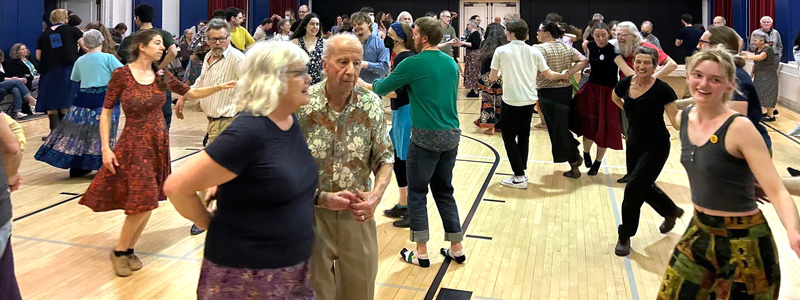
Dancers take to the floor at Tracy Hall during a contra dance in February.

Dancers take to the floor at Tracy Hall during a contra dance in February.

What David most enjoys about calling was “the sense of helping create an enjoyable evening for everyone by picking the right dances for that particular group of people, working closely with the band to find the right mix of tunes and letting them sound their best, choreographing the evening so that everyone goes away having had a good time,” he said.

Chip excelled at setting the mood for dances. He “[helped] everyone feel comfortable and relaxed, whether they be new dancers or new musicians…he was a welcoming and supportive presence,” David added.

The History of Contra dance in the UV

Beyond Blind Squirrel, numerous contra dance bands have graced the Upper Valley region since the resurgence of the art form in the early 70s, including Northern Spy, Cuckoo’s Nest, Smash the Windows, and Dr. Ruth and the Pleasure Seekers.
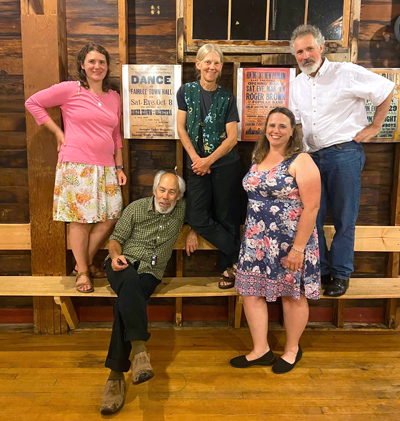
Blind Squirrel

Blind Squirrel

According to David, renowned caller Dudley Laufman re-launched the dance genre locally, in South Strafford’s Barrett Hall. A new band, Smash the Windows, emerged in the late 70s, holding monthly dances in Lyme, then in Lebanon and Cornish.

Northern Spy, David’s band, first performed in Lebanon, then Etna, before settling at Norwich’s Tracy Hall. At the early dances, sometimes the band members would outnumber the dancers, but by the late 80s, attendance at Tracy Hall contra dances numbered up to 200.

“The popularity waxed and waned, and by the 20-teens, when a committee took responsibility for organizing the Norwich dances…attendance had fallen below 50,” David added. The coronavirus made dancing impossible for a while, but “the Norwich dance now is on the rise with many new, younger dancers discovering this healthy and friendly activity and bringing their friends.”

Looking to the Future

Since the retirement of Northern Spy and Cuckoo’s Nest, the Norwich Dance Committee has been able to engage other regional bands and provide more variety for dancers with different styles of music. Blind Squirrel is looking to restart by finding a new guitar player. “That’s what [Chip] would have wanted,” said Erin.

Elfie Forbes, a long-time contra dancer and Norwich resident, is grateful for the continued efforts of the committee. “I’m glad [dancing] keeps going here,” she said. For her, dancing helps build an in-person community in a world that feels fractured and disconnected, and it’s a great way to meet people. Elfie’s late partner, Ruth Sylvester, was a caller at Norwich dances for many years.

Chip at one of his last dances in New London before his passing in March.

Chip at one of his last dances in New London before his
passing in March.

Contra dancing is fun for the musicians, too. “It’s a great feeling” to provide the music for the dancers, Steve said. The pressure is off because “you’re there playing in front of people, but you’re not performing. The people dancing are so focused on the caller, so we’re playing for ourselves and the dancers.”

That ethic of service was certainly evident in the way Chip supported his bandmates and his community. He’ll be remembered for his generosity, caring nature, dedication, and humility by those who continue to be connected to the contra dance tradition and beyond.
Share:
Reading time: 5 min
All, Cover Story

From Norwich to New Orleans

March 18, 2024 by Gwynn Lyons No Comments
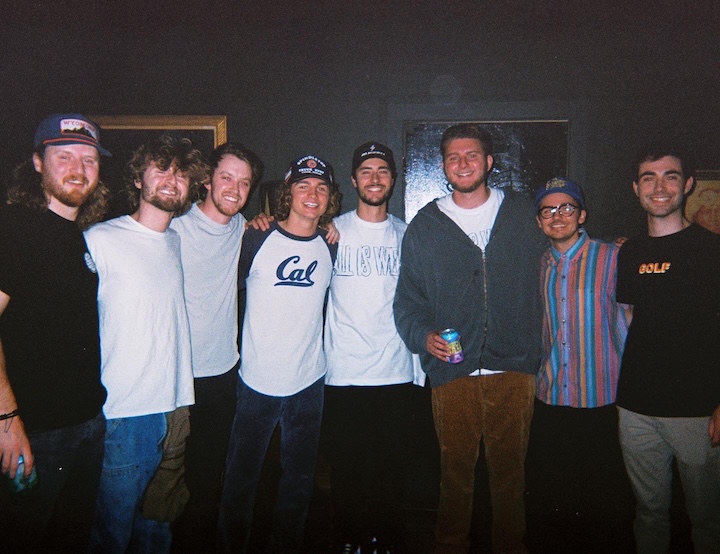
From Norwich to New Orleans - people standing in a line with arms around each other smiling

Following the Journey of a Young Musician With Upper Valley Roots

From performing in assembly at Marion Cross School to racking up more than a million monthly listeners on Spotify, Hans Williams’ musical career has grown steadily as he has developed his sound. Now based in New Orleans, the Norwich native sat down with The Norwich Times to discuss his roots, his journey, and his aspirations.

Music as an emotional outlet

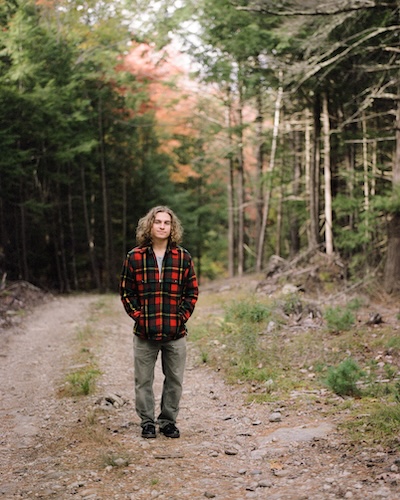
From Norwich to New Orleans - man standing on dirt road with hands in pockets
Hans Williams

For singer-songwriter Hans Williams, music goes beyond mere lyrics, melody, and harmony; it’s also a vehicle for self-expression. He writes music to share himself and connect with others. Williams’ emotional vulnerability is front and center in tracks like “Body On My Shoulders,” which he wrote after being a first responder to his floormate’s suicide while attending college at Tulane University.“ I use my music as an emotional outlet,” Williams said. And to good effect: “I’ve been really lucky to have people that have gravitated towards it and used it for the same purpose in the last five or six years.”

Distributing his music online has allowed Williams to reach people all around the world; on Spotify, his listeners hail from 183 different countries. As an independent musician – one that has not signed with a label – Williams is able to retain greater control over his music. Revenue from digital streams and shows gives him the means to continue creating music without having to compromise on his vision and voice.

Beginnings

Williams’ musical career can be traced all the way back to elementary school. In third grade, he had a brief stint as a rapper, going by the name “Young Freezeman” and distributing CDs of his rap tapes. He also performed at regularly held school assemblies in front of his peers and teachers at Marion Cross School in Norwich. The process of recording music piqued his interest in doing more than just live performances.

At home, Williams listened to his dad’s favorite funk artists, like Parliament Funkadelic, the Ohio Players, James Brown, Tower of Power, and Al Greene. Later on, he became interested in his mom’s favorites, singer-songwriter artists like Norah Jones, Tracy Chapman, and the Chicks. Williams’ music has become increasingly soulful as his unique sound has evolved over time, while staying true to its folk roots.

Though primarily a vocalist now, the first instrument Williams’ learned to play was the guitar. He began taking lessons during his childhood from Tuck Stocking of Tuck’s Rock Dojo in Etna.

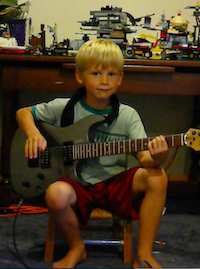
From Norwich to New Orleans - young boy sitting down with guitar in hand
Hans Williams learning to play the guitar at age 10.

“When I had my first lesson with Tuck, I was 10,” Williams said. “Tuck recently told me, he talked to my dad after [that] lesson and told him, ‘Hans has got a lot of passion, but he has no clue what he’s doing on the guitar’,” he laughed.

As it turns out, Williams’ relationship with Tuck ended up being the foundation of his budding music career. At Tuck’s Rock Dojo, Williams participated in local bands that Tuck facilitated and had the opportunity to create music in his studio. According to Williams, Tuck’s Rock Dojo is the premier outlet for playing alternative music in the Upper Valley.

“You could come in there with almost no experience and find a way to add something,” he said.“ Going in there and toying around was a big part of exploring what I wanted to do with music.”

Coming into his own

Williams enjoyed playing music in school, too, and got support from Ms. Keck of Marion Cross School and Ms. Chambers of Hanover High School. He performed in chorus, acapella groups, and the jazz band. Yet, he found studying music in school to be a bit limiting.

“Oftentimes, there’s not a lot of room for exploration,” Williams explained. He continued to seek out performance opportunities outside of school, playing in a band called “Unstable Elements” and later performing on the Norwich green during the Fair as a high school junior, and at Blue Sparrow Kitchen as a senior.

After departing for college at Tulane University in 2019, Williams began seeking out solo gigs and performed in venues around New Orleans, building his audience and his musicianship over time. He ultimately recruited a band, with whom he went on tour across New England this past summer.

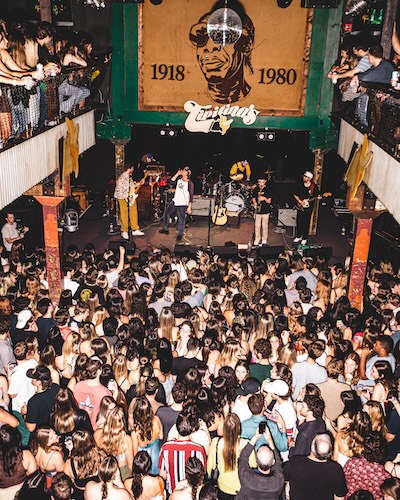
From Norwich to New Orleans - concert with band on stage and crowd in front of stage
Hans Williams (second from left) and band performing at Tipitina’s in New Orleans.

“I’ve had slow, steady growth personally and creatively as an artist,” Williams said, reflecting on his career. “Having a band who can push me more from an instrumental standpoint has made me realize that there’s a lot more that I can do than having four-chord, singer-songwriter songs,” he added.

Now that he has graduated from college, Williams is immersing himself in the New Orleans music scene and finding inspiration all around the City.

“I run into so many more influences than I did when I was in school,” he said. “It gets me so excited.” As a young artist, he’s soaking up everything he can from the experience.

“I’m nowhere near wanting to settle down creatively; there’s a lot more to explore,” he added. “The more I can push myself outside of my folk/singer-songwriter comfort zone, the better.”

Norwich leaves its mark

Williams’ music pays homage to being raised in Norwich, and the influence it’s had on his life and in his musical career today. His newest project, which will be released in the spring, is called “More Than One Way Home” and explores themes of nostalgia, childhood, and homecoming.“

Growing up here gave me a good sense of what community should feel like,” Williams said. “It feels so ideal in so many ways. I didn’t really appreciate how supportive and sheltered this community was until I left.”

Williams is one of a growing number of acclaimed musicians who have come from the Upper Valley, including Noah Kahan, Brooks Hubbard, and Phin Choukas. The rise of digital music and digital means of distribution make it easier than ever for musicians from rural areas to find success – and to become role models for local kids who dream big.

More than one way home

Nowadays, Williams spends his time in New Orleans working at a studio as a handyman, where he gets to sit in on recording sessions with brass bands and funk groups. He hopes to nurture more collaborations and sing with another group in a seven or eight-piece band.

This spring, Williams plans to release his first EP and go on a nationwide tour to nearly every major U.S. city with a few stops in Canada. He looks forward to meeting his listeners.

Even though Williams has been approached by major labels at recording companies, he says he isn’t ready to sign just yet – it’s a big gamble, and a lot of pressure to make money. “Someday we’ll find a partner that shares our vision and is willing to give us a good deal,” Williams said. Until then, he’s more than happy to continue to be an independent musician.

All in all, Williams said, “Making music into a career has been a privilege.”

Share:
Reading time: 5 min

Our Latest Issue

Fall 2026 Edition

© 2024 copyright Greater Good Media. All rights reserved.